THE ADVENTURE COLLECTIVE® · Independent discovery and booking for outdoor travel

Walk Savannah’s original squares on a guided 90-minute route from Johnson Square to Forsyth Park. This compact tour blends colonial planning, movie history, and local stories—ideal for first-time visitors who want context with their photos.
Walk Savannah’s original squares on a guided 90-minute route from Johnson Square to Forsyth Park. This compact tour blends colonial planning, movie history, and local stories—ideal for first-time visitors who want context with their photos.
Visitors gather at Johnson Square, the humid air carrying the faint river tang from the nearby Savannah River, while live oaks shade the bronze monument where the guide waits with a sign. The walk moves with a steady, conversational pace through the grid of squares laid out by James Oglethorpe, each green room a chapter in Savannah’s civic life — market, burial ground, military parade field — made visible in ironwork and brick.
Verified experiences and guided adventures in the surrounding area.
Operated by Cinematic Sites of Savannah · Savannah, Georgia
Visitors gather at Johnson Square, the humid air carrying the faint river tang from the nearby Savannah River, while live oaks shade the bronze monument where the guide waits with a sign. The walk moves with a steady, conversational pace through the grid of squares laid out by James Oglethorpe, each green room a chapter in Savannah’s civic life — market, burial ground, military parade field — made visible in ironwork and brick.
Savannah’s streets tell layered stories: 18th-century colonial planning, antebellum commerce, and 20th-century film shoots that turned squares into familiar movie sets. The city’s geology is low coastal plain: tidal creeks and clay-rich soils that made Savannah a port and shaped its growth. Cultural notes surface between stops — Gullah-Geechee influences, the city’s mercantile ties to the Atlantic, and the changing uses of public space across centuries.
Expect a mix of architectural detail, local anecdotes, and movie trivia as the tour threads from Johnson Square to Forsyth Park. Guides highlight the fountain’s history, the role of the squares in urban life, and lesser-known corners that often escape quick photo stops.
Practical guidance: wear supportive walking shoes and bring a filled water bottle; the route covers historic sidewalks and occasional cobblestone and lasts about 90 minutes. Morning or late-afternoon departures avoid peak heat and make the magnolia and live oak canopy most enjoyable. The tour is suitable for first-time visitors and those curious about how landscape, commerce, and culture shaped one of America’s oldest planned cities.
easy.
1.5 hours.
Light activity level; suitable for most people who can walk 1–2 miles at a steady pace
The tour begins at Johnson Square (look for the guide’s sign by the central monument) and ends at Forsyth Park with plenty of transit options nearby.
Yes — the route is stroller-accessible, though some sidewalks and crossings may be uneven; infants and small children are accommodated.
No — this is a walking tour focused on outdoor squares and public spaces; admissions to specific museums or houses are not included.
This standard shared tour is conducted in English and is not private; check the operator for private or multilingual options.
Savannah was laid out in Oglethorpe’s 18th-century grid of public squares; those civic parcels shaped social and economic life through colonial and antebellum periods.
The city prioritizes tree canopy preservation and careful maintenance of historic public spaces; visitors are asked to stay on paths and avoid climbing monuments to protect fragile masonry.
Cinematic Sites of Savannah operates guided outdoor trips and adventures with an emphasis on safety, stewardship, and memorable experiences.
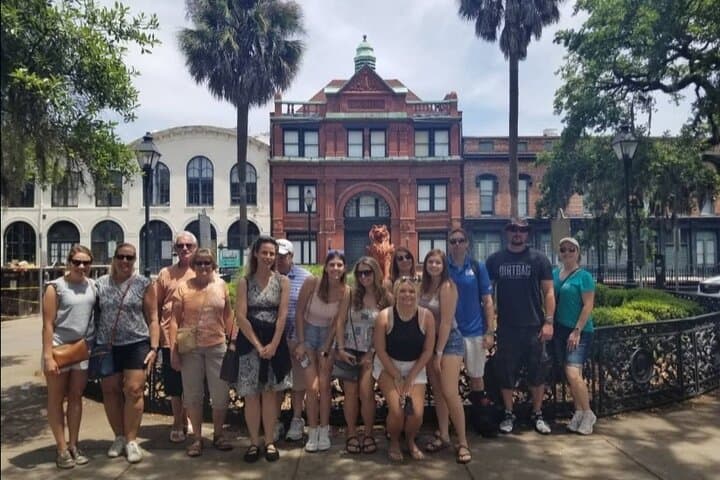
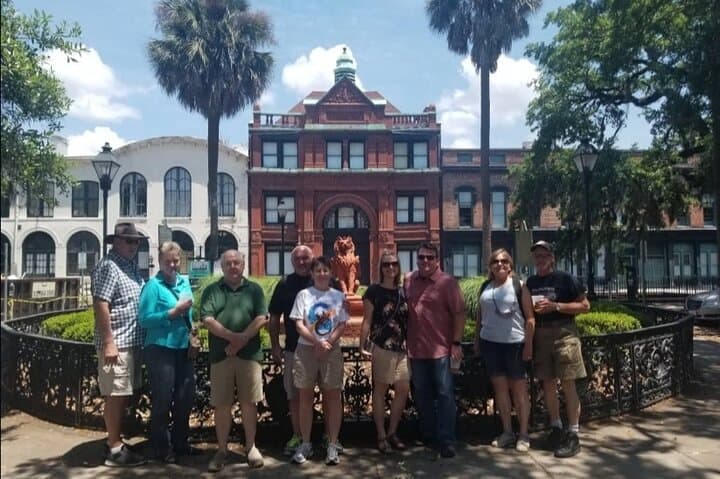
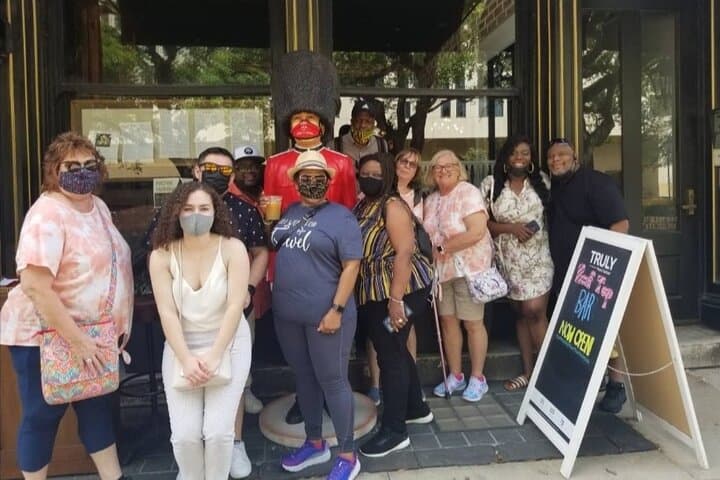
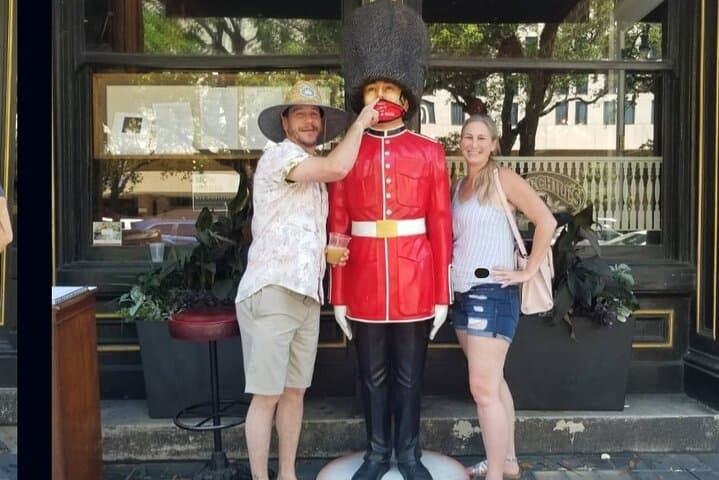
Visitors gather at Johnson Square, the humid air carrying the faint river tang from the nearby Savannah River, while live oaks shade the bronze monument where the guide waits with a sign. The walk moves with a steady, conversational pace through the grid of squares laid out by James Oglethorpe, each green room a chapter in Savannah’s civic life — market, burial ground, military parade field — made visible in ironwork and brick.
Visitors gather at Johnson Square, the humid air carrying the faint river tang from the nearby Savannah River, while live oaks shade the bronze monument where the guide waits with a sign. The walk moves with a steady, conversational pace through the grid of squares laid out by James Oglethorpe, each green room a chapter in Savannah’s civic life — market, burial ground, military parade field — made visible in ironwork and brick.
Savannah’s streets tell layered stories: 18th-century colonial planning, antebellum commerce, and 20th-century film shoots that turned squares into familiar movie sets. The city’s geology is low coastal plain: tidal creeks and clay-rich soils that made Savannah a port and shaped its growth. Cultural notes surface between stops — Gullah-Geechee influences, the city’s mercantile ties to the Atlantic, and the changing uses of public space across centuries.
Expect a mix of architectural detail, local anecdotes, and movie trivia as the tour threads from Johnson Square to Forsyth Park. Guides highlight the fountain’s history, the role of the squares in urban life, and lesser-known corners that often escape quick photo stops.
Practical guidance: wear supportive walking shoes and bring a filled water bottle; the route covers historic sidewalks and occasional cobblestone and lasts about 90 minutes. Morning or late-afternoon departures avoid peak heat and make the magnolia and live oak canopy most enjoyable. The tour is suitable for first-time visitors and those curious about how landscape, commerce, and culture shaped one of America’s oldest planned cities.