THE ADVENTURE COLLECTIVE® · Independent discovery and booking for outdoor travel

Move beyond photos and join a guided walk through Fushimi Inari’s thousands of torii gates. This two-hour tour pairs local history and shrine ritual with manageable mountain trails and morning light for quieter views.
Move beyond photos and join a guided walk through Fushimi Inari’s thousands of torii gates. This two-hour tour pairs local history and shrine ritual with manageable mountain trails and morning light for quieter views.
You enter through a curtain of red—hundreds of torii doors crowd the narrow path and sunlight slices between uprights, turning the air a warm, copper tone. The torii push you forward; the mountain trail hums with the quiet authority of history and the soft patter of other travelers’ footsteps.
Verified experiences and guided adventures in the surrounding area.
Operated by Traveling Kyoto · Kyoto, Kyoto Prefecture
You enter through a curtain of red—hundreds of torii doors crowd the narrow path and sunlight slices between uprights, turning the air a warm, copper tone. The torii push you forward; the mountain trail hums with the quiet authority of history and the soft patter of other travelers’ footsteps.
Founded in 711, Fushimi Inari Taisha grew around devotion to Inari, the kami of rice and prosperity; foxes act as the shrine’s messengers in legend and in the rows of stone foxes watching the steps. The shrine sits on a wooded hill whose volcanic and sedimentary soils support mixed forest, the paths worn into a steady climb that rewards you with panoramic views over Kyoto at the Yotsutsuji intersection.
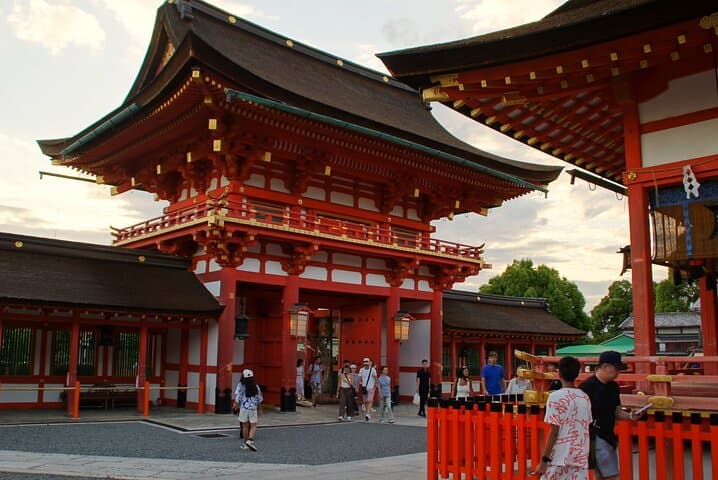
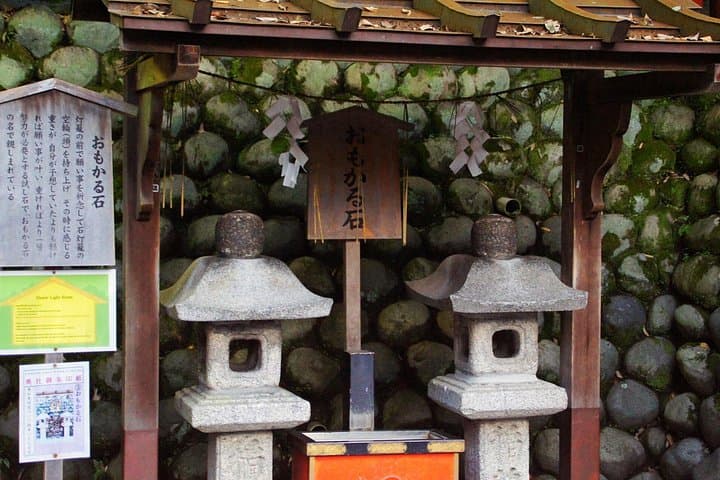
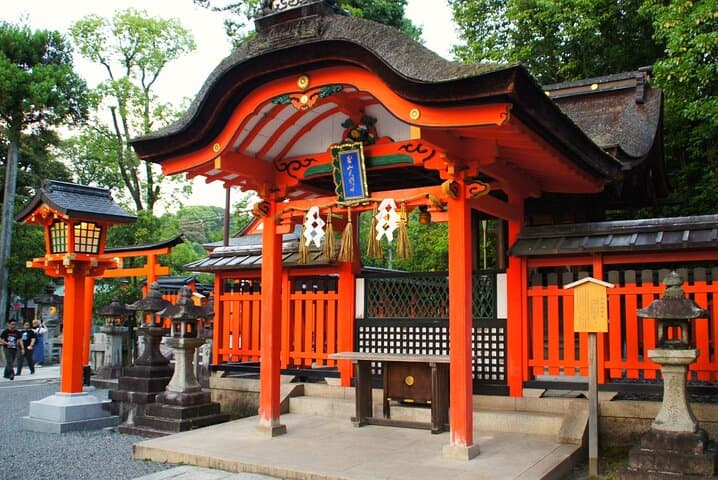
Culturally, the site blends Shinto ritual with everyday urban life—merchants still donate torii, and small auxiliary shrines mark personal prayers. Local guides translate the symbolism of offerings, ema boards, and ritual cleansing while steering you away from the busiest photography spots so you can feel the place instead of just framing it.
Practical guidance: the standard walking loop takes about two hours and includes uneven stone steps and narrow passages—comfortable shoes and a steady pace matter. Visit early morning or late afternoon to avoid the largest crowds; bring water and respect ritual spaces (no loud conversation during prayers). The meeting point is outside a Daily Yamazaki near the shrine entrance—look for the fox statue.
This tour mixes short climbs and cultural depth: expect clear historical context, accessible trails, and a compact mountain hike that ends with a sweeping city view and a sharper sense of Kyoto’s spiritual geography.
easy.
2 hours.
Suitable for most travelers who can manage uphill walks and stair sections for up to two hours.
The meeting point is in front of the Daily Yamazaki convenience store near the shrine entrance—look for the fox statue if the storefront is crowded.
The tour is rated easy overall but includes uphill sections and stone steps; take it at your own pace and notify the guide if you need to rest.
Photography is permitted in most outdoor areas, but be respectful near altars and people praying; follow any posted restrictions and your guide’s instructions.
Narrow steps and uneven ground make strollers impractical; children can participate if they can handle stair climbs and crowds.
Fushimi Inari Taisha dates to 711 AD and became Japan’s principal Inari shrine; donated torii reflect merchants’ gratitude and local economic history.
The site manages wear on stone paths and torii through maintenance and donor programs; visitors help by staying on marked trails, not touching inscriptions, and disposing of litter.
Traveling Kyoto operates guided outdoor trips and adventures with an emphasis on safety, stewardship, and memorable experiences.
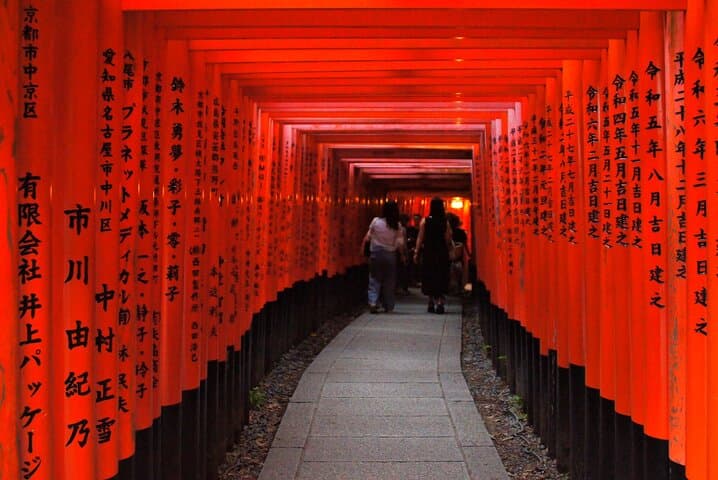
You enter through a curtain of red—hundreds of torii doors crowd the narrow path and sunlight slices between uprights, turning the air a warm, copper tone. The torii push you forward; the mountain trail hums with the quiet authority of history and the soft patter of other travelers’ footsteps.
You enter through a curtain of red—hundreds of torii doors crowd the narrow path and sunlight slices between uprights, turning the air a warm, copper tone. The torii push you forward; the mountain trail hums with the quiet authority of history and the soft patter of other travelers’ footsteps.
Founded in 711, Fushimi Inari Taisha grew around devotion to Inari, the kami of rice and prosperity; foxes act as the shrine’s messengers in legend and in the rows of stone foxes watching the steps. The shrine sits on a wooded hill whose volcanic and sedimentary soils support mixed forest, the paths worn into a steady climb that rewards you with panoramic views over Kyoto at the Yotsutsuji intersection.
Culturally, the site blends Shinto ritual with everyday urban life—merchants still donate torii, and small auxiliary shrines mark personal prayers. Local guides translate the symbolism of offerings, ema boards, and ritual cleansing while steering you away from the busiest photography spots so you can feel the place instead of just framing it.
Practical guidance: the standard walking loop takes about two hours and includes uneven stone steps and narrow passages—comfortable shoes and a steady pace matter. Visit early morning or late afternoon to avoid the largest crowds; bring water and respect ritual spaces (no loud conversation during prayers). The meeting point is outside a Daily Yamazaki near the shrine entrance—look for the fox statue.
This tour mixes short climbs and cultural depth: expect clear historical context, accessible trails, and a compact mountain hike that ends with a sweeping city view and a sharper sense of Kyoto’s spiritual geography.