THE ADVENTURE COLLECTIVE® · Independent discovery and booking for outdoor travel

Walk vineyard lanes on the Grand Cru Mandelberg, explore the cellar, and learn smell-and-taste techniques in a three-hour Alsace wine experience. Practical, sensory, and set against views of the Vosges and medieval towns.
Walk vineyard lanes on the Grand Cru Mandelberg, explore the cellar, and learn smell-and-taste techniques in a three-hour Alsace wine experience. Practical, sensory, and set against views of the Vosges and medieval towns.
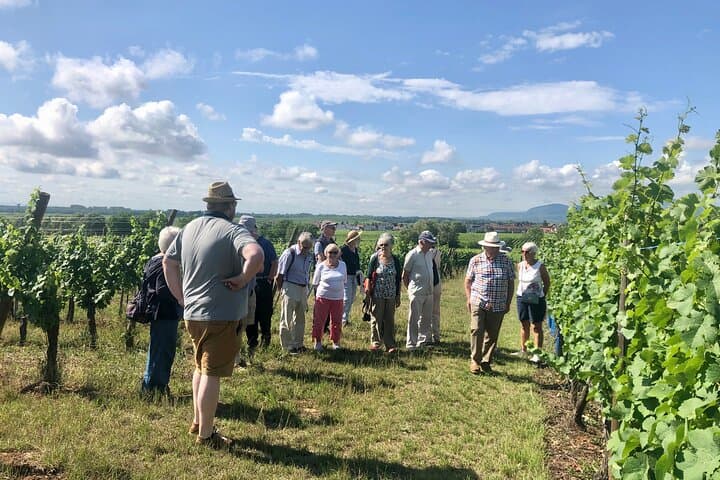
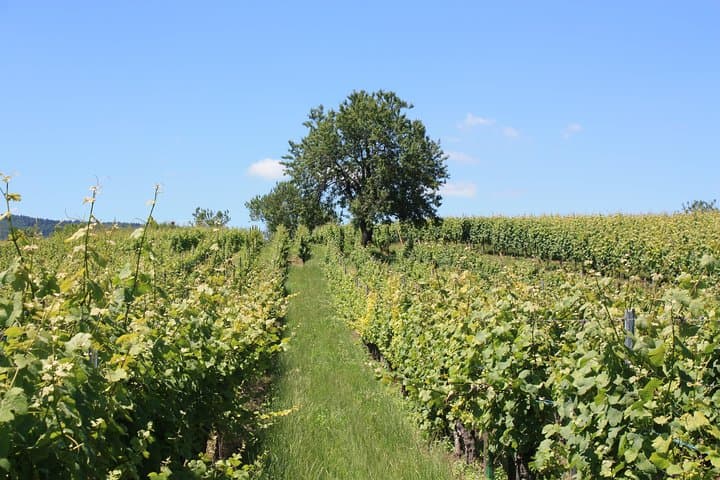
A cool wind moves through low rows of vines on the Grand Cru Mandelberg, lifting the scent of crushed grape skin and almond blossom as you step off the lane. The walk begins between neat terraces and streams, opening onto a plain where the Vosges rise like a dark wall and the towers of Riquewihr and Zellenberg puncture the skyline.
Verified experiences and guided adventures in the surrounding area.
Operated by Domaine Specht - Vins d'Alsace et activités oenotouristiques · Riquewihr, Grand Est
A cool wind moves through low rows of vines on the Grand Cru Mandelberg, lifting the scent of crushed grape skin and almond blossom as you step off the lane. The walk begins between neat terraces and streams, opening onto a plain where the Vosges rise like a dark wall and the towers of Riquewihr and Zellenberg puncture the skyline.
The route follows the rhythms of Alsace viticulture: narrow paths cut between vines trained for sun, soil that tells its story in limestone and marl, and small plots tended by families who have grafted traditions into the land for generations. The cellar visit that follows brings that history indoors—barrels and stainless steel tanks side by side—while a guide explains harvest choices, fermentation and the region’s approach to Grand Cru classification.
The sensory workshops are practical and tuned to discovery: a short aroma exercise trains the nose on varietal notes; a tasting session pairs three wines with local toasts and spreads, highlighting how acidity and minerality play against food. The whole program runs about three hours and is paced for walkers of all levels.
Practical notes: wear sturdy shoes for compacted dirt and mild slopes, plan the tour mid-morning or late afternoon for softer light and cooler temperatures, and leave room in your luggage for a bottle or two. Expect easy terrain, conversation about winemaking choices, and a tasting that frames Alsace wines in landscape as much as in glass.
easy.
3 hours.
Suitable for most participants who can walk for roughly an hour over gentle, uneven terrain.
The experience lasts about three hours: a one-hour vineyard walk, a cellar visit, followed by aroma and tasting workshops.
Yes—terrain is easy with short slopes; the program notes it’s suitable for all fitness levels, though tasting portions are for adults.
Guides commonly speak French and English; check booking details or request language needs when you reserve.
Yes—wines sampled are typically available for purchase at the domaine; bring a bag or plan shipping for multiple bottles.
Mandelberg is a designated Grand Cru with a long history of family winemaking; the patchwork of small plots reflects centuries of inheritance and microclimate focus.
Local producers increasingly use cover crops and reduced-spray techniques to protect soil health; visitors are asked to stay on paths to limit erosion and vine damage.
Domaine Specht - Vins d'Alsace et activités oenotouristiques operates guided outdoor trips and adventures with an emphasis on safety, stewardship, and memorable experiences.
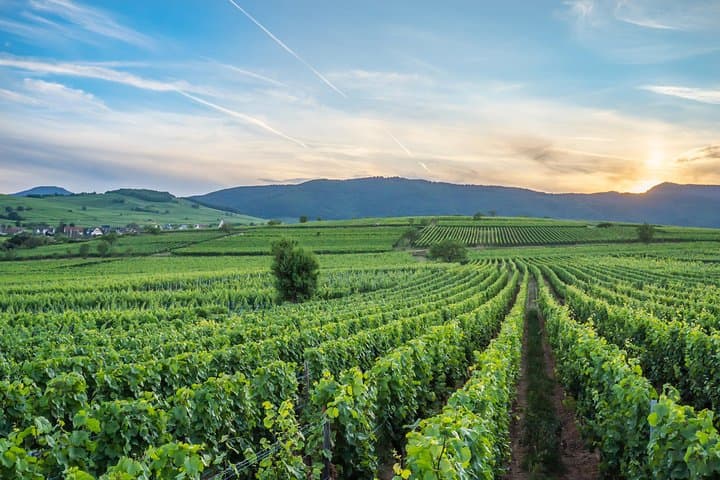
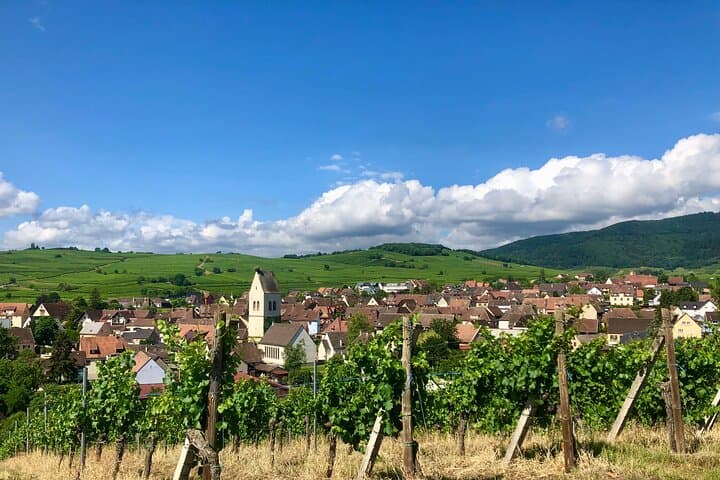
A cool wind moves through low rows of vines on the Grand Cru Mandelberg, lifting the scent of crushed grape skin and almond blossom as you step off the lane. The walk begins between neat terraces and streams, opening onto a plain where the Vosges rise like a dark wall and the towers of Riquewihr and Zellenberg puncture the skyline.
A cool wind moves through low rows of vines on the Grand Cru Mandelberg, lifting the scent of crushed grape skin and almond blossom as you step off the lane. The walk begins between neat terraces and streams, opening onto a plain where the Vosges rise like a dark wall and the towers of Riquewihr and Zellenberg puncture the skyline.
The route follows the rhythms of Alsace viticulture: narrow paths cut between vines trained for sun, soil that tells its story in limestone and marl, and small plots tended by families who have grafted traditions into the land for generations. The cellar visit that follows brings that history indoors—barrels and stainless steel tanks side by side—while a guide explains harvest choices, fermentation and the region’s approach to Grand Cru classification.
The sensory workshops are practical and tuned to discovery: a short aroma exercise trains the nose on varietal notes; a tasting session pairs three wines with local toasts and spreads, highlighting how acidity and minerality play against food. The whole program runs about three hours and is paced for walkers of all levels.
Practical notes: wear sturdy shoes for compacted dirt and mild slopes, plan the tour mid-morning or late afternoon for softer light and cooler temperatures, and leave room in your luggage for a bottle or two. Expect easy terrain, conversation about winemaking choices, and a tasting that frames Alsace wines in landscape as much as in glass.