THE ADVENTURE COLLECTIVE® · Independent discovery and booking for outdoor travel

Explore Puebla’s baroque streets, cathedral towers and sweets-lined alleys on a focused three-hour pedestrian tour. Learn the city’s colonial layout, visit a UNESCO-listed library, and taste traditional confections as local guides unpack the stories behind the stones.
Explore Puebla’s baroque streets, cathedral towers and sweets-lined alleys on a focused three-hour pedestrian tour. Learn the city’s colonial layout, visit a UNESCO-listed library, and taste traditional confections as local guides unpack the stories behind the stones.
A morning in Puebla begins at the Zócalo, where stone façades cool like old coins and church bells puncture the air with deliberate rhythm. The tour threads through grid streets laid out in 1531, moving past the cathedral’s twin towers, into narrow alleys where sunlight skims painted tiles and the smell of fresh tortillas and chocolate wafts from open doorways.
Verified experiences and guided adventures in the surrounding area.
Operated by CASA MEXICANA TOUR OPERADORA · Puebla, Puebla
A morning in Puebla begins at the Zócalo, where stone façades cool like old coins and church bells puncture the air with deliberate rhythm. The tour threads through grid streets laid out in 1531, moving past the cathedral’s twin towers, into narrow alleys where sunlight skims painted tiles and the smell of fresh tortillas and chocolate wafts from open doorways.
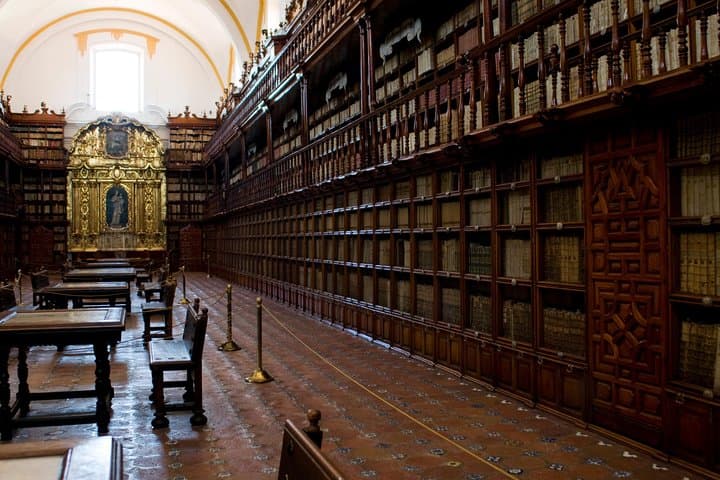
Puebla was founded as a colonial city with a strict orthogonal plan; its volcanic valley geology supplied the gray and green stones used in baroque facades and the famous Talavera ceramics. The route typically includes the Cathedral, the UNESCO-recognized Biblioteca Palafoxiana (one of the Americas’ oldest public libraries), the Chapel of the Rosary in Santo Domingo, and the Calle de los Dulces — a living market of candied almonds, rompope and other convent-born confections.
Culturally the city sits at an intersection: indigenous craft traditions, Spanish Catholic architecture and a thriving contemporary arts scene around the Barrio del Artista. Guides layer anecdotes with architecture—why certain tiles were used, how trade routes shaped local crafts—and point out family-run workshops and artisan stalls still making Talavera by hand.
Practical guidance: this is an easy, accessible three-hour walk on mostly paved streets and plazas; comfortable shoes and a sun hat are recommended. Bring water, small cash for markets, and allow time for shop browsing. Tours are generally wheelchair accessible and best experienced early in the day to avoid heat and crowds.
easy.
3 hours.
Suitable for travelers of average fitness; mostly flat walking with frequent stops.
Yes — the itinerary notes wheelchair-accessible surfaces and most major stops around the Zócalo are accessible, though some smaller alleys can be tight.
This walking tour typically does not include museum admissions; your guide will indicate entry points and any separate fees.
Guides commonly speak Spanish and often English; ask at booking for specific language requests or private tour arrangements.
The tour requires a minimum of two people per reservation, and cancellation for a full refund is possible up to 24 hours before the scheduled time.
Puebla’s grid was laid out in 1531; its Historic Center preserves colonial-era baroque architecture and the Biblioteca Palafoxiana, one of the earliest public libraries in the Americas.
Support local artisans and reduce waste by avoiding single-use plastics; stick to marked sidewalks and respect historic buildings and shop displays.
CASA MEXICANA TOUR OPERADORA operates guided outdoor trips and adventures with an emphasis on safety, stewardship, and memorable experiences.

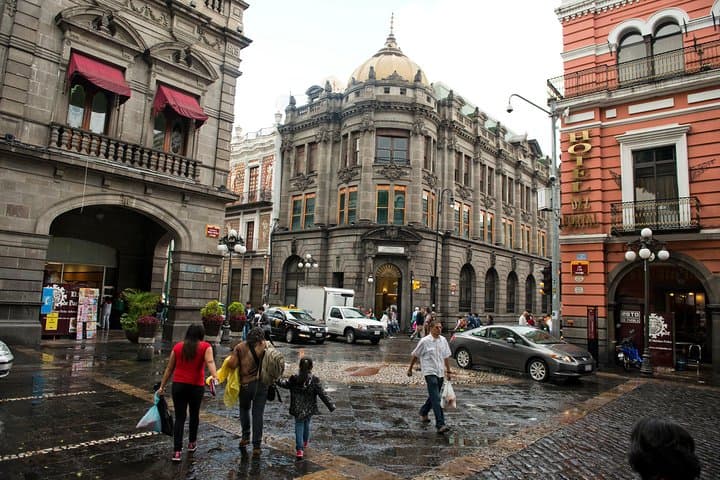

A morning in Puebla begins at the Zócalo, where stone façades cool like old coins and church bells puncture the air with deliberate rhythm. The tour threads through grid streets laid out in 1531, moving past the cathedral’s twin towers, into narrow alleys where sunlight skims painted tiles and the smell of fresh tortillas and chocolate wafts from open doorways.
A morning in Puebla begins at the Zócalo, where stone façades cool like old coins and church bells puncture the air with deliberate rhythm. The tour threads through grid streets laid out in 1531, moving past the cathedral’s twin towers, into narrow alleys where sunlight skims painted tiles and the smell of fresh tortillas and chocolate wafts from open doorways.
Puebla was founded as a colonial city with a strict orthogonal plan; its volcanic valley geology supplied the gray and green stones used in baroque facades and the famous Talavera ceramics. The route typically includes the Cathedral, the UNESCO-recognized Biblioteca Palafoxiana (one of the Americas’ oldest public libraries), the Chapel of the Rosary in Santo Domingo, and the Calle de los Dulces — a living market of candied almonds, rompope and other convent-born confections.
Culturally the city sits at an intersection: indigenous craft traditions, Spanish Catholic architecture and a thriving contemporary arts scene around the Barrio del Artista. Guides layer anecdotes with architecture—why certain tiles were used, how trade routes shaped local crafts—and point out family-run workshops and artisan stalls still making Talavera by hand.
Practical guidance: this is an easy, accessible three-hour walk on mostly paved streets and plazas; comfortable shoes and a sun hat are recommended. Bring water, small cash for markets, and allow time for shop browsing. Tours are generally wheelchair accessible and best experienced early in the day to avoid heat and crowds.