THE ADVENTURE COLLECTIVE® · Independent discovery and booking for outdoor travel

Take a two-hour guided walk along Manhattan’s High Line and see how an elevated freight rail turned into a living urban park. Learn neighborhood history, spot native plantings, and catch skyline views from above the city streets.
Take a two-hour guided walk along Manhattan’s High Line and see how an elevated freight rail turned into a living urban park. Learn neighborhood history, spot native plantings, and catch skyline views from above the city streets.
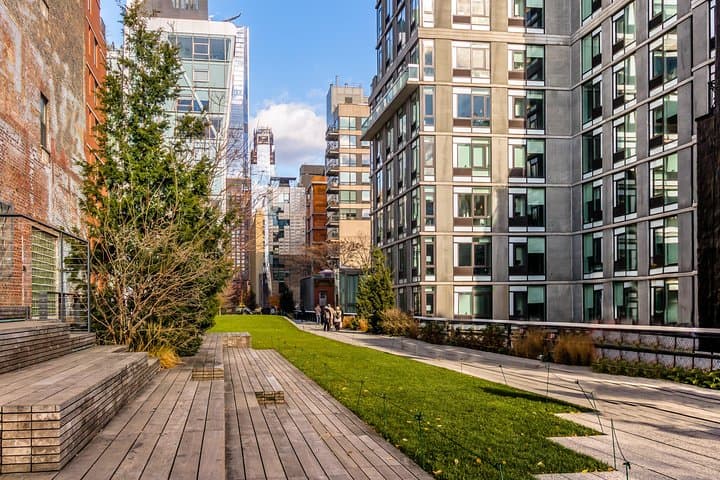
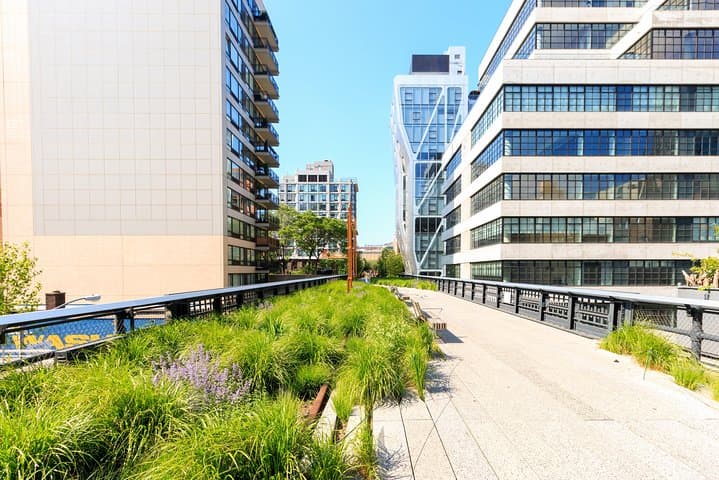
You step off the sidewalk and up — not into wilderness, but into a reclaimed ribbon of city sky where trains once clattered and now grasses wave at the skyscrapers. The High Line lifts you a story above Chelsea, offering a slow, linear promenade: Hudson glints to the west, brick facades and glass towers stand sentinel, and the city’s noise thins into a background hum.
Verified experiences and guided adventures in the surrounding area.
Operated by Uncle Sam's New York · New York, NY
You step off the sidewalk and up — not into wilderness, but into a reclaimed ribbon of city sky where trains once clattered and now grasses wave at the skyscrapers. The High Line lifts you a story above Chelsea, offering a slow, linear promenade: Hudson glints to the west, brick facades and glass towers stand sentinel, and the city’s noise thins into a background hum.
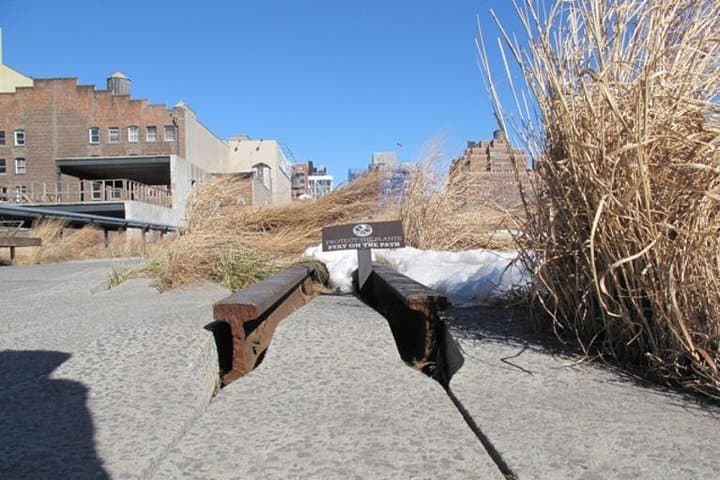
Opened in phases between 2009 and 2014 on a 1.45-mile (2.33-km) former freight rail line, the High Line cuts through a neighborhood whose history stretches back to the mid-19th century. Built to remove dangerous street-level freight traffic, the elevated track was part of the Manhattan West Side Improvement Project. In the decades after the rails fell silent, citizens and artists rallied to convert iron and ballast into public space. Today the park threads public art, engineered planting, and urban views into one accessible walk.
Geologically there’s little to dig into—Manhattan’s bedrock sits far below—but the High Line creates its own micro-ecology. Designers planted resilient native and adapted species that can tolerate shallow soils and reflected heat; prairie grasses, bearded iris, and small trees now take ownership of the old track bed. They move with the wind, sometimes daring you to keep pace.
Culturally the route is a compact chronicle: start in the Meatpacking District, pass the industrial bones of Chelsea Market and the old Nabisco complex where the Oreo originated, and pause at the White Star Pier memory markers where ocean liners once moored. Guides will point out both the neighborhood’s gritty labor past and its rapid reinvention as galleries, boutiques, and high-rise residences.
Practical guidance: this tour runs about two hours and covers the full park length at a relaxed pace. The path is mostly paved boardwalk and metal decking; expect short stairs at some entrances but elevators and ramps at major access points (14th St, 16th St, 23rd St). Wear comfortable walking shoes and a light layer—the exposed elevation catches wind and sun differently than the street.
Timing matters: mornings and weekdays are quieter; late afternoon brings golden light but more foot traffic. Bring water, use public transit to reach the meeting point at Ninth Avenue and 14th Street, and leave bulky backpacks at your hotel—the park is designed for strolling, not hauling. If you want photos, ask your guide where the best uninterrupted skyline sightlines are.
This guided walk condenses history, landscape design, and urban ecology into two hours — an efficient, sensory way to read Manhattan from above and understand how an obsolete rail line became one of the city’s most talked-about public spaces.
moderate.
2 hours.
Light-to-moderate fitness; suitable for walkers who can stand and stroll continuously for up to two hours.
Yes—this is a guided tour with a booking; your confirmation (mobile or paper) is required at check-in.
Most major access points have elevators and ramps, but check with the operator for specific accessibility arrangements before booking.
The meeting point is 44 Ninth Avenue (corner of 9th Ave and 14th St) in the Meatpacking District; the tour loops along the High Line and returns to the start area.
There are public restrooms near some entrances (e.g., Gansevoort and 14th Street areas), but availability can be limited—use facilities before the tour if possible.
Yes—families with children can join; strollers are allowed but managing crowds on busier days may be harder.
Early morning for soft light and fewer people, or late afternoon for warm tones and dynamic shadows.
The High Line was originally an elevated freight rail line built as part of the Manhattan West Side Improvement Project in the 1930s to remove dangerous street-level freight traffic; it was later converted to an elevated public park beginning in 2009.
The park uses drought-tolerant and native plantings to minimize irrigation and supports community stewardship programs to reduce litter and protect plant communities.
Uncle Sam's New York operates guided outdoor trips and adventures with an emphasis on safety, stewardship, and memorable experiences.
You step off the sidewalk and up — not into wilderness, but into a reclaimed ribbon of city sky where trains once clattered and now grasses wave at the skyscrapers. The High Line lifts you a story above Chelsea, offering a slow, linear promenade: Hudson glints to the west, brick facades and glass towers stand sentinel, and the city’s noise thins into a background hum.
You step off the sidewalk and up — not into wilderness, but into a reclaimed ribbon of city sky where trains once clattered and now grasses wave at the skyscrapers. The High Line lifts you a story above Chelsea, offering a slow, linear promenade: Hudson glints to the west, brick facades and glass towers stand sentinel, and the city’s noise thins into a background hum.
Opened in phases between 2009 and 2014 on a 1.45-mile (2.33-km) former freight rail line, the High Line cuts through a neighborhood whose history stretches back to the mid-19th century. Built to remove dangerous street-level freight traffic, the elevated track was part of the Manhattan West Side Improvement Project. In the decades after the rails fell silent, citizens and artists rallied to convert iron and ballast into public space. Today the park threads public art, engineered planting, and urban views into one accessible walk.
Geologically there’s little to dig into—Manhattan’s bedrock sits far below—but the High Line creates its own micro-ecology. Designers planted resilient native and adapted species that can tolerate shallow soils and reflected heat; prairie grasses, bearded iris, and small trees now take ownership of the old track bed. They move with the wind, sometimes daring you to keep pace.
Culturally the route is a compact chronicle: start in the Meatpacking District, pass the industrial bones of Chelsea Market and the old Nabisco complex where the Oreo originated, and pause at the White Star Pier memory markers where ocean liners once moored. Guides will point out both the neighborhood’s gritty labor past and its rapid reinvention as galleries, boutiques, and high-rise residences.
Practical guidance: this tour runs about two hours and covers the full park length at a relaxed pace. The path is mostly paved boardwalk and metal decking; expect short stairs at some entrances but elevators and ramps at major access points (14th St, 16th St, 23rd St). Wear comfortable walking shoes and a light layer—the exposed elevation catches wind and sun differently than the street.
Timing matters: mornings and weekdays are quieter; late afternoon brings golden light but more foot traffic. Bring water, use public transit to reach the meeting point at Ninth Avenue and 14th Street, and leave bulky backpacks at your hotel—the park is designed for strolling, not hauling. If you want photos, ask your guide where the best uninterrupted skyline sightlines are.
This guided walk condenses history, landscape design, and urban ecology into two hours — an efficient, sensory way to read Manhattan from above and understand how an obsolete rail line became one of the city’s most talked-about public spaces.