THE ADVENTURE COLLECTIVE® · Independent discovery and booking for outdoor travel

Walk the honeyed lanes of Jaisalmer Fort and explore ornate havelis on a private, guided tour that blends living neighborhoods with 12th‑century history. Perfect for travelers who prefer on‑foot storytelling over bus sightseeing.
Walk the honeyed lanes of Jaisalmer Fort and explore ornate havelis on a private, guided tour that blends living neighborhoods with 12th‑century history. Perfect for travelers who prefer on‑foot storytelling over bus sightseeing.
You step through a low arched gateway and the city’s sandstone walls seem to hold their breath—heat-softened yellow stone, narrow lanes, and rooftops where life continues above the streets.
Verified experiences and guided adventures in the surrounding area.
Operated by Ghanshyam Singh · Jaisalmer, Rajasthan
You step through a low arched gateway and the city’s sandstone walls seem to hold their breath—heat-softened yellow stone, narrow lanes, and rooftops where life continues above the streets.
This private walking tour guides visitors through Jaisalmer Fort, the largest living fort in the world and a 12th‑century stronghold founded by Maharawal Jaisal. The fort’s sandstone ramps and carved Jain temples reflect centuries of trade along the Silk Road; later mansions—Patwon ki Haveli and Nathmal Haveli—showcase merchant wealth and detailed stone carving of the 18th and 19th centuries.
Geology is visible in every wall: compacted Thar sandstone that darkens with age and polishes under human touch. Culturally, the fort remains a neighborhood—families, small shops, rooftop cafés—so the tour is as much about present‑day life as it is about monuments.
Expect tight alleys, stepped courtyards, and rooftop viewpoints that frame the desert beyond. Guides typically include stories of the Jain patrons, royal households, and the mason guilds who shaped the facades.
Practical notes: wear closed shoes for uneven flagstones; carry water (shade is sparse on ramparts); budget small cash for mosque/temple entry fees and camera permits. Morning or late afternoon departures avoid the midday glare and bring softer light for photography. The tour is low‑impact and short on technical challenge but rich in walking, stairs, and sociocultural detail—ideal for travelers who want an intimate, on‑foot introduction to the Golden City.
easy.
1–5 hours.
Suitable for most fitness levels; involves sustained walking and stair climbing but no technical demands
Tours vary by booking but typically last between 1 and 5 hours depending on whether you include multiple havelis and the Royal Palace museum.
Admission to some sites like the Royal Palace or Jain temples normally requires a separate ticket and camera fee; confirm with the operator before departure.
Yes — the tour is rated easy, but expect narrow alleys and multiple staircases; participants with limited mobility should check pickup points and route details in advance.
Private transport options (AC car, open jeep, tuk‑tuk) are commonly offered for pickup and drop‑off — specify your preference when booking.
Jaisalmer Fort was founded in 1156 A.D. by Maharawal Jaisal and grew into a fortified trade hub with Jain temples and merchant havelis through the medieval period.
The fort’s soft sandstone is vulnerable to erosion and salt damage; visitors can help by avoiding chalk or nail scratches on walls and by minimizing water waste in this arid region.
Ghanshyam Singh operates guided outdoor trips and adventures with an emphasis on safety, stewardship, and memorable experiences.
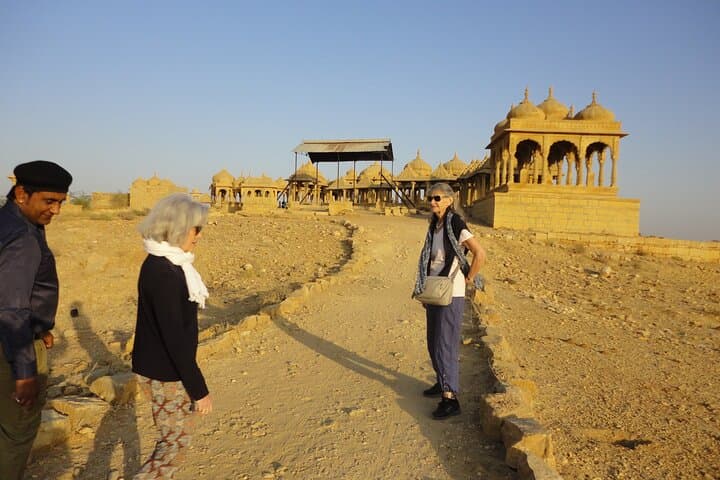
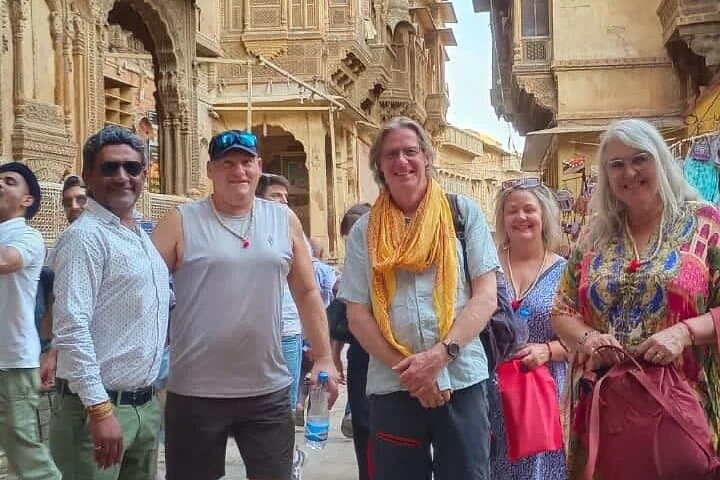
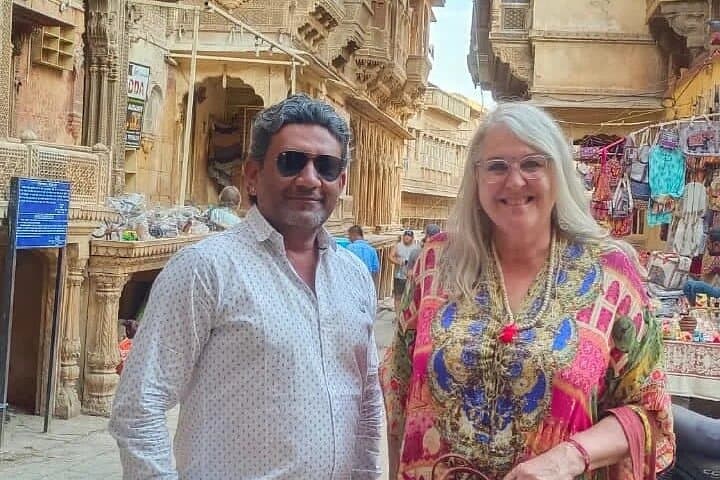
You step through a low arched gateway and the city’s sandstone walls seem to hold their breath—heat-softened yellow stone, narrow lanes, and rooftops where life continues above the streets.
You step through a low arched gateway and the city’s sandstone walls seem to hold their breath—heat-softened yellow stone, narrow lanes, and rooftops where life continues above the streets.
This private walking tour guides visitors through Jaisalmer Fort, the largest living fort in the world and a 12th‑century stronghold founded by Maharawal Jaisal. The fort’s sandstone ramps and carved Jain temples reflect centuries of trade along the Silk Road; later mansions—Patwon ki Haveli and Nathmal Haveli—showcase merchant wealth and detailed stone carving of the 18th and 19th centuries.
Geology is visible in every wall: compacted Thar sandstone that darkens with age and polishes under human touch. Culturally, the fort remains a neighborhood—families, small shops, rooftop cafés—so the tour is as much about present‑day life as it is about monuments.
Expect tight alleys, stepped courtyards, and rooftop viewpoints that frame the desert beyond. Guides typically include stories of the Jain patrons, royal households, and the mason guilds who shaped the facades.
Practical notes: wear closed shoes for uneven flagstones; carry water (shade is sparse on ramparts); budget small cash for mosque/temple entry fees and camera permits. Morning or late afternoon departures avoid the midday glare and bring softer light for photography. The tour is low‑impact and short on technical challenge but rich in walking, stairs, and sociocultural detail—ideal for travelers who want an intimate, on‑foot introduction to the Golden City.