THE ADVENTURE COLLECTIVE® · Independent discovery and booking for outdoor travel

Trace the footsteps of the Buddha across Varanasi, Bodhgaya, Nalanda and Lumbini. This 10-day route mixes hour-long drives, short village walks and visits to some of South Asia's most important Buddhist sites.
Trace the footsteps of the Buddha across Varanasi, Bodhgaya, Nalanda and Lumbini. This 10-day route mixes hour-long drives, short village walks and visits to some of South Asia's most important Buddhist sites.
You step out of the car into a humid Bihar morning and the world narrows to chant, stone, and the long shadow of the Bodhi Tree. Narrow lanes lead away from the Mahabodhi complex; small prayer flags flap over tea stalls and monks walk with quiet purpose. This is not a single place but a corridor of memory—from Varanasi's river ghats to Bodhgaya's enlightenment grounds and across the border to Lumbini's birth gardens.
Verified experiences and guided adventures in the surrounding area.
Operated by Travel Component · Bodhgaya, Bihar
You step out of the car into a humid Bihar morning and the world narrows to chant, stone, and the long shadow of the Bodhi Tree. Narrow lanes lead away from the Mahabodhi complex; small prayer flags flap over tea stalls and monks walk with quiet purpose. This is not a single place but a corridor of memory—from Varanasi's river ghats to Bodhgaya's enlightenment grounds and across the border to Lumbini's birth gardens.
The route threads centuries of history: Varanasi's continuous urban life on the Ganges, Nalanda's ruins that once housed hundreds of scholars, and Bodhgaya where Siddhartha Gautama sat beneath a peepal and reached awakening. Geology here is flat Gangetic plains—paddy fields, seasonal rivers, and alluvial soil—making long drives the norm between sites. Local culture blends small-town Hindu and Buddhist communities, monasteries from Japan and Tibet, and village life that still follows agricultural seasons.
Practically, expect daily drives of up to five hours interspersed with short, contemplative walks—Sujata Temple is a 30-minute stroll through wet fields. Trains connect major nodes but seat availability varies; advance booking is essential. Pack light layers for humid days and cooler mornings, sturdy footwear for uneven temple grounds, and a small daypack for water and shade. Respect dress codes at holy sites, keep noise low around meditation areas, and carry copies of travel documents for the India–Nepal border crossing. The Buddha's Trail is equal parts cultural immersion and slow travel—bring patience and curiosity, and you'll leave with a clearer sense of why these places still draw seekers from across the world.
moderate.
8–10 days.
Suitable for travelers who can handle multiple full travel days with short walks (15–60 minutes) at temples and sites.
Most travelers require a passport; many nationalities can obtain a Nepal visa on arrival, but requirements vary—confirm with consulates before travel.
There are lots of vehicle transfers and some short walks; those with significant mobility issues or spinal restrictions should check accessibility and avoid steep temple stairs.
October–March offers the most comfortable temperatures and lower monsoon disruption for road travel and outdoor visits.
Breakfast is included on most days per the itinerary and nine nights of accommodation are provided; confirm specifics with the operator at booking.
Bodhgaya marks the place where Siddhartha Gautama attained enlightenment under the Bodhi Tree; Nalanda was an influential Buddhist university from the 5th to 12th centuries.
Sites are culturally sensitive—avoid litter, stick to marked paths and support local guides and small businesses to help preserve temples and monastic communities.
Travel Component operates guided outdoor trips and adventures with an emphasis on safety, stewardship, and memorable experiences.
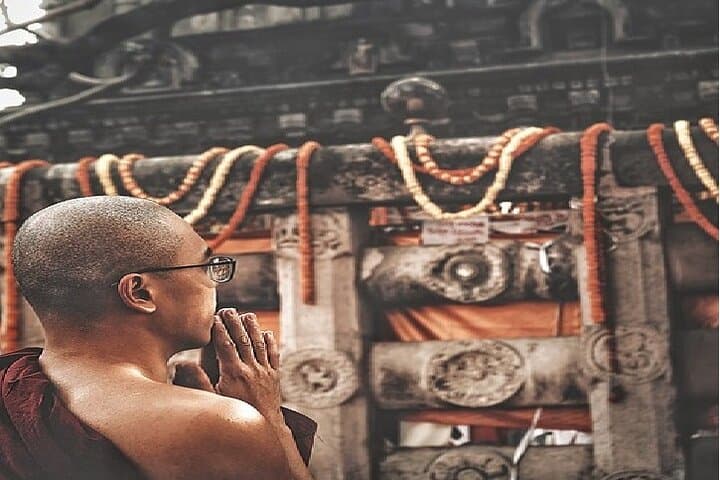
You step out of the car into a humid Bihar morning and the world narrows to chant, stone, and the long shadow of the Bodhi Tree. Narrow lanes lead away from the Mahabodhi complex; small prayer flags flap over tea stalls and monks walk with quiet purpose. This is not a single place but a corridor of memory—from Varanasi's river ghats to Bodhgaya's enlightenment grounds and across the border to Lumbini's birth gardens.
You step out of the car into a humid Bihar morning and the world narrows to chant, stone, and the long shadow of the Bodhi Tree. Narrow lanes lead away from the Mahabodhi complex; small prayer flags flap over tea stalls and monks walk with quiet purpose. This is not a single place but a corridor of memory—from Varanasi's river ghats to Bodhgaya's enlightenment grounds and across the border to Lumbini's birth gardens.
The route threads centuries of history: Varanasi's continuous urban life on the Ganges, Nalanda's ruins that once housed hundreds of scholars, and Bodhgaya where Siddhartha Gautama sat beneath a peepal and reached awakening. Geology here is flat Gangetic plains—paddy fields, seasonal rivers, and alluvial soil—making long drives the norm between sites. Local culture blends small-town Hindu and Buddhist communities, monasteries from Japan and Tibet, and village life that still follows agricultural seasons.
Practically, expect daily drives of up to five hours interspersed with short, contemplative walks—Sujata Temple is a 30-minute stroll through wet fields. Trains connect major nodes but seat availability varies; advance booking is essential. Pack light layers for humid days and cooler mornings, sturdy footwear for uneven temple grounds, and a small daypack for water and shade. Respect dress codes at holy sites, keep noise low around meditation areas, and carry copies of travel documents for the India–Nepal border crossing. The Buddha's Trail is equal parts cultural immersion and slow travel—bring patience and curiosity, and you'll leave with a clearer sense of why these places still draw seekers from across the world.