THE ADVENTURE COLLECTIVE® · Independent discovery and booking for outdoor travel

Skip the stage-set stories and walk Savannah with a guide who uses original sources to reveal scandal, industry, and everyday life across centuries. This 90-minute route moves through squares, vaults, and alleyways most visitors never see.
Skip the stage-set stories and walk Savannah with a guide who uses original sources to reveal scandal, industry, and everyday life across centuries. This 90-minute route moves through squares, vaults, and alleyways most visitors never see.
The guide stands at the James Oglethorpe statue in Chippewa Square and the city seems to hold its breath — live oaks lean in, Spanish moss brushing the air as the group sets off.
Verified experiences and guided adventures in the surrounding area.
Operated by Mad Cat Tours · Savannah, Georgia
The guide stands at the James Oglethorpe statue in Chippewa Square and the city seems to hold its breath — live oaks lean in, Spanish moss brushing the air as the group sets off.
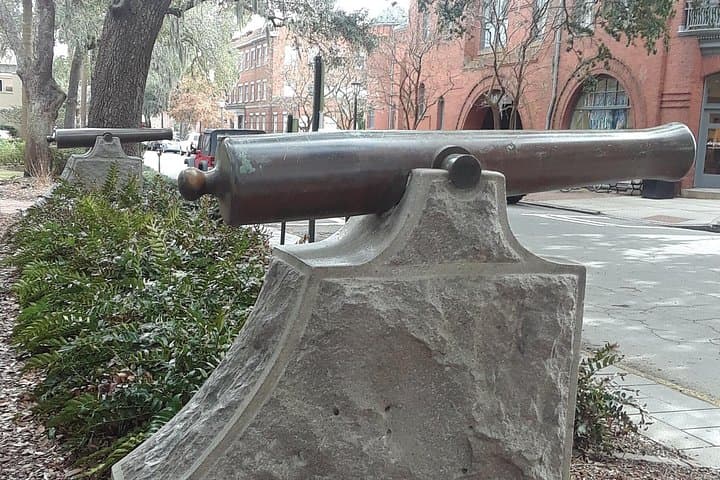
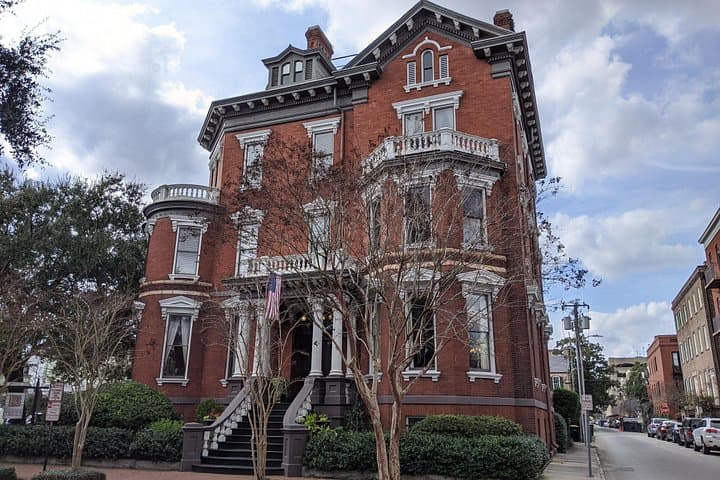
This 90-minute walking tour threads through Savannah’s grid of public squares and lesser-seen alleys, moving from colonial street lines to antebellum facades. The narrative shifts quickly: colonial trading posts, Revolutionary-era planning, the rise of rice and cotton wealth, and the hard lines of Civil War history. Guides draw on primary sources to animate characters and controversies, pointing out vaults, service tunnels, and architectural details that reveal class and labor histories.
Geologically, Savannah sits on coastal plain sediments; the flat terrain makes the tour easy on the legs but also explains the city’s marshy edge and historic river commerce. Culturally, expect frank stories about race, commerce, and politics alongside lighter anecdotes about local personalities and eccentric households.
Practical guidance is straightforward: the route is on city sidewalks and brick lanes, wheelchair-accessible in many sections but with occasional uneven stone. Tours run rain or shine; dress for sun and humidity in summer, layers in winter. Bring water, bug repellent, and comfortable shoes. Dogs on leash are welcome.
For travelers who want context, arrive a few minutes early to scan map plaques and ask about specific periods you care about — guides will tailor emphasis when possible. The walk is an efficient, evidence-based way to grasp Savannah’s visible past and its shadowed corners.
easy.
1.5–2 hours.
Suitable for most fitness levels; requires standing and walking on uneven ground for up to 90 minutes
Much of the route uses paved sidewalks and is wheelchair-accessible, but some sites feature uneven historic surfaces that may be challenging; contact the operator for specific accessibility needs.
The tour is recommended for ages 16 and up; younger children may be allowed but content can include frank historical topics.
Dogs on leash are welcome; service animals are permitted. Bring water for pets and be mindful of heat.
Tours operate in rain, heat, and light snow—dress appropriately; extreme weather may prompt rescheduling at the operator’s discretion.
Savannah’s layout dates to Oglethorpe’s 18th-century plan of public squares; its architecture records colonial trade, antebellum wealth, and Civil War-era change.
Historic preservation and tree protection ordinances keep squares and live oaks intact; visitors should stay on paths, avoid touching fragile masonry, and support local conservation efforts.
Mad Cat Tours operates guided outdoor trips and adventures with an emphasis on safety, stewardship, and memorable experiences.
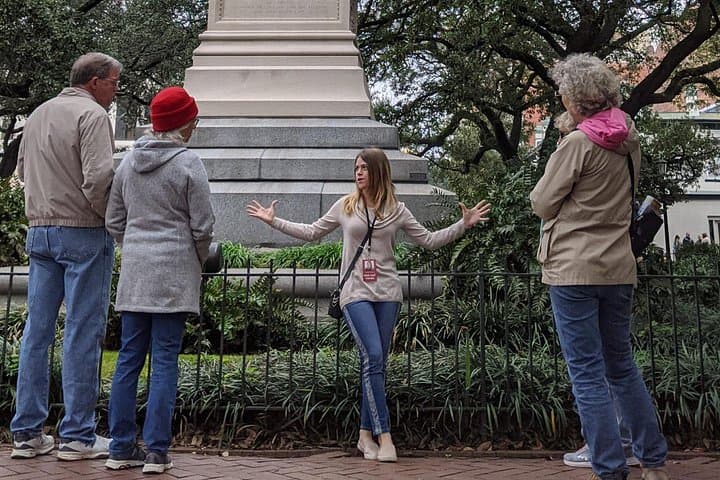
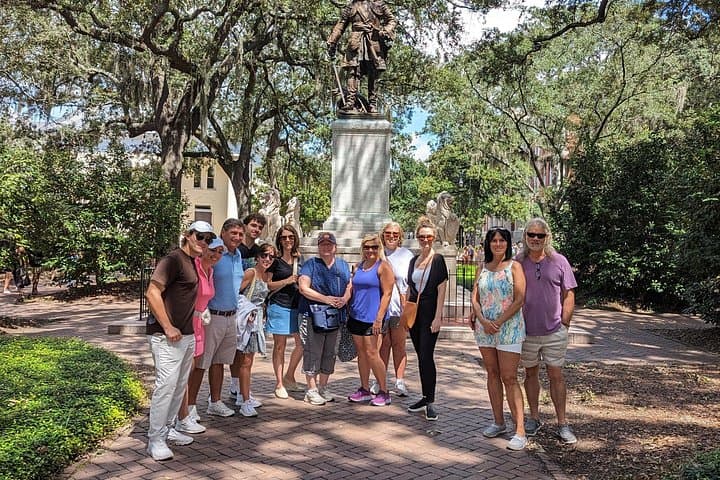
The guide stands at the James Oglethorpe statue in Chippewa Square and the city seems to hold its breath — live oaks lean in, Spanish moss brushing the air as the group sets off.
The guide stands at the James Oglethorpe statue in Chippewa Square and the city seems to hold its breath — live oaks lean in, Spanish moss brushing the air as the group sets off.
This 90-minute walking tour threads through Savannah’s grid of public squares and lesser-seen alleys, moving from colonial street lines to antebellum facades. The narrative shifts quickly: colonial trading posts, Revolutionary-era planning, the rise of rice and cotton wealth, and the hard lines of Civil War history. Guides draw on primary sources to animate characters and controversies, pointing out vaults, service tunnels, and architectural details that reveal class and labor histories.
Geologically, Savannah sits on coastal plain sediments; the flat terrain makes the tour easy on the legs but also explains the city’s marshy edge and historic river commerce. Culturally, expect frank stories about race, commerce, and politics alongside lighter anecdotes about local personalities and eccentric households.
Practical guidance is straightforward: the route is on city sidewalks and brick lanes, wheelchair-accessible in many sections but with occasional uneven stone. Tours run rain or shine; dress for sun and humidity in summer, layers in winter. Bring water, bug repellent, and comfortable shoes. Dogs on leash are welcome.
For travelers who want context, arrive a few minutes early to scan map plaques and ask about specific periods you care about — guides will tailor emphasis when possible. The walk is an efficient, evidence-based way to grasp Savannah’s visible past and its shadowed corners.