THE ADVENTURE COLLECTIVE® · Independent discovery and booking for outdoor travel

Experience Arusha National Park on foot with a guided walking safari that brings you close to giraffe, colobus monkeys and crater lakes. This full-day tour pairs expert rangers with low-impact travel—ideal for travelers who want intimate wildlife encounters and practical guidance for a safe, sustainable outing.
Experience Arusha National Park on foot with a guided walking safari that brings you close to giraffe, colobus monkeys and crater lakes. This full-day tour pairs expert rangers with low-impact travel—ideal for travelers who want intimate wildlife encounters and practical guidance for a safe, sustainable outing.
Dawn arrives across open grasslands and the silhouette of Mount Meru watches as a small group steps off the vehicle and onto a walking trail. The air is cool and the scrub crackles underfoot; ahead, a ranger points toward a pair of giraffe browsing acacias while black-and-white colobus monkeys call from higher branches. On a walking safari, the landscape moves at human pace and wildlife comes into view in a way a vehicle cannot match.
Verified experiences and guided adventures in the surrounding area.
Operated by Tarry Adventures and Safaris · Arusha, Arusha Region
Dawn arrives across open grasslands and the silhouette of Mount Meru watches as a small group steps off the vehicle and onto a walking trail. The air is cool and the scrub crackles underfoot; ahead, a ranger points toward a pair of giraffe browsing acacias while black-and-white colobus monkeys call from higher branches. On a walking safari, the landscape moves at human pace and wildlife comes into view in a way a vehicle cannot match.
Arusha National Park sits on volcanic soils shaped by Mount Meru and a string of crater lakes known as Momella. The park's mix of montane forest, grassy plains and alkaline lakes has supported Maasai pastoralism and Swahili trade routes for centuries; today it’s managed for conservation and low-impact tourism. Geology dictates the pace here—lava flows, crater rims and shallow lakes create the varied habitats you’ll visit.
Practical guidance: tours run for about 10 hours including park transfers, so expect long but paced days and bring layered clothing for morning chills and midday heat. Follow your ranger’s instructions—they read animal behavior and keep groups safe. Footwear with grip is essential: trails can be sandy, rocky or wet near lake edges. Hydration and sun protection matter; a light daypack holds water, lunch (usually provided), binoculars and camera.
Timing matters: morning walks offer the best chance of close encounters and cooler temperatures; late-day light is great for photography but animals are often more dispersed. Respect rules on distances and waste—this experience is built on low-impact presence and local stewardship.
easy.
10 hours.
Suitable for most fitness levels; expect several hours of walking over uneven ground and short, steady climbs.
Walking safaris prioritize close, calm encounters with a variety of species—giraffe, buffalo, monkeys and birds are common; sightings of elephant or buffalo may occur but are never guaranteed.
Yes—this operator rates the activity as suitable for all fitness levels; routes are paced by the ranger, but discuss any mobility limitations at booking so guides can adapt the itinerary.
Typical inclusions are private transport to/from Arusha, park entry, an experienced ranger, lunch and drinking water; confirm specific dietary needs when booking.
Always stay with the group, follow ranger instructions, avoid sudden movements or feeding animals, and keep a respectful distance even when wildlife seems calm.
The park preserves volcanic landscapes around Mount Meru and Momella Lakes and has long been a focus for conservation and low-impact visitation in the region.
Arusha National Park is managed to minimize footprint—stick to trails, pack out all waste and support guides who follow TANAPA rules to protect wildlife and habitats.
Tarry Adventures and Safaris operates guided outdoor trips and adventures with an emphasis on safety, stewardship, and memorable experiences.
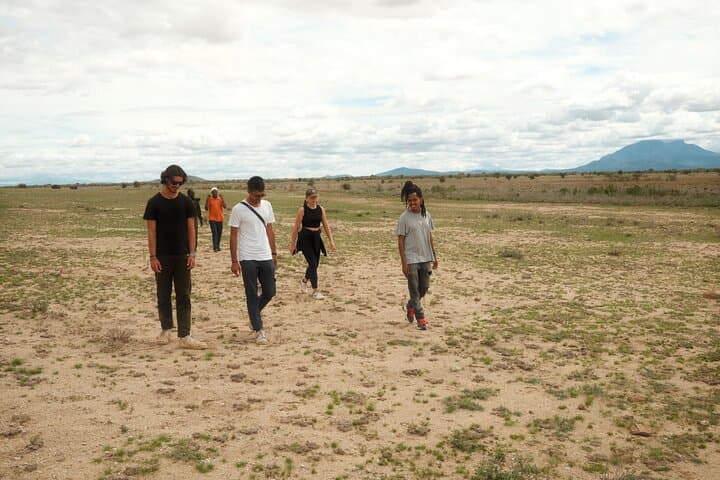
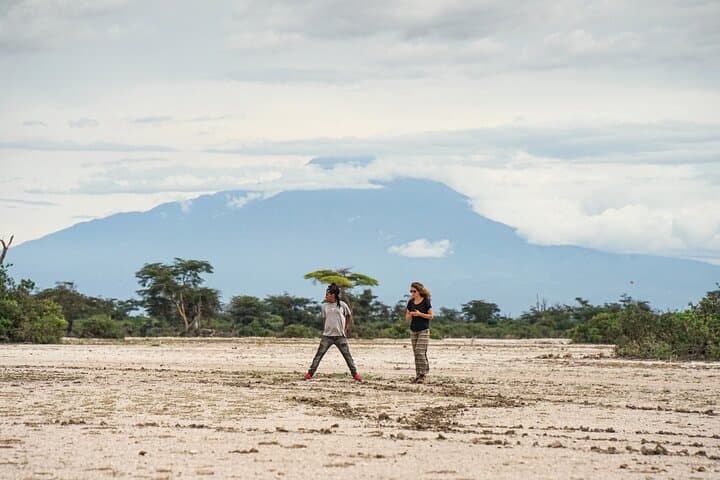
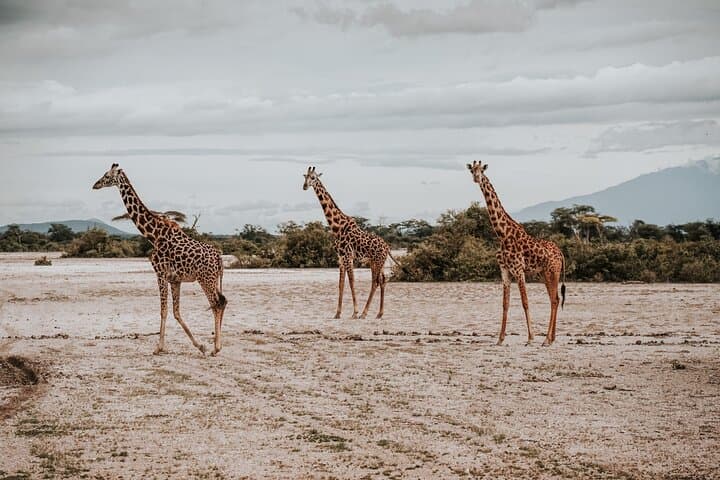
Dawn arrives across open grasslands and the silhouette of Mount Meru watches as a small group steps off the vehicle and onto a walking trail. The air is cool and the scrub crackles underfoot; ahead, a ranger points toward a pair of giraffe browsing acacias while black-and-white colobus monkeys call from higher branches. On a walking safari, the landscape moves at human pace and wildlife comes into view in a way a vehicle cannot match.
Dawn arrives across open grasslands and the silhouette of Mount Meru watches as a small group steps off the vehicle and onto a walking trail. The air is cool and the scrub crackles underfoot; ahead, a ranger points toward a pair of giraffe browsing acacias while black-and-white colobus monkeys call from higher branches. On a walking safari, the landscape moves at human pace and wildlife comes into view in a way a vehicle cannot match.
Arusha National Park sits on volcanic soils shaped by Mount Meru and a string of crater lakes known as Momella. The park's mix of montane forest, grassy plains and alkaline lakes has supported Maasai pastoralism and Swahili trade routes for centuries; today it’s managed for conservation and low-impact tourism. Geology dictates the pace here—lava flows, crater rims and shallow lakes create the varied habitats you’ll visit.
Practical guidance: tours run for about 10 hours including park transfers, so expect long but paced days and bring layered clothing for morning chills and midday heat. Follow your ranger’s instructions—they read animal behavior and keep groups safe. Footwear with grip is essential: trails can be sandy, rocky or wet near lake edges. Hydration and sun protection matter; a light daypack holds water, lunch (usually provided), binoculars and camera.
Timing matters: morning walks offer the best chance of close encounters and cooler temperatures; late-day light is great for photography but animals are often more dispersed. Respect rules on distances and waste—this experience is built on low-impact presence and local stewardship.