THE ADVENTURE COLLECTIVE® · Independent discovery and booking for outdoor travel

Explore Kamnik’s compact medieval core with a private guide who highlights Plečnik’s architectural touches, local craftsmen and castle views. This 90–120 minute walk pairs clear historical context with practical tips for getting the most out of a short cultural visit.
Explore Kamnik’s compact medieval core with a private guide who highlights Plečnik’s architectural touches, local craftsmen and castle views. This 90–120 minute walk pairs clear historical context with practical tips for getting the most out of a short cultural visit.
A narrow street opens onto a square where stone steps catch the light and the air smells faintly of wood smoke and fresh bread. Your guide leads you past small workshops and civic facades, pausing at an understated column, a reconfigured fountain and the austere lines of a Plečnik detail that hints at a broader architectural conversation with Ljubljana.
Verified experiences and guided adventures in the surrounding area.
Operated by Vitamia Explore Slovenia · Kamnik, Upper Carniola
A narrow street opens onto a square where stone steps catch the light and the air smells faintly of wood smoke and fresh bread. Your guide leads you past small workshops and civic facades, pausing at an understated column, a reconfigured fountain and the austere lines of a Plečnik detail that hints at a broader architectural conversation with Ljubljana.
Kamnik was one of central Slovenia’s most important medieval towns—its market, castle ruins and artisan districts grew where the river valleys meet alpine foothills. The town sits on layered limestone and flysch; the nearby slopes feed clear springs that helped shape local crafts and trade routes. Architect Jože Plečnik’s influence appears in measured proportions: elements adapted into civic buildings and private commissions rather than sweeping redesigns, making discovery a matter of close observation.
Culturally the town balances practical trades—shoe, metal and wood workshops—with festivals that remember market rhythms and mountain pastoral life. Expect cobbled lanes, hidden courtyards and viewpoints over the Kamnik Alps, where the landscape still asserts itself beyond the rooftops.
Practical guidance: this is a relaxed, largely flat walking tour of 90–120 minutes on paved and cobbled surfaces. Wear firm shoes, bring a light layer and a rain jacket in spring or autumn, and plan to start mid-morning for softer light and open craftspeople’s shops. Photography is welcome; small donations or purchases directly support local artisans. The tour works well as a half-day cultural excursion from Ljubljana or as a focused introduction if you’re based in town.
easy.
1.5–2 hours.
Suitable for most fitness levels; primarily walking on paved streets with occasional short steps
The private tour runs approximately 90–120 minutes, covering Kamnik’s old town and key Plečnik-related sites.
English is provided; guides may also offer German, Spanish or Russian—confirm at booking.
The walk is rated easy but uses cobbled streets and short flights of steps; those with limited mobility should check accessibility and mention needs when booking.
Meeting details are provided after booking—transport is not included, but Kamnik is a short drive or public-transport hop from Ljubljana.
Kamnik grew as a medieval market town with castle fortifications; its civic life and crafts were shaped by trade routes linking alpine pastures to plains.
Support local artisans and avoid photographing private interiors without permission; stick to public paths to protect fragile historic surfaces.
Vitamia Explore Slovenia operates guided outdoor trips and adventures with an emphasis on safety, stewardship, and memorable experiences.
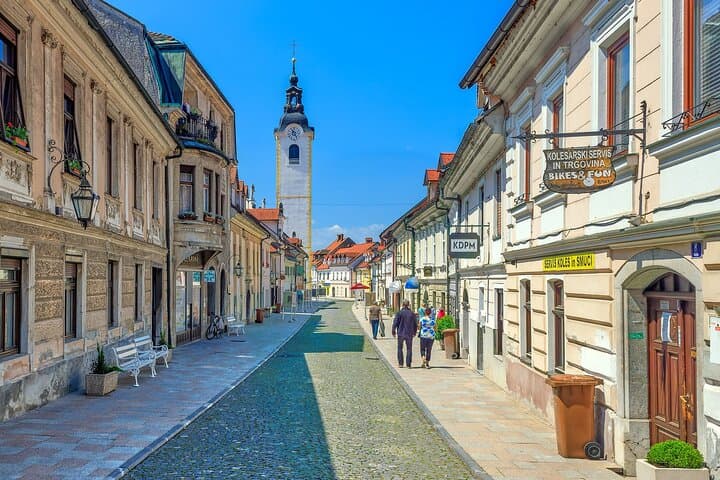
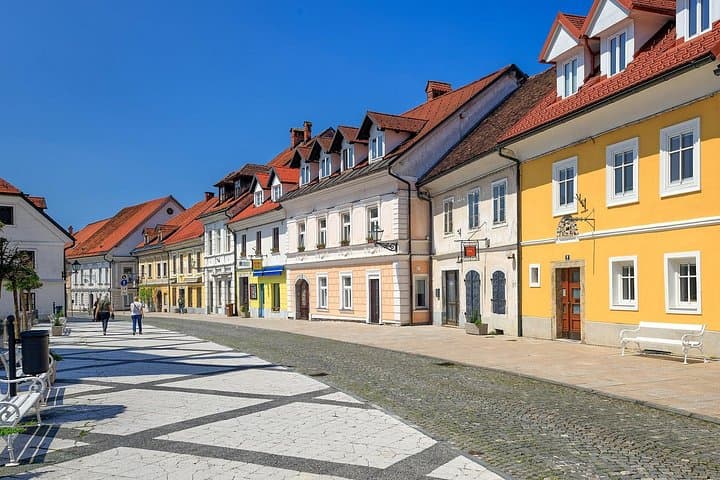
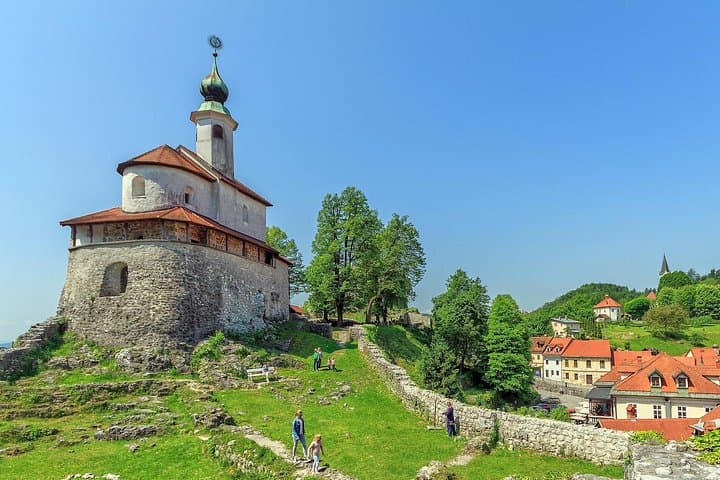
A narrow street opens onto a square where stone steps catch the light and the air smells faintly of wood smoke and fresh bread. Your guide leads you past small workshops and civic facades, pausing at an understated column, a reconfigured fountain and the austere lines of a Plečnik detail that hints at a broader architectural conversation with Ljubljana.
A narrow street opens onto a square where stone steps catch the light and the air smells faintly of wood smoke and fresh bread. Your guide leads you past small workshops and civic facades, pausing at an understated column, a reconfigured fountain and the austere lines of a Plečnik detail that hints at a broader architectural conversation with Ljubljana.
Kamnik was one of central Slovenia’s most important medieval towns—its market, castle ruins and artisan districts grew where the river valleys meet alpine foothills. The town sits on layered limestone and flysch; the nearby slopes feed clear springs that helped shape local crafts and trade routes. Architect Jože Plečnik’s influence appears in measured proportions: elements adapted into civic buildings and private commissions rather than sweeping redesigns, making discovery a matter of close observation.
Culturally the town balances practical trades—shoe, metal and wood workshops—with festivals that remember market rhythms and mountain pastoral life. Expect cobbled lanes, hidden courtyards and viewpoints over the Kamnik Alps, where the landscape still asserts itself beyond the rooftops.
Practical guidance: this is a relaxed, largely flat walking tour of 90–120 minutes on paved and cobbled surfaces. Wear firm shoes, bring a light layer and a rain jacket in spring or autumn, and plan to start mid-morning for softer light and open craftspeople’s shops. Photography is welcome; small donations or purchases directly support local artisans. The tour works well as a half-day cultural excursion from Ljubljana or as a focused introduction if you’re based in town.