THE ADVENTURE COLLECTIVE® · Independent discovery and booking for outdoor travel

Walk the stone alleys of Pano Lefkara, visit family lace workshops, then follow a quiet dirt road to Lefkara’s red-hued reservoir for panoramic views and easy lakeside hiking. This full-day route blends cultural stops with straightforward, scenic walking.
Walk the stone alleys of Pano Lefkara, visit family lace workshops, then follow a quiet dirt road to Lefkara’s red-hued reservoir for panoramic views and easy lakeside hiking. This full-day route blends cultural stops with straightforward, scenic walking.
A dry wind moves through the alleys of Pano Lefkara as walkers gather beneath low stone eaves—sunlight slices across whitewashed houses and the soft clack of sandals mixes with distant church bells. The route leads away from the village’s tight lanes and down a hardly used dirt road toward the manmade Lefkara lake, where hills painted in rusty reds rise and an islet punctuates the water.
Verified experiences and guided adventures in the surrounding area.
Operated by Cyprus Walks Etc · Pano Lefkara, Larnaca District
A dry wind moves through the alleys of Pano Lefkara as walkers gather beneath low stone eaves—sunlight slices across whitewashed houses and the soft clack of sandals mixes with distant church bells. The route leads away from the village’s tight lanes and down a hardly used dirt road toward the manmade Lefkara lake, where hills painted in rusty reds rise and an islet punctuates the water.
Pano Lefkara has long been a working village of artisans; Lefkaritika lace drew travelers even in the Renaissance—local lore credits Leonardo da Vinci with a visit. Geologically the area shifts from the pale, limestone-built village to oxidized, iron-stained formations around the reservoir. Cultural highlights include the central church and small family workshops where lace is woven by hand.
Practical guidance: expect an easy, largely flat dirt-road walk that can extend up to 10 km one way, though views concentrate in the first 5 km. Allow 6–8 hours for a relaxed pace with stops in the village; public restrooms and cafés are available in Pano Lefkara. Trails are unsigned; basic map awareness and a charged phone are useful. Bring sun protection, at least 2 liters of water, sturdy shoes for loose gravel, and respect private property—many lanes thread between homes and working yards.
Timing matters: mornings and late afternoons offer the best light and cooler temperatures. The walk is straightforward but rewarding—an intersection of craft, quiet village life, and arresting red-hued shorelines.
moderate.
6–8 hours.
Moderate fitness recommended—able to walk up to 10 km on dirt roads with occasional uneven ground.
The walking route along the dirt road can run up to 10 km each way, but the most scenic views are within the first 5 km.
Yes—Pano Lefkara has small family-run shops and ateliers where visitors can see and purchase traditional lace.
The terrain is generally easy but requires moderate fitness for full-day walking; children and older adults should plan for frequent rests and shorter turn-around distances.
Pano Lefkara has cafés and public restrooms; services near the lake are minimal, so use village facilities before setting out.
Pano Lefkara is historically known for Lefkaritika lace, a craft that drew visitors centuries ago; local tradition even links a visit by Leonardo da Vinci to the village’s reputation.
The dry landscape and riparian edges are sensitive—stay on established tracks, avoid disturbing flora, and carry out all waste to protect the fragile hillside scrub and water quality.
Cyprus Walks Etc operates guided outdoor trips and adventures with an emphasis on safety, stewardship, and memorable experiences.
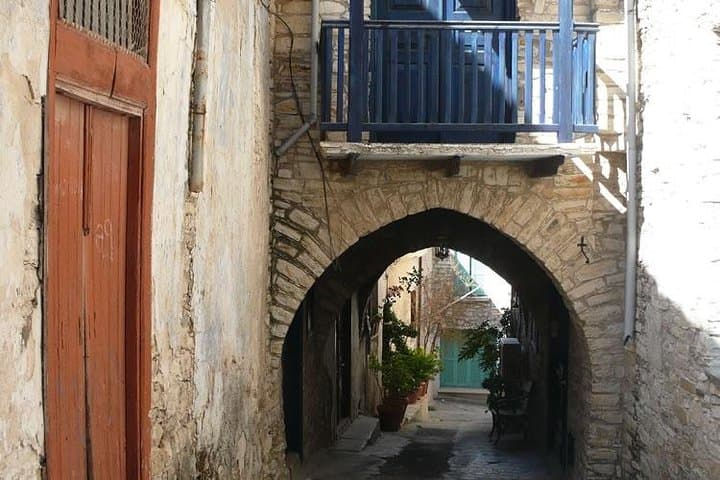
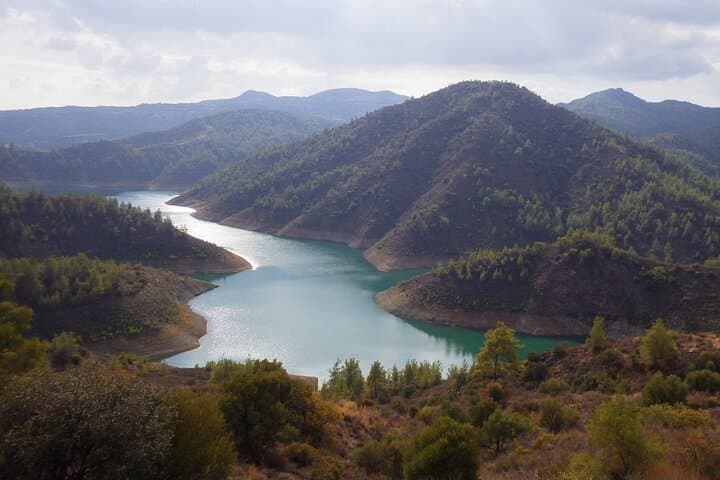
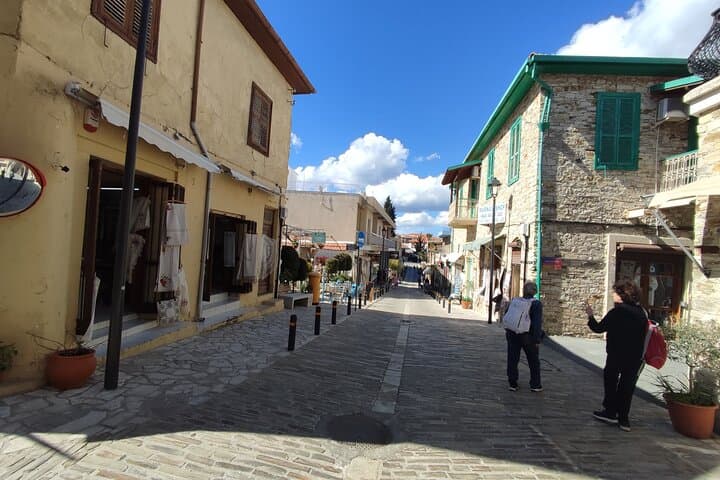
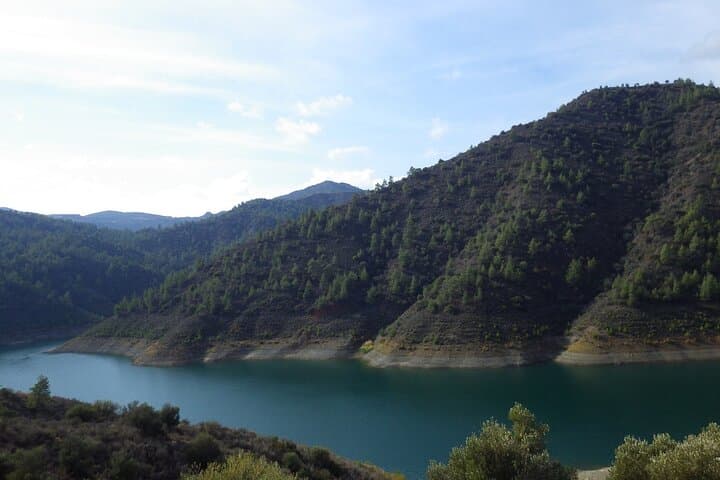
A dry wind moves through the alleys of Pano Lefkara as walkers gather beneath low stone eaves—sunlight slices across whitewashed houses and the soft clack of sandals mixes with distant church bells. The route leads away from the village’s tight lanes and down a hardly used dirt road toward the manmade Lefkara lake, where hills painted in rusty reds rise and an islet punctuates the water.
A dry wind moves through the alleys of Pano Lefkara as walkers gather beneath low stone eaves—sunlight slices across whitewashed houses and the soft clack of sandals mixes with distant church bells. The route leads away from the village’s tight lanes and down a hardly used dirt road toward the manmade Lefkara lake, where hills painted in rusty reds rise and an islet punctuates the water.
Pano Lefkara has long been a working village of artisans; Lefkaritika lace drew travelers even in the Renaissance—local lore credits Leonardo da Vinci with a visit. Geologically the area shifts from the pale, limestone-built village to oxidized, iron-stained formations around the reservoir. Cultural highlights include the central church and small family workshops where lace is woven by hand.
Practical guidance: expect an easy, largely flat dirt-road walk that can extend up to 10 km one way, though views concentrate in the first 5 km. Allow 6–8 hours for a relaxed pace with stops in the village; public restrooms and cafés are available in Pano Lefkara. Trails are unsigned; basic map awareness and a charged phone are useful. Bring sun protection, at least 2 liters of water, sturdy shoes for loose gravel, and respect private property—many lanes thread between homes and working yards.
Timing matters: mornings and late afternoons offer the best light and cooler temperatures. The walk is straightforward but rewarding—an intersection of craft, quiet village life, and arresting red-hued shorelines.