THE ADVENTURE COLLECTIVE® · Independent discovery and booking for outdoor travel

Explore Mljet’s salt lakes on foot and by solar boat. Follow shaded trails to the Benedictine monastery on St. Mary’s islet, watch for peregrine falcons, and learn the island’s karst geology on a calm half-day guided tour.
Explore Mljet’s salt lakes on foot and by solar boat. Follow shaded trails to the Benedictine monastery on St. Mary’s islet, watch for peregrine falcons, and learn the island’s karst geology on a calm half-day guided tour.
You step off the ferry onto the small pier at Pomena and the island exhales: pine and holm oak shade narrow trails while the salt lake mirrors the sky.
Verified experiences and guided adventures in the surrounding area.
Operated by Petar · Pomena, Dubrovnik-Neretva County
You step off the ferry onto the small pier at Pomena and the island exhales: pine and holm oak shade narrow trails while the salt lake mirrors the sky.
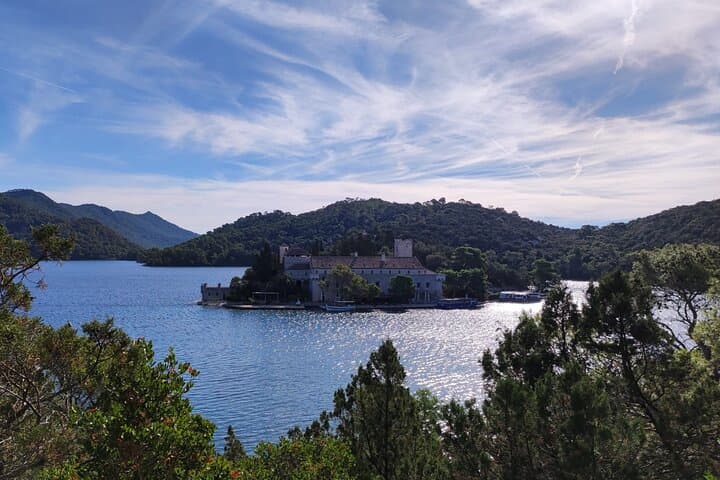
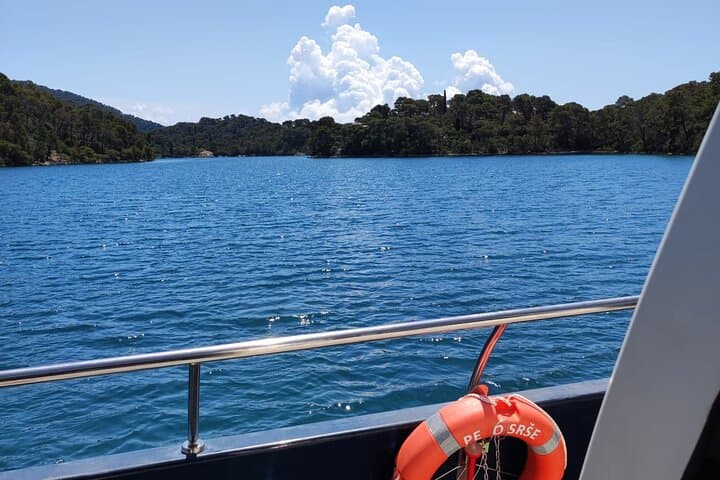
The guided walk moves at a human pace—easy forest steps down to the shore of Malo Jezero, then along trails that thread between Veliko Jezero’s reed-lined margins. Midway, a quiet solar boat slips across glassy water to Saint Mary’s islet, where the 12th‑century Benedictine monastery stands as a plain stone marker of medieval monastic life.
Mljet’s landscape is karst at work: limestone bedrock shaped by millennia of sea and subterranean channels, producing two inland bays connected to the Adriatic. The island’s culture is small-scale and maritime — fishermen, olive groves, and a tourism rhythm that still favors quiet afternoons over busy promenades.
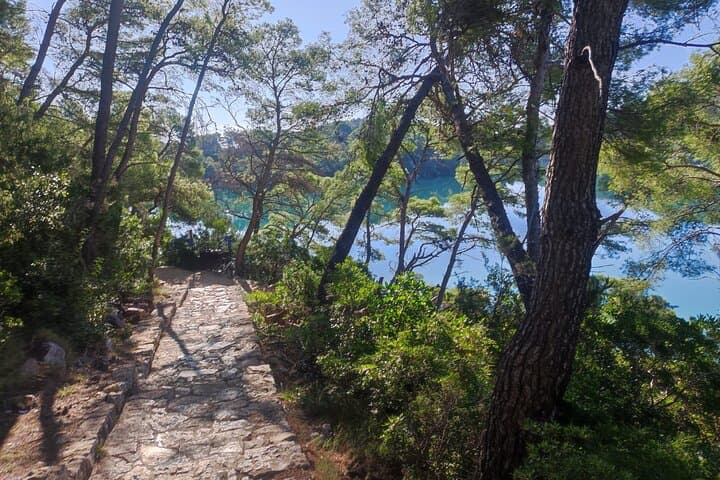
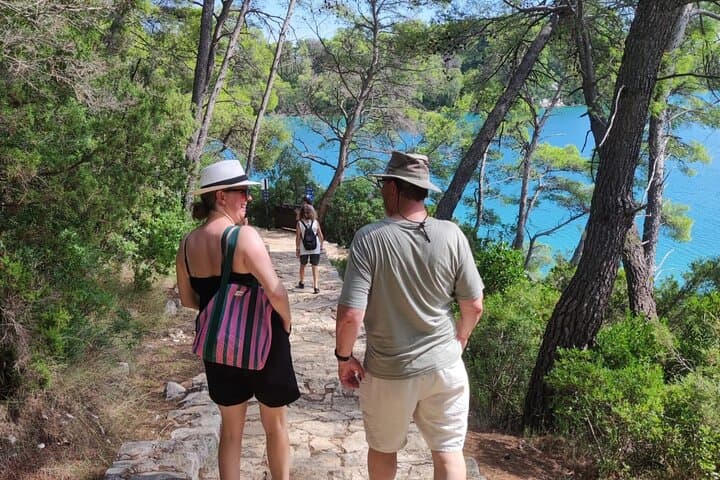
Practical guidance is straightforward. Trails are mostly packed-earth and shaded; expect some roots and low stone steps rather than steep climbs. The guide provides context on flora and fauna and handles boat logistics, but park admission is separate. Solar-powered boats minimize noise and disturbance, making birdwatching possible during crossings.
Plan for 2–3 hours on a standard half-day tour: stable footwear, sun protection, and a filled water bottle make the walk comfortable. Morning or late‑afternoon departures avoid midday heat and improve light for photos. Respect marked paths and nesting seasons — Mljet’s fragile habitats respond quickly to damage. With a measured pace and basic preparation, this tour is a compact, low-impact way to experience one of Croatia’s quieter national parks.
moderate.
2–3 hours.
Suitable for people with basic fitness: able to walk for up to 3 hours on uneven forest paths and short shorelines
No — the licensed local guide is included, but national park entry fees are paid separately at the park entrance or on arrival.
Regular catamaran and car-ferry services connect Mljet with Dubrovnik and Pelješac; Pomena is accessible from the primary island ferry terminals and local transfers.
Yes — the route is described as physically easy and suitable for varied fitness levels, though people should be comfortable walking up to three hours with occasional steps.
Solar boats are quiet and low-impact but accessibility varies; contact the operator in advance to confirm boarding assistance and vessel configuration.
Mljet’s Benedictine presence dates to the 12th century; monks cultivated olives and maintained the island’s small maritime economy for centuries.
Mljet is a protected national park—use marked trails, avoid disturbing nesting birds, and support low-impact options like the solar boat to reduce pollution and noise.
Petar operates guided outdoor trips and adventures with an emphasis on safety, stewardship, and memorable experiences.
You step off the ferry onto the small pier at Pomena and the island exhales: pine and holm oak shade narrow trails while the salt lake mirrors the sky.
You step off the ferry onto the small pier at Pomena and the island exhales: pine and holm oak shade narrow trails while the salt lake mirrors the sky.
The guided walk moves at a human pace—easy forest steps down to the shore of Malo Jezero, then along trails that thread between Veliko Jezero’s reed-lined margins. Midway, a quiet solar boat slips across glassy water to Saint Mary’s islet, where the 12th‑century Benedictine monastery stands as a plain stone marker of medieval monastic life.
Mljet’s landscape is karst at work: limestone bedrock shaped by millennia of sea and subterranean channels, producing two inland bays connected to the Adriatic. The island’s culture is small-scale and maritime — fishermen, olive groves, and a tourism rhythm that still favors quiet afternoons over busy promenades.
Practical guidance is straightforward. Trails are mostly packed-earth and shaded; expect some roots and low stone steps rather than steep climbs. The guide provides context on flora and fauna and handles boat logistics, but park admission is separate. Solar-powered boats minimize noise and disturbance, making birdwatching possible during crossings.
Plan for 2–3 hours on a standard half-day tour: stable footwear, sun protection, and a filled water bottle make the walk comfortable. Morning or late‑afternoon departures avoid midday heat and improve light for photos. Respect marked paths and nesting seasons — Mljet’s fragile habitats respond quickly to damage. With a measured pace and basic preparation, this tour is a compact, low-impact way to experience one of Croatia’s quieter national parks.