THE ADVENTURE COLLECTIVE® · Independent discovery and booking for outdoor travel

Walk through the streets where Dallas’s history unfolded — from the founder’s cabin to Dealey Plaza and the Grassy Knoll. This two-hour guided route pairs concise history with tangible cityscapes and practical tips for timing and comfort.
Walk through the streets where Dallas’s history unfolded — from the founder’s cabin to Dealey Plaza and the Grassy Knoll. This two-hour guided route pairs concise history with tangible cityscapes and practical tips for timing and comfort.
You meet under the rough-hewn planks of the John Neely Bryan Cabin, the city breathing around you — pavement, distant traffic, and the occasional gull over the Trinity River daring you to look up. For two hours the guide moves the group through compact city blocks, past the Grassy Knoll, the plaza where history held its breath, and into quieter courtyards that recall Dallas’s frontier years.
Verified experiences and guided adventures in the surrounding area.
Operated by Opatrip.com USA · Dallas, Texas
You meet under the rough-hewn planks of the John Neely Bryan Cabin, the city breathing around you — pavement, distant traffic, and the occasional gull over the Trinity River daring you to look up. For two hours the guide moves the group through compact city blocks, past the Grassy Knoll, the plaza where history held its breath, and into quieter courtyards that recall Dallas’s frontier years.
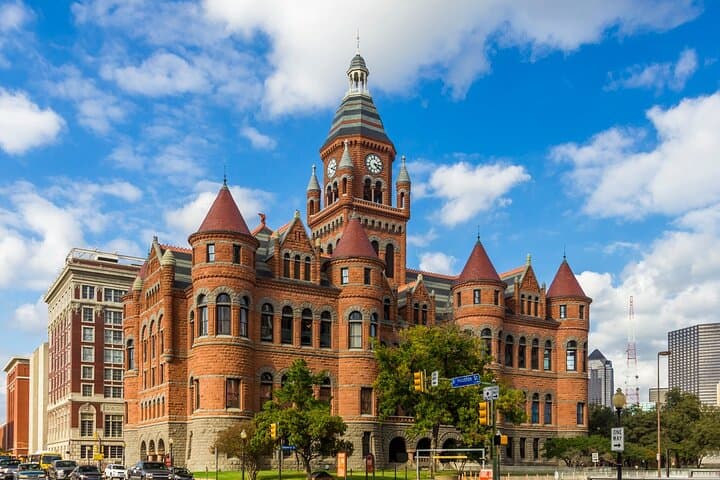
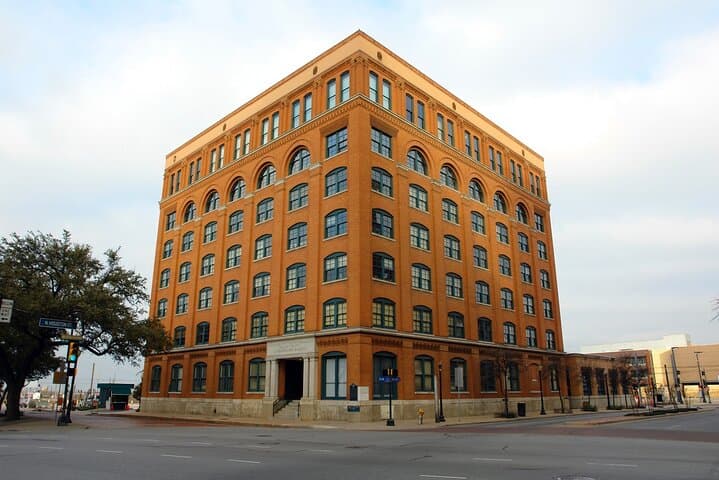
Dallas sits on the Blackland Prairie where clay soils and flat plains shaped early settlement and cattle drives; nearby the Trinity River carved a transportation corridor that pulled commerce and culture inward. The tour threads civic architecture, the courthouse’s carved stone, and memorials to national trauma with stories of pioneers, the city’s founding by John Neely Bryan, and the rise of a metropolitan center that traded ranching for finance and culture.
Expect paved sidewalks, brief stair sections, and frequent stops for storytelling and photos. The guide frames the facts — dates, people, controversies — with measured local color: the merchants who built the West End, the veterans who shaped public memory, and how a single street corner altered global politics.
Practical side: take sun protection, carry water, and plan for summer heat; mornings and late afternoons are cooler and less crowded. The pace is gentle — accessible for most — but city navigation means paying attention to traffic signals and crossing lanes. End the walk at Wild Bill’s Western Store for a literal touch of cowboy culture and a chance to ask local questions. This is a walking primer to Dallas’s public spaces: historical, human, and unvarnished.
easy.
2 hours.
Suitable for most fitness levels; requires standing and walking on sidewalks for up to two hours
The tour lasts about two hours and covers roughly 1.5–2 miles of mostly flat, paved city sidewalks with frequent stops.
Much of the route is on paved sidewalks and is generally accessible, but there are a few curbs and narrow spots; contact the operator to confirm specific accessibility needs.
No — this is a walking tour that focuses on public spaces and exteriors; any museum entries are not included unless specified.
Bring water, wear a hat and sunscreen, and choose early-morning or late-afternoon tour times to minimize exposure to peak heat.
John Neely Bryan founded Dallas in the 1840s; the city later became a transportation and commercial hub along the Trinity River corridor.
City tours have a light footprint, but visitors should respect memorials, stay on sidewalks, and avoid leaving litter—historic sites rely on civic stewardship.
Opatrip.com USA operates guided outdoor trips and adventures with an emphasis on safety, stewardship, and memorable experiences.


You meet under the rough-hewn planks of the John Neely Bryan Cabin, the city breathing around you — pavement, distant traffic, and the occasional gull over the Trinity River daring you to look up. For two hours the guide moves the group through compact city blocks, past the Grassy Knoll, the plaza where history held its breath, and into quieter courtyards that recall Dallas’s frontier years.
You meet under the rough-hewn planks of the John Neely Bryan Cabin, the city breathing around you — pavement, distant traffic, and the occasional gull over the Trinity River daring you to look up. For two hours the guide moves the group through compact city blocks, past the Grassy Knoll, the plaza where history held its breath, and into quieter courtyards that recall Dallas’s frontier years.
Dallas sits on the Blackland Prairie where clay soils and flat plains shaped early settlement and cattle drives; nearby the Trinity River carved a transportation corridor that pulled commerce and culture inward. The tour threads civic architecture, the courthouse’s carved stone, and memorials to national trauma with stories of pioneers, the city’s founding by John Neely Bryan, and the rise of a metropolitan center that traded ranching for finance and culture.
Expect paved sidewalks, brief stair sections, and frequent stops for storytelling and photos. The guide frames the facts — dates, people, controversies — with measured local color: the merchants who built the West End, the veterans who shaped public memory, and how a single street corner altered global politics.
Practical side: take sun protection, carry water, and plan for summer heat; mornings and late afternoons are cooler and less crowded. The pace is gentle — accessible for most — but city navigation means paying attention to traffic signals and crossing lanes. End the walk at Wild Bill’s Western Store for a literal touch of cowboy culture and a chance to ask local questions. This is a walking primer to Dallas’s public spaces: historical, human, and unvarnished.