THE ADVENTURE COLLECTIVE® · Independent discovery and booking for outdoor travel

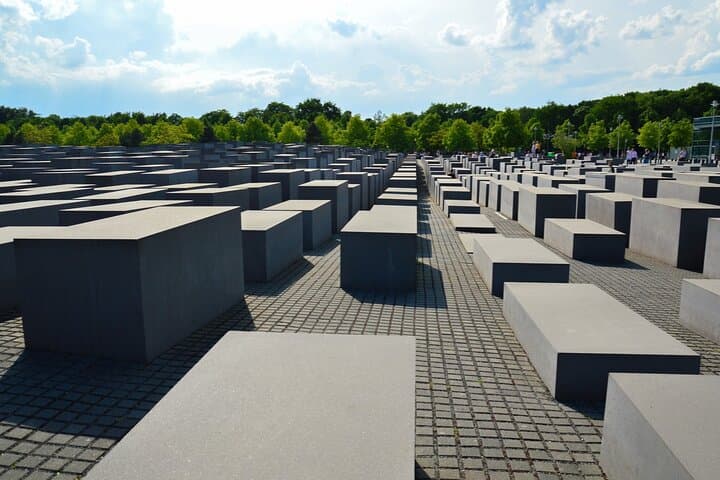
A self-guided puzzle walk through central Berlin that turns iconic WWII and Cold War sites into a city game. Solve location-based challenges at Alexanderplatz, Bebelplatz, and the Memorial to the Murdered Jews of Europe while moving at your own pace.
A self-guided puzzle walk through central Berlin that turns iconic WWII and Cold War sites into a city game. Solve location-based challenges at Alexanderplatz, Bebelplatz, and the Memorial to the Murdered Jews of Europe while moving at your own pace.
You start at the Urania World Clock in Alexanderplatz, phone in hand, the city breathing around you — tram bells, cyclists, the distant hum of the Spree. The app gives the first riddle and the ordinary square becomes a map of choices: follow a clue to the Rathaus, thread between the churches at Gendarmenmarkt, or stand quietly at Bebelplatz where books were burned.
Verified experiences and guided adventures in the surrounding area.
Operated by Questo · Berlin, Berlin
You start at the Urania World Clock in Alexanderplatz, phone in hand, the city breathing around you — tram bells, cyclists, the distant hum of the Spree. The app gives the first riddle and the ordinary square becomes a map of choices: follow a clue to the Rathaus, thread between the churches at Gendarmenmarkt, or stand quietly at Bebelplatz where books were burned.
This self-guided city game threads through Berlin’s physical history: pre-war Prussian architecture, GDR-era public spaces, and the scars left by Allied bombing and the Third Reich’s final days. Geologically the route sits on the Berlin glacial plain beside the Spree, streets layered over centuries of rebuilding. Culturally, Mitte shifts from institutional power to memorial practice — the Memorial to the Murdered Jews of Europe and the site of Hitler’s bunker are interpreted spaces that demand respect and context rather than spectacle.
Expect 45–90 minutes of walking, short puzzles that need observation rather than specialist knowledge, and pockets of quiet where plaques and fountains reveal stories. Practicalities: download the game (it runs offline), wear supportive shoes for cobbles and short flights of steps, and carry a charged phone and a small power bank. Use public transit to reach Alexanderplatz and aim for early morning or late afternoon to avoid tour-group peaks.
Play with curiosity and restraint: the experience mixes outdoor exploration, history, and a puzzle mechanic — an urban walk that asks you to read the city as much as to move through it.
easy.
45–90 minutes.
Low fitness required; mostly standing and easy urban walking for under two hours
No — this is self-guided. The app provides clues and background so you can explore at your own pace without a guide.
Plan for about 45–90 minutes; the game lists a 60-minute benchmark but you can pause and resume anytime.
Many central streets and squares are accessible, but cobblestones and occasional stairs may present challenges — bring a companion if mobility assistance is needed.
Yes; the content is family-friendly, though some historic sites cover difficult topics and may require parental context.
The route traces central sites tied to WWII and the Nazi regime’s collapse, plus later GDR-era public space decisions—places where politics and memory intersect in the built environment.
These are commemorative and urban spaces; minimize impact by staying on paths, not disturbing memorial installations, and disposing of litter responsibly.
Questo operates guided outdoor trips and adventures with an emphasis on safety, stewardship, and memorable experiences.
You start at the Urania World Clock in Alexanderplatz, phone in hand, the city breathing around you — tram bells, cyclists, the distant hum of the Spree. The app gives the first riddle and the ordinary square becomes a map of choices: follow a clue to the Rathaus, thread between the churches at Gendarmenmarkt, or stand quietly at Bebelplatz where books were burned.
You start at the Urania World Clock in Alexanderplatz, phone in hand, the city breathing around you — tram bells, cyclists, the distant hum of the Spree. The app gives the first riddle and the ordinary square becomes a map of choices: follow a clue to the Rathaus, thread between the churches at Gendarmenmarkt, or stand quietly at Bebelplatz where books were burned.
This self-guided city game threads through Berlin’s physical history: pre-war Prussian architecture, GDR-era public spaces, and the scars left by Allied bombing and the Third Reich’s final days. Geologically the route sits on the Berlin glacial plain beside the Spree, streets layered over centuries of rebuilding. Culturally, Mitte shifts from institutional power to memorial practice — the Memorial to the Murdered Jews of Europe and the site of Hitler’s bunker are interpreted spaces that demand respect and context rather than spectacle.
Expect 45–90 minutes of walking, short puzzles that need observation rather than specialist knowledge, and pockets of quiet where plaques and fountains reveal stories. Practicalities: download the game (it runs offline), wear supportive shoes for cobbles and short flights of steps, and carry a charged phone and a small power bank. Use public transit to reach Alexanderplatz and aim for early morning or late afternoon to avoid tour-group peaks.
Play with curiosity and restraint: the experience mixes outdoor exploration, history, and a puzzle mechanic — an urban walk that asks you to read the city as much as to move through it.