THE ADVENTURE COLLECTIVE® · Independent discovery and booking for outdoor travel

Ride along Walker Bay's white sands where Southern right whales come close to shore. This three-hour guided beach canter from De Kelders offers high-chance whale sightings with firm riding beaches and dramatic limestone coastline.
Ride along Walker Bay's white sands where Southern right whales come close to shore. This three-hour guided beach canter from De Kelders offers high-chance whale sightings with firm riding beaches and dramatic limestone coastline.
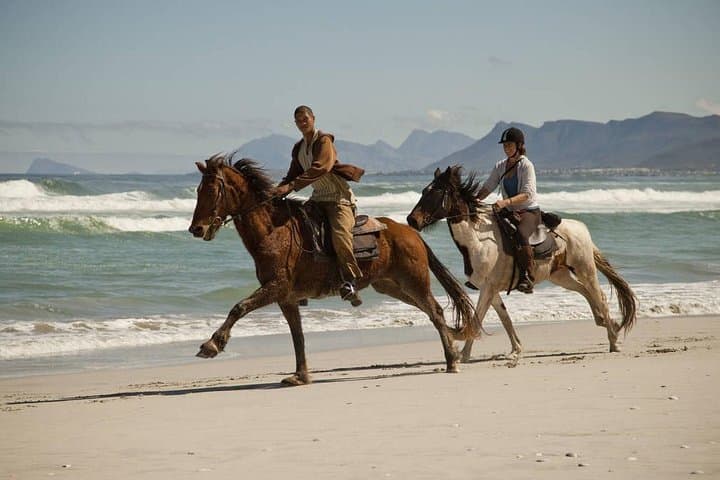
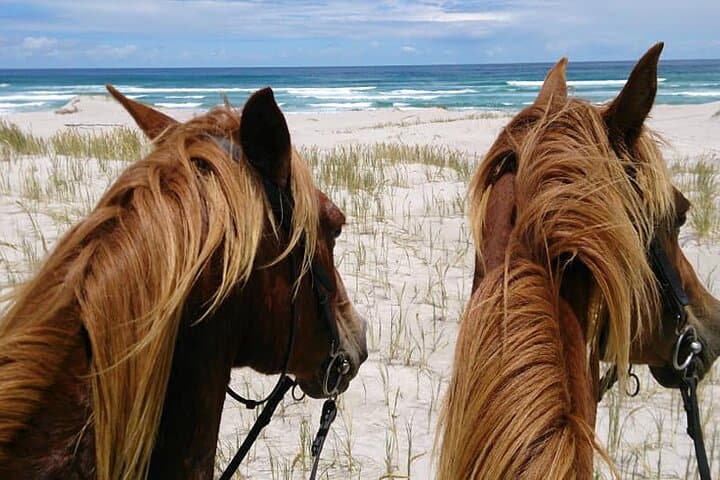
The sand gives under the horse's hooves and the Atlantic breathes salt across your face as you ride parallel to a shoreline where whales routinely come within meters.
Verified experiences and guided adventures in the surrounding area.
Operated by African Horse Company · Gansbaai, Western Cape
The sand gives under the horse's hooves and the Atlantic breathes salt across your face as you ride parallel to a shoreline where whales routinely come within meters.
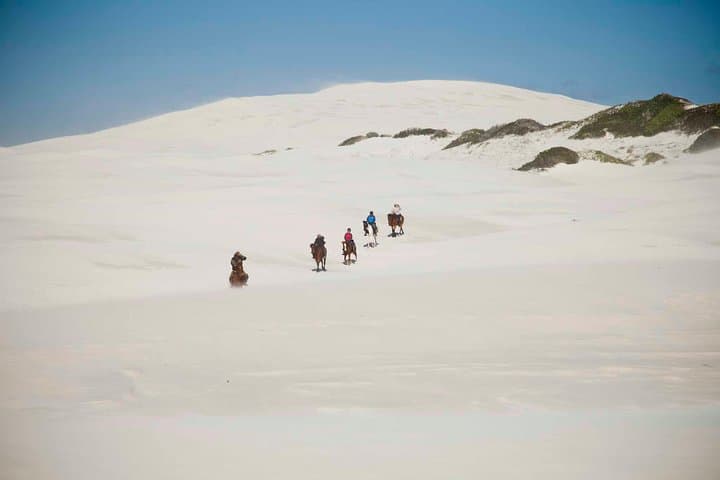
This beach ride along Walker Bay and the De Kelders coastline threads white sand, limestone flats and broken, rocky shelves—terrain shaped by the South Atlantic's slow grinding and the ancient uplift of the Cape Fold Belt. The area has long been a meeting place between fisher communities and migratory whales; by the 19th century the region moved from shore-based whaling to protection and tourism as populations recovered.
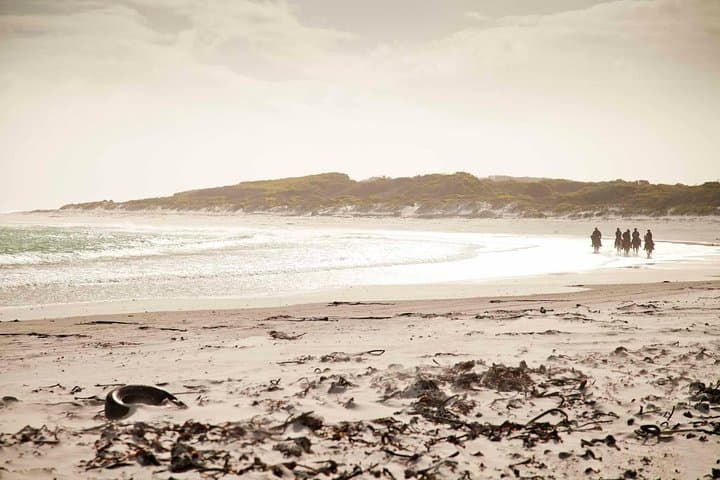
Locally, this stretch is part of the Walker Bay Conservancy and a recognised whale sanctuary—Southern right whales migrate here from June to December to calve and play in the surf. The shore itself alternates between firm, canter-friendly beaches and tighter zones where limestone cliffs pin the surf.
Expect a mix of walking, trotting and sustained canters across hard-packed sand and occasional softer patches at the tide line. Guides set the pace; horses and helmets are provided. Bring binoculars or a camera with a decent zoom—the whales' spy-hops and breaches are the main show, and seabirds ride the updrafts off the cliffs.
Practical notes: this is a three- to four-hour outing requiring good balance and confidence at speed; not recommended for back or heart conditions, pregnant riders, or complete beginners. Dress in layers, protect against wind and spray, hydrate before you mount, and plan your visit during the whale season for the best chance of close encounters.
challenging.
3–3.5 hours.
Should be comfortable riding for multiple hours and able to mount/dismount independently; good balance and core strength help for cantering on sand.
Yes—participants should be comfortable at walk, trot and canter; guides manage pace but this is not for absolute beginners.
Operators typically accept adults and older teens; bookings ask for height and weight so horses can be matched safely—check specific limits when booking.
No guarantee—June to December offers the highest likelihood, but sightings depend on natural behavior and weather; guides maximize chances by riding proven lookout sections.
Yes—helmets and horses are supplied, and guides handle tack; bring your own gloves and appropriate footwear for comfort.
Walker Bay's coastline has a fishing and coastal village history; 19th-century shore-whaling gave way to protection as whales returned and ecotourism developed.
The Walker Bay Conservancy and local marine protections regulate access to sensitive shorelines and promote responsible whale-watching practices to minimize disturbance.
African Horse Company operates guided outdoor trips and adventures with an emphasis on safety, stewardship, and memorable experiences.
The sand gives under the horse's hooves and the Atlantic breathes salt across your face as you ride parallel to a shoreline where whales routinely come within meters.
The sand gives under the horse's hooves and the Atlantic breathes salt across your face as you ride parallel to a shoreline where whales routinely come within meters.
This beach ride along Walker Bay and the De Kelders coastline threads white sand, limestone flats and broken, rocky shelves—terrain shaped by the South Atlantic's slow grinding and the ancient uplift of the Cape Fold Belt. The area has long been a meeting place between fisher communities and migratory whales; by the 19th century the region moved from shore-based whaling to protection and tourism as populations recovered.
Locally, this stretch is part of the Walker Bay Conservancy and a recognised whale sanctuary—Southern right whales migrate here from June to December to calve and play in the surf. The shore itself alternates between firm, canter-friendly beaches and tighter zones where limestone cliffs pin the surf.
Expect a mix of walking, trotting and sustained canters across hard-packed sand and occasional softer patches at the tide line. Guides set the pace; horses and helmets are provided. Bring binoculars or a camera with a decent zoom—the whales' spy-hops and breaches are the main show, and seabirds ride the updrafts off the cliffs.
Practical notes: this is a three- to four-hour outing requiring good balance and confidence at speed; not recommended for back or heart conditions, pregnant riders, or complete beginners. Dress in layers, protect against wind and spray, hydrate before you mount, and plan your visit during the whale season for the best chance of close encounters.