THE ADVENTURE COLLECTIVE® · Independent discovery and booking for outdoor travel

Trace Miguel de Unamuno’s footsteps through Salamanca on a self-guided, puzzle-driven city quest. Solve clues at the Roman bridge, Casa Lis, and the University while soaking up centuries of history and local life.
Trace Miguel de Unamuno’s footsteps through Salamanca on a self-guided, puzzle-driven city quest. Solve clues at the Roman bridge, Casa Lis, and the University while soaking up centuries of history and local life.
Morning light gilds the stone of Plaza Mayor as you unlock the first clue on your phone and step into Salamanca’s slow, storied rhythm.
Verified experiences and guided adventures in the surrounding area.
Operated by Questo · Salamanca, Castile and León
Morning light gilds the stone of Plaza Mayor as you unlock the first clue on your phone and step into Salamanca’s slow, storied rhythm.
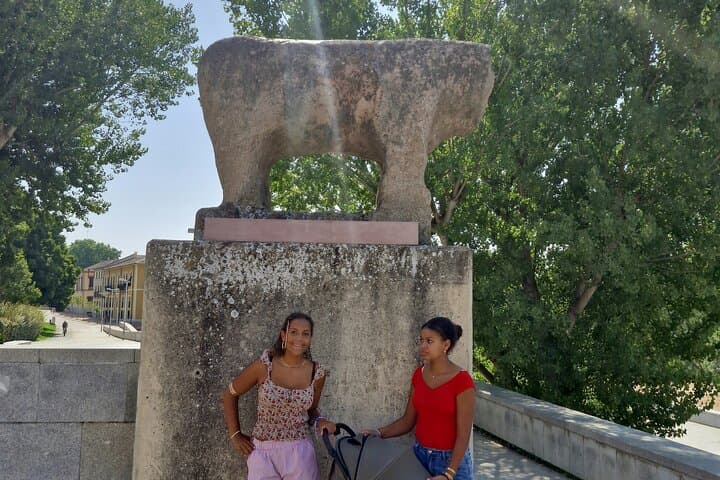
This self-guided Unamuno-inspired quest stitches together 10–15 puzzles and GPS waypoints through the city’s historic core—from the Puente Romano and its guardian Verraco to the frog on the University façade and the stained glass of Casa Lis. The narrative traces Miguel de Unamuno’s life here: an academic, writer, and public voice whose ideas shaped modern Spanish thought. The route threads Roman engineering, medieval scholarship, and Spanish Baroque architecture; the Tormes River and the Roman bridge remind visitors this city has been a crossroads since antiquity.
Culturally, the game leans into Salamanca’s student energy and literary traditions, pausing at Huerto de Calixto y Melibea and the Cueva de Salamanca where legend and literature meet. You’ll move on mostly paved streets, short stair sections near cathedral viewpoints, and pedestrian plazas—no special gear required, but a charged phone and comfortable shoes matter.
Practical guidance: plan 60–120 minutes depending on pace and pauses; start in the morning to avoid crowds at Plaza Mayor; use local cafés for intermittent rests; follow the GPS but allow time to read plaques and enter courtyards. The experience is flexible—pause and resume any time—and accessible for most fitness levels, including families with strollers. Respect quiet hours around religious sites and bring a power bank for uninterrupted navigation. This is a reflective urban walk that rewards curiosity as much as speed.
easy.
1.5 hours (90 minutes).
Suitable for most fitness levels; requires steady walking on paved surfaces and occasional short stairs
No—this is a self-guided, instant-start experience with a mobile access code, so you can begin whenever convenient within operating hours.
Yes; the itinerary notes stroller accessibility and is suitable for families, though cobblestones may be bumpy in places.
Yes—the mobile platform allows you to pause the game and resume later from your last waypoint.
Full refund is available if you cancel at least 24 hours before the scheduled time according to the standard cancellation policy.
Salamanca grew as a Roman crossing on the Tormes River and later as a medieval university center; Unamuno served as rector of the University and shaped its intellectual identity in the early 20th century.
Historic stone façades and narrow streets are sensitive to wear—use marked paths, avoid climbing on monuments, and support local preservation efforts by following site rules.
Questo operates guided outdoor trips and adventures with an emphasis on safety, stewardship, and memorable experiences.


Morning light gilds the stone of Plaza Mayor as you unlock the first clue on your phone and step into Salamanca’s slow, storied rhythm.
Morning light gilds the stone of Plaza Mayor as you unlock the first clue on your phone and step into Salamanca’s slow, storied rhythm.
This self-guided Unamuno-inspired quest stitches together 10–15 puzzles and GPS waypoints through the city’s historic core—from the Puente Romano and its guardian Verraco to the frog on the University façade and the stained glass of Casa Lis. The narrative traces Miguel de Unamuno’s life here: an academic, writer, and public voice whose ideas shaped modern Spanish thought. The route threads Roman engineering, medieval scholarship, and Spanish Baroque architecture; the Tormes River and the Roman bridge remind visitors this city has been a crossroads since antiquity.
Culturally, the game leans into Salamanca’s student energy and literary traditions, pausing at Huerto de Calixto y Melibea and the Cueva de Salamanca where legend and literature meet. You’ll move on mostly paved streets, short stair sections near cathedral viewpoints, and pedestrian plazas—no special gear required, but a charged phone and comfortable shoes matter.
Practical guidance: plan 60–120 minutes depending on pace and pauses; start in the morning to avoid crowds at Plaza Mayor; use local cafés for intermittent rests; follow the GPS but allow time to read plaques and enter courtyards. The experience is flexible—pause and resume any time—and accessible for most fitness levels, including families with strollers. Respect quiet hours around religious sites and bring a power bank for uninterrupted navigation. This is a reflective urban walk that rewards curiosity as much as speed.