THE ADVENTURE COLLECTIVE® · Independent discovery and booking for outdoor travel

Trace St. Paul’s footsteps on a 6–7 hour minibus pilgrimage from Athens to Ancient Corinth. See the Temple of Apollo, the Isthmus Canal and the early Christian sites with time to explore ruins and the museum independently.
Trace St. Paul’s footsteps on a 6–7 hour minibus pilgrimage from Athens to Ancient Corinth. See the Temple of Apollo, the Isthmus Canal and the early Christian sites with time to explore ruins and the museum independently.
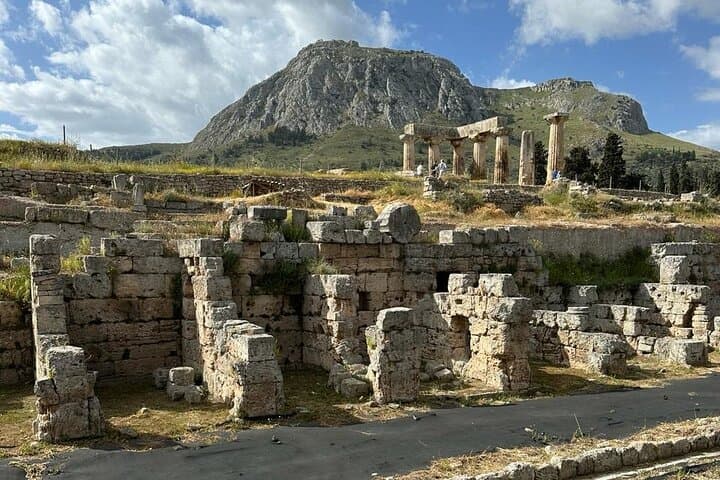
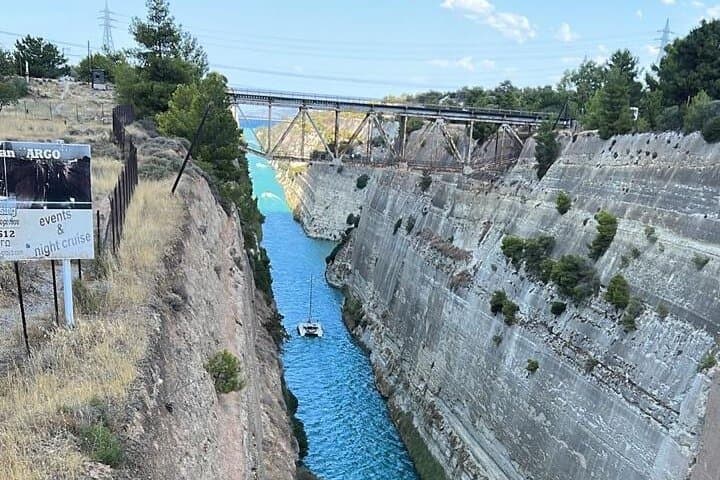
The morning bus eases out of Athens and the coastline slides by—olive-gray hills giving way to a narrow cut of seawater where the Corinth Canal clamps two seas together. On arrival, the air smells of salt and sun; the ruins sit like a city paused in mid-conversation, stones waiting for footsteps to finish their sentences.
Verified experiences and guided adventures in the surrounding area.
Operated by Great Greece Tours · Corinth, Peloponnese
The morning bus eases out of Athens and the coastline slides by—olive-gray hills giving way to a narrow cut of seawater where the Corinth Canal clamps two seas together. On arrival, the air smells of salt and sun; the ruins sit like a city paused in mid-conversation, stones waiting for footsteps to finish their sentences.
This full-day minibus pilgrimage traces St. Paul’s route through Roman Corinth, the Temple of Apollo and the early Christian house-church where Paul met Priscilla and Aquila. Geology is visible at the Isthmus Canal—an engineered fracture with cliffs up to 80 m high and a channel carved through rock; archaeology layers classical temples, a Roman agora and Byzantine churches atop one another. Culture here is blunt and tactile: trade and empire left roads and columns, while early Christianity left inscriptions and lettered fragments.
Expect broad, mostly paved paths around excavation sites and uneven stone underfoot inside ruins. The itinerary includes a stop at Kechries port and a photo overlook of the Canal, time at the Temple of Apollo and 90–120 minutes at Ancient Corinth museum and site; entrance to the archaeological site is not included. Guides drive and narrate from the vehicle but will not enter the site with you, so independent walking is required.
Practical edge: bring sturdy shoes, sun protection and small change for site admissions and the museum café. Midday sun is intense—carry water and plan museum stops for shade. The rhythm of the tour is deliberate: part history lesson, part landscape encounter, and entirely walkable for travelers prepared for short hikes across ancient stone.
easy.
6–7 hours.
Suitable for travelers with basic mobility; involves walking up to an hour at archaeological sites over uneven stone surfaces.
The tour runs about 6–7 hours (360–420 minutes) including drive time and multiple stops for photos and site visits.
No—the archaeological site and museum entrance fees are not included, so bring cash or card for tickets.
The driver/guide provides narration from the vehicle and at overlooks but will not enter the site with you; independent walking is required.
The vehicle and some surfaces are wheelchair accessible, but many excavation areas have uneven stone and steps—access may be limited in parts of the site.
Great Greece Tours operates guided outdoor trips and adventures with an emphasis on safety, stewardship, and memorable experiences.


The morning bus eases out of Athens and the coastline slides by—olive-gray hills giving way to a narrow cut of seawater where the Corinth Canal clamps two seas together. On arrival, the air smells of salt and sun; the ruins sit like a city paused in mid-conversation, stones waiting for footsteps to finish their sentences.
The morning bus eases out of Athens and the coastline slides by—olive-gray hills giving way to a narrow cut of seawater where the Corinth Canal clamps two seas together. On arrival, the air smells of salt and sun; the ruins sit like a city paused in mid-conversation, stones waiting for footsteps to finish their sentences.
This full-day minibus pilgrimage traces St. Paul’s route through Roman Corinth, the Temple of Apollo and the early Christian house-church where Paul met Priscilla and Aquila. Geology is visible at the Isthmus Canal—an engineered fracture with cliffs up to 80 m high and a channel carved through rock; archaeology layers classical temples, a Roman agora and Byzantine churches atop one another. Culture here is blunt and tactile: trade and empire left roads and columns, while early Christianity left inscriptions and lettered fragments.
Expect broad, mostly paved paths around excavation sites and uneven stone underfoot inside ruins. The itinerary includes a stop at Kechries port and a photo overlook of the Canal, time at the Temple of Apollo and 90–120 minutes at Ancient Corinth museum and site; entrance to the archaeological site is not included. Guides drive and narrate from the vehicle but will not enter the site with you, so independent walking is required.
Practical edge: bring sturdy shoes, sun protection and small change for site admissions and the museum café. Midday sun is intense—carry water and plan museum stops for shade. The rhythm of the tour is deliberate: part history lesson, part landscape encounter, and entirely walkable for travelers prepared for short hikes across ancient stone.