THE ADVENTURE COLLECTIVE® · Independent discovery and booking for outdoor travel

Explore Quito’s historic heart on a four‑hour guided walk that blends colonial architecture, local cuisine, and the Panecillo viewpoint. Expect narrow cobbled streets, gilded church interiors, and panoramic city views above the Andean valley.
Explore Quito’s historic heart on a four‑hour guided walk that blends colonial architecture, local cuisine, and the Panecillo viewpoint. Expect narrow cobbled streets, gilded church interiors, and panoramic city views above the Andean valley.
The city arrives before you on a steep ribbon of stone streets and red-tiled roofs: vendors smoke by doorway cafés, church bells mark the hour, and the Panecillo statue watches the valley like a weathered guardian. Start in the Plaza Grande and feel how centuries press close—colonial portals, carved wooden balconies, and narrow lanes that funnel you toward plazas and viewpoints.
Verified experiences and guided adventures in the surrounding area.
Operated by Galapagos My World · Quito, Pichincha
The city arrives before you on a steep ribbon of stone streets and red-tiled roofs: vendors smoke by doorway cafés, church bells mark the hour, and the Panecillo statue watches the valley like a weathered guardian. Start in the Plaza Grande and feel how centuries press close—colonial portals, carved wooden balconies, and narrow lanes that funnel you toward plazas and viewpoints.
Quito sits high on the Andean flank at nearly 2,850 meters. Its colonial core dates to the 16th century and was built atop older indigenous settlements; the Panecillo hill served as a pre‑Inca ceremonial site long before the Virgin of Quito was raised there in the 1970s. Geology here is volcanic: the city perches on alluvial terraces and slopes created by eruptions and glacial sculpting, which is why viewpoints open onto sudden drops and long city vistas.
Culture here is tactile—museums in former hospitals hold ecclesiastical art and civic archives, while La Ronda’s narrow street preserves artisan shops and street food. Expect a bilingual guide to stitch legend to architecture, from the gold-bathed altars of San Francisco to the Plaza’s political heart.
Practical guidance: wear sturdy walking shoes; cobbles and steep steps are constant. Bring a reusable water bottle and a light rain jacket—showers can arrive fast even on sunlit mornings. Plan for about four hours, pace uphill sections, and reserve a little cash for small museum fees and snacks. Timing sunrise or late afternoon at the Panecillo gives the best light for photos and thinner crowds.
easy.
4 hours.
Requires a moderate fitness level for walking uphill and standing during museum visits; suitable for most able-bodied travelers
The tour lasts about four hours and includes several blocks of walking on cobblestone streets and stairs, with short stops at museums and viewpoints.
Some museum admissions noted in the itinerary are included; check your booking confirmation or ask the guide about specific sites to avoid surprises.
The route requires moderate mobility due to uneven surfaces and stairs; it’s not recommended for travelers with serious mobility limitations or recent spinal injuries.
Yes — tours are led by bilingual guides who can present history and legends in English and Spanish.
Quito’s historic center was largely built after Spanish conquest in the 16th century on top of much older indigenous settlements; many churches and plazas preserve colonial-era art and urban design.
Preserving historic facades and managing tourist numbers are local priorities; stick to marked paths, avoid touching delicate art, and support local artisans to keep cultural traditions viable.
Galapagos My World operates guided outdoor trips and adventures with an emphasis on safety, stewardship, and memorable experiences.
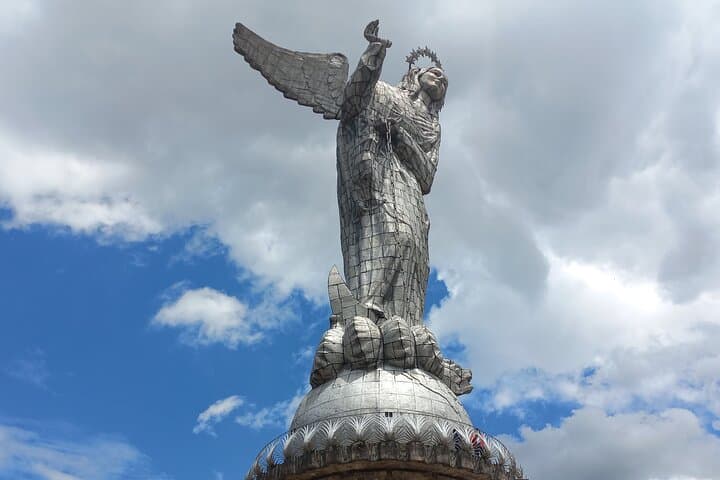
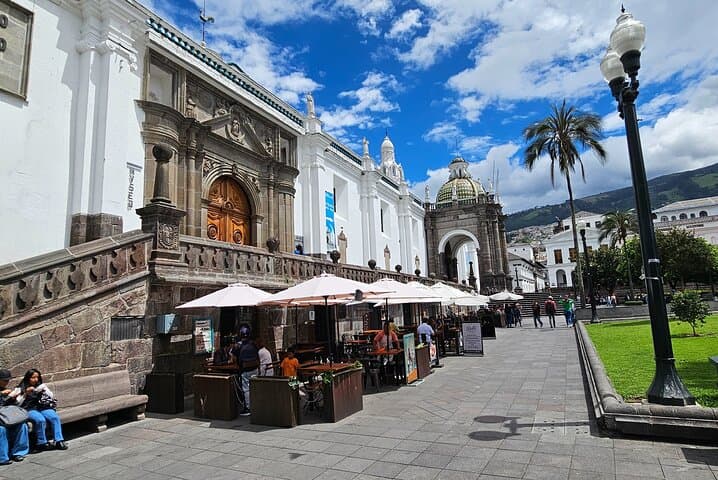
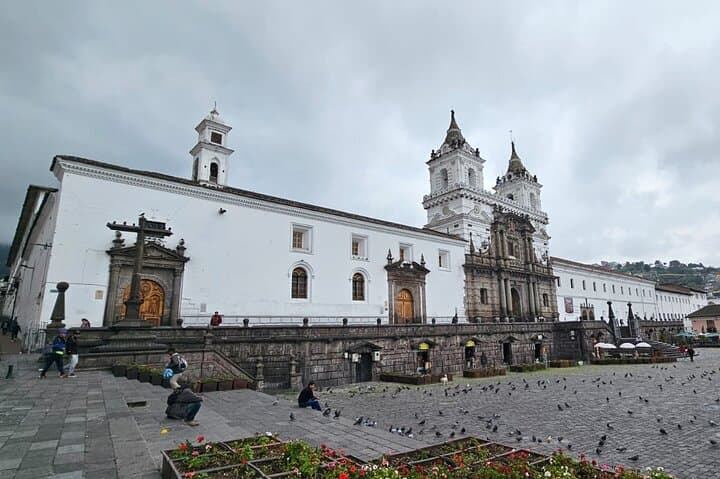
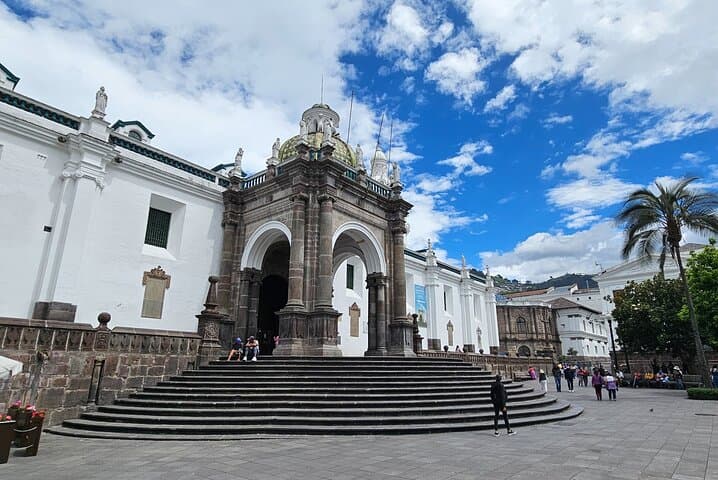
The city arrives before you on a steep ribbon of stone streets and red-tiled roofs: vendors smoke by doorway cafés, church bells mark the hour, and the Panecillo statue watches the valley like a weathered guardian. Start in the Plaza Grande and feel how centuries press close—colonial portals, carved wooden balconies, and narrow lanes that funnel you toward plazas and viewpoints.
The city arrives before you on a steep ribbon of stone streets and red-tiled roofs: vendors smoke by doorway cafés, church bells mark the hour, and the Panecillo statue watches the valley like a weathered guardian. Start in the Plaza Grande and feel how centuries press close—colonial portals, carved wooden balconies, and narrow lanes that funnel you toward plazas and viewpoints.
Quito sits high on the Andean flank at nearly 2,850 meters. Its colonial core dates to the 16th century and was built atop older indigenous settlements; the Panecillo hill served as a pre‑Inca ceremonial site long before the Virgin of Quito was raised there in the 1970s. Geology here is volcanic: the city perches on alluvial terraces and slopes created by eruptions and glacial sculpting, which is why viewpoints open onto sudden drops and long city vistas.
Culture here is tactile—museums in former hospitals hold ecclesiastical art and civic archives, while La Ronda’s narrow street preserves artisan shops and street food. Expect a bilingual guide to stitch legend to architecture, from the gold-bathed altars of San Francisco to the Plaza’s political heart.
Practical guidance: wear sturdy walking shoes; cobbles and steep steps are constant. Bring a reusable water bottle and a light rain jacket—showers can arrive fast even on sunlit mornings. Plan for about four hours, pace uphill sections, and reserve a little cash for small museum fees and snacks. Timing sunrise or late afternoon at the Panecillo gives the best light for photos and thinner crowds.