THE ADVENTURE COLLECTIVE® · Independent discovery and booking for outdoor travel

Trace the footsteps of Rangers and infantry on a private half‑day tour of Omaha Beach, Pointe du Hoc and the American Military Cemetery. Expect coastal winds, chalk cliffs, and thoughtful interpretation that brings D‑Day geography into focus.
Trace the footsteps of Rangers and infantry on a private half‑day tour of Omaha Beach, Pointe du Hoc and the American Military Cemetery. Expect coastal winds, chalk cliffs, and thoughtful interpretation that brings D‑Day geography into focus.
You step from the coach onto wind-gnawed sand and the sea seems to hurry past its own history — waves daring you to measure the scale of what happened here. Cliffs rise in chalk and turf; concrete bunkers sit like weathered teeth in the grass. On a four-hour private loop from Formigny-la-Bataille you move between memorial geometry and the rawness of open coast.
Verified experiences and guided adventures in the surrounding area.
Operated by Normandy Chronicles · Formigny-la-Bataille, Normandy
You step from the coach onto wind-gnawed sand and the sea seems to hurry past its own history — waves daring you to measure the scale of what happened here. Cliffs rise in chalk and turf; concrete bunkers sit like weathered teeth in the grass. On a four-hour private loop from Formigny-la-Bataille you move between memorial geometry and the rawness of open coast.
June 6, 1944 reoriented the map here: Rangers scaled Pointe du Hoc’s bluffs to silence coastal guns, infantry waded through surf on Omaha Beach, and temporary harbors were assembled at nearby Vierville-sur-Mer and Arromanches to keep supply lines open. The soil is layered with geology and history — chalk escarpments carved by tides, scrubland that still hides bunkers and shell-crater pockmarks. Local villages keep memory active: small museums, quiet plaques, and ceremonies at the American Military Cemetery where rows of white crosses slope toward the sea.
Practical guidance: wear sturdy shoes for sand, stairs and uneven bunkers; expect strong coastal winds and dress in layers; mornings are cooler and less crowded for photos and reflection. Bring water, a windproof jacket and a respectful attitude — these are preserved sites and many areas ask visitors to stay on paths and avoid artifact collection. Guided interpretation will connect maps, regiment names and landscape features so the places on the shoreline stop being abstract dates and become the ground people crossed. This itinerary suits travelers who want an outdoors-focused, historically rich half-day that balances solemnity with clear, place-based storytelling.
moderate.
4 hours.
You should be comfortable walking on sand, stairs and uneven surfaces; the tour has short walks rather than long hikes.
The tour is primarily vehicle-based with several short on-foot stops (generally 15–90 minutes each) at viewpoints, the cemetery and Pointe du Hoc.
Yes; the Normandy American Cemetery at Colleville-sur-Mer is open to visitors daily, with a visitor center and strict rules to preserve the site.
Photography is allowed at most locations, but be respectful and follow signs restricting photos in certain areas of cemeteries or during ceremonies.
Yes, with moderate mobility; expect some stairs and uneven ground — contact the operator about mobility needs before booking.
The Normandy landings on June 6, 1944 combined amphibious assault, airborne drops and engineering feats like temporary Mulberry harbors to supply the invasion.
These are protected historical landscapes; visitors are asked to stay on marked paths, avoid collecting artifacts, and support local conservation and museum efforts.
Normandy Chronicles operates guided outdoor trips and adventures with an emphasis on safety, stewardship, and memorable experiences.
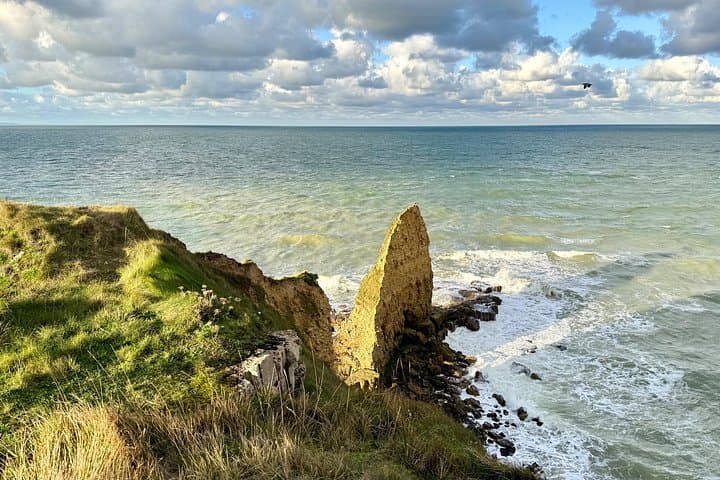
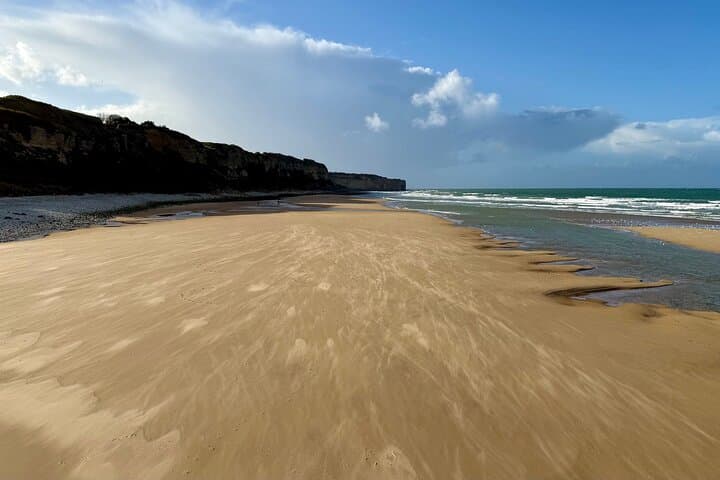

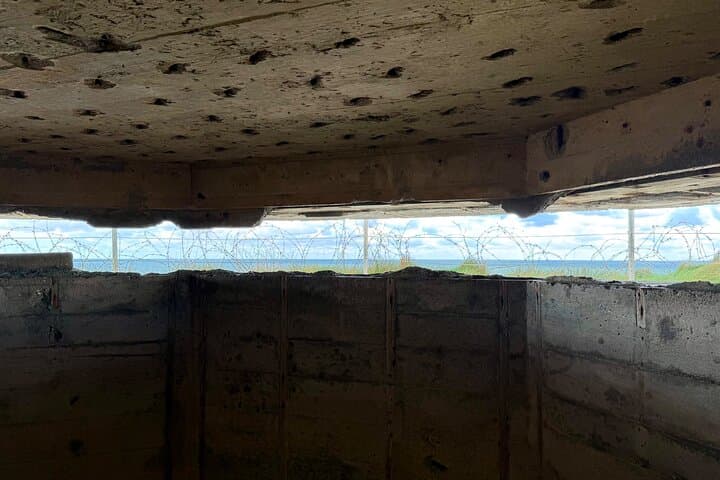
You step from the coach onto wind-gnawed sand and the sea seems to hurry past its own history — waves daring you to measure the scale of what happened here. Cliffs rise in chalk and turf; concrete bunkers sit like weathered teeth in the grass. On a four-hour private loop from Formigny-la-Bataille you move between memorial geometry and the rawness of open coast.
You step from the coach onto wind-gnawed sand and the sea seems to hurry past its own history — waves daring you to measure the scale of what happened here. Cliffs rise in chalk and turf; concrete bunkers sit like weathered teeth in the grass. On a four-hour private loop from Formigny-la-Bataille you move between memorial geometry and the rawness of open coast.
June 6, 1944 reoriented the map here: Rangers scaled Pointe du Hoc’s bluffs to silence coastal guns, infantry waded through surf on Omaha Beach, and temporary harbors were assembled at nearby Vierville-sur-Mer and Arromanches to keep supply lines open. The soil is layered with geology and history — chalk escarpments carved by tides, scrubland that still hides bunkers and shell-crater pockmarks. Local villages keep memory active: small museums, quiet plaques, and ceremonies at the American Military Cemetery where rows of white crosses slope toward the sea.
Practical guidance: wear sturdy shoes for sand, stairs and uneven bunkers; expect strong coastal winds and dress in layers; mornings are cooler and less crowded for photos and reflection. Bring water, a windproof jacket and a respectful attitude — these are preserved sites and many areas ask visitors to stay on paths and avoid artifact collection. Guided interpretation will connect maps, regiment names and landscape features so the places on the shoreline stop being abstract dates and become the ground people crossed. This itinerary suits travelers who want an outdoors-focused, historically rich half-day that balances solemnity with clear, place-based storytelling.