THE ADVENTURE COLLECTIVE® · Independent discovery and booking for outdoor travel

Cross the Q’eswachaka rope bridge on a full-day cultural excursion from Cusco. Witness the annual ichu-weaving ritual, walk a traditional Inca span, and learn how a living engineering tradition survives in the high Andes.
Cross the Q’eswachaka rope bridge on a full-day cultural excursion from Cusco. Witness the annual ichu-weaving ritual, walk a traditional Inca span, and learn how a living engineering tradition survives in the high Andes.
A low sun cuts across high grass as the driver pulls off the road and the valley opens: the Q’eswachaka rope bridge hangs across a narrow gorge, its braided ichu ropes dark against the sky. You approach with other travelers and community members, the scent of smoke and fresh-cut grass in the air, and the bridge itself humming quietly with the weight of centuries.
Verified experiences and guided adventures in the surrounding area.
Operated by Ritisuyo · Cusco, Cusco
A low sun cuts across high grass as the driver pulls off the road and the valley opens: the Q’eswachaka rope bridge hangs across a narrow gorge, its braided ichu ropes dark against the sky. You approach with other travelers and community members, the scent of smoke and fresh-cut grass in the air, and the bridge itself humming quietly with the weight of centuries.
This bridge is not a ruin but a living technique—the last traditional Inca rope bridge rebuilt each year by local Quechua communities using ichu (high-altitude grass). The structure sits in the Canas zone of Cusco, spanning a steep ravine carved by seasonal streams and the slow work of Andean geology. The ritual of rebuilding ties together cultural memory, engineering know-how, and communal obligation.
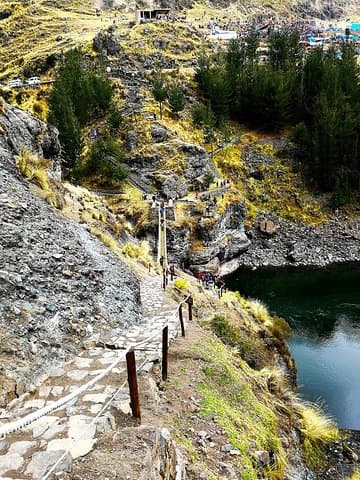
Expect a day-long excursion from Cusco (roughly 3–4 hours each way by road), light walking to reach viewpoints, and a short, steady crossing over the woven span that tests balance more than bravery. The walk rewards with wide puna landscapes, scattered high-altitude lakes along the route, and close-up time with the weavers who demonstrate braiding techniques and host a communal picnic.
Practical notes: altitude hovers around 3,500–3,700 meters, so hydrate, move slowly, and allow for mild breathlessness. Wear closed-toe shoes with grip for the uneven approach, bring sun protection and a warm layer for windy afternoons, and carry cash to support local vendors. Respect the community’s rituals and photography preferences—this is both a cultural ceremony and a functioning crossing. The trip pairs cultural immersion with a simple, powerful piece of living engineering—an accessible full-day adventure that rewards curiosity and preparation.
easy.
10–12 hours.
Light fitness—able to sit in a vehicle for several hours and walk short uneven approaches; expect breathlessness at altitude.
Yes—guided excursions commonly allow visitors to walk across the bridge under community supervision, though access can vary during ritual rebuilding days.
Most tours are full-day departures (roughly 10–12 hours round trip) with about 3–4 hours driving each way depending on stops.
At roughly 3,500–3,700 meters mild symptoms are common; acclimatize in Cusco, hydrate, and avoid heavy exertion on arrival day.
Itineraries often include a communal picnic with the host community—confirm with the operator when booking for dietary needs.
The bridge is rebuilt annually using pre-Columbian techniques; the ritual keeps construction knowledge and community bonds alive across generations.
Local stewardship governs access—the community-led rebuild minimizes permanent infrastructure and tourism dollars directly support traditional maintenance.
Ritisuyo operates guided outdoor trips and adventures with an emphasis on safety, stewardship, and memorable experiences.
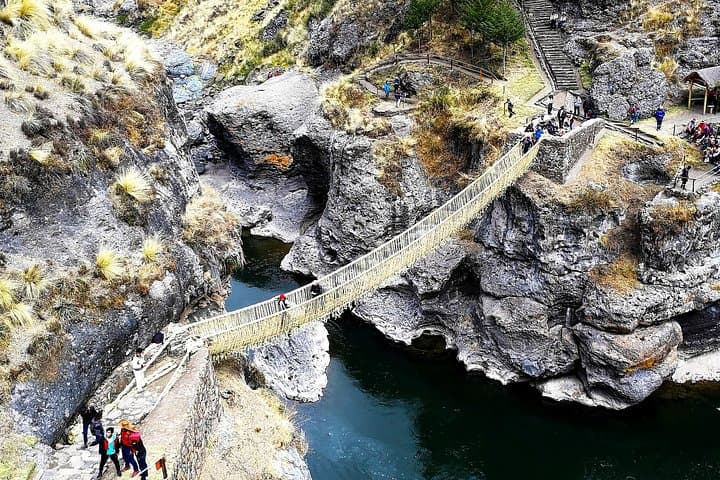
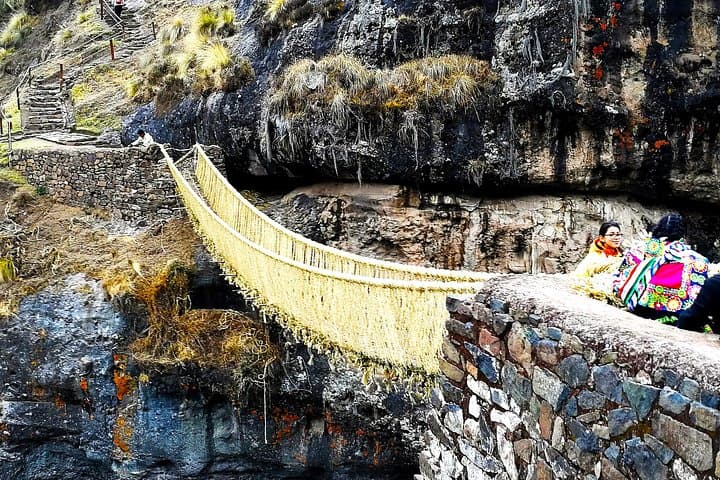
A low sun cuts across high grass as the driver pulls off the road and the valley opens: the Q’eswachaka rope bridge hangs across a narrow gorge, its braided ichu ropes dark against the sky. You approach with other travelers and community members, the scent of smoke and fresh-cut grass in the air, and the bridge itself humming quietly with the weight of centuries.
A low sun cuts across high grass as the driver pulls off the road and the valley opens: the Q’eswachaka rope bridge hangs across a narrow gorge, its braided ichu ropes dark against the sky. You approach with other travelers and community members, the scent of smoke and fresh-cut grass in the air, and the bridge itself humming quietly with the weight of centuries.
This bridge is not a ruin but a living technique—the last traditional Inca rope bridge rebuilt each year by local Quechua communities using ichu (high-altitude grass). The structure sits in the Canas zone of Cusco, spanning a steep ravine carved by seasonal streams and the slow work of Andean geology. The ritual of rebuilding ties together cultural memory, engineering know-how, and communal obligation.
Expect a day-long excursion from Cusco (roughly 3–4 hours each way by road), light walking to reach viewpoints, and a short, steady crossing over the woven span that tests balance more than bravery. The walk rewards with wide puna landscapes, scattered high-altitude lakes along the route, and close-up time with the weavers who demonstrate braiding techniques and host a communal picnic.
Practical notes: altitude hovers around 3,500–3,700 meters, so hydrate, move slowly, and allow for mild breathlessness. Wear closed-toe shoes with grip for the uneven approach, bring sun protection and a warm layer for windy afternoons, and carry cash to support local vendors. Respect the community’s rituals and photography preferences—this is both a cultural ceremony and a functioning crossing. The trip pairs cultural immersion with a simple, powerful piece of living engineering—an accessible full-day adventure that rewards curiosity and preparation.