THE ADVENTURE COLLECTIVE® · Independent discovery and booking for outdoor travel

Follow the stone steps of the Camino Real from Barichara to Guane on a 7 km historic trail that traces Guane indigenous engineering, 19th‑century repairs, canyon views, and a paleontological museum. Expect varied terrain, sweeping vistas, and a culturally rich finish in Guane.
Follow the stone steps of the Camino Real from Barichara to Guane on a 7 km historic trail that traces Guane indigenous engineering, 19th‑century repairs, canyon views, and a paleontological museum. Expect varied terrain, sweeping vistas, and a culturally rich finish in Guane.
A dust-fine wind pushes sweetscented dust from the footpath as you step off Barichara’s cobbled plaza and onto the Camino Real. The trail angles down through a changing spine of vegetation — prickly cacti giving way to scrub and then pockets of taller trees — while the Suarez River and its canyon lie like a low, thumping heart below, daring you to look over the rim.
Verified experiences and guided adventures in the surrounding area.
Operated by BnB Colombia Tours · Barichara, Santander
A dust-fine wind pushes sweetscented dust from the footpath as you step off Barichara’s cobbled plaza and onto the Camino Real. The trail angles down through a changing spine of vegetation — prickly cacti giving way to scrub and then pockets of taller trees — while the Suarez River and its canyon lie like a low, thumping heart below, daring you to look over the rim.
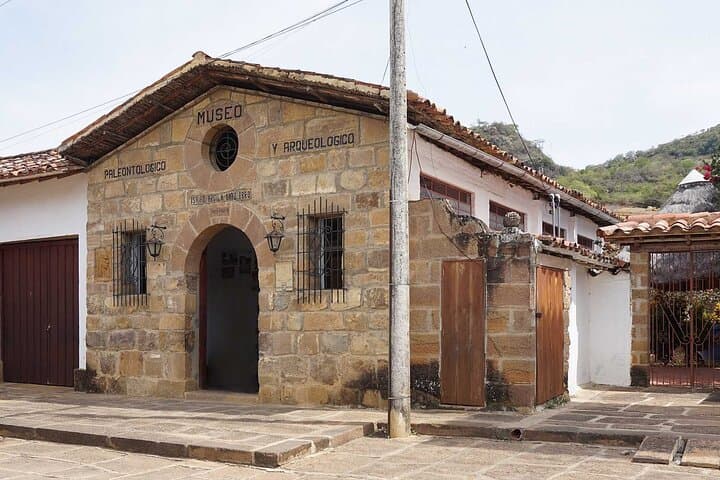
This 7 km (4.3 mi) route follows stonework first laid by the Guane people more than 600 years ago and later reshaped in the 19th century by German engineer Geo von Lengerke. Walkers pass the Mirador with broad views into the Suarez Canyon and enter Guane, where Father Isaías Díaz Ardila’s Archaeological and Paleontological Museum houses thousands of fossils and a rare pre-Columbian mummy.
Geology here is visible underfoot: compacted sandstone and handset stones guide your steps, while erosional ridges and the canyon walls trace rivers of sediment from ancient inland seas. Culturally, the towns keep a slow pace — stone streets, low houses, and local artisans — and guides translate local stories about the Guane reservation and colonial-era changes.
Expect a medium-intensity hike of roughly 2–3 hours downhill one-way, with some steeper sections and uneven stone underfoot. Bring sturdy shoes, at least 1–2 liters of water, sun protection, and a light rain layer; the microclimate can shift quickly between dry scrub and humid pockets.
Practical notes: most tours include private transport back to Barichara, bilingual guides, and entrance to the museum. Start early to avoid midday heat, respect the site’s archaeology by staying on the stone path, and leave no trace to protect this living historic trail.
moderate.
2–3 hours.
Suitable for people with moderate fitness: able to walk uneven terrain for a couple of hours and handle short steeper sections.
The route is about 7 km (4.3 mi) and typically takes 2–3 hours one-way; it’s medium intensity with uneven stone sections but suitable for most people in moderate fitness.
Many tours include private transport and return to Barichara; check your booking — the described tour provides private transportation and pick-up details are confirmed after booking.
This tour notes that entrance fees are included; the Archaeological and Paleontological Museum in Guane is part of the itinerary.
The path’s stone stairs and uneven surfaces make it challenging for strollers; infants are allowed but should be carried or in slings, and families should be cautious on steeper sections.
The Camino Real was built by the Guane people over 600 years ago and later reworked in 1864 by German engineer Geo Von Lengerke; Guane was historically preserved as an indigenous reservation.
Stay on the stone path and pack out trash to protect fragile archaeological features and the nearby Cerranía de los Yariguíes habitats; support local guides and admission fees that fund preservation.
BnB Colombia Tours operates guided outdoor trips and adventures with an emphasis on safety, stewardship, and memorable experiences.
A dust-fine wind pushes sweetscented dust from the footpath as you step off Barichara’s cobbled plaza and onto the Camino Real. The trail angles down through a changing spine of vegetation — prickly cacti giving way to scrub and then pockets of taller trees — while the Suarez River and its canyon lie like a low, thumping heart below, daring you to look over the rim.
A dust-fine wind pushes sweetscented dust from the footpath as you step off Barichara’s cobbled plaza and onto the Camino Real. The trail angles down through a changing spine of vegetation — prickly cacti giving way to scrub and then pockets of taller trees — while the Suarez River and its canyon lie like a low, thumping heart below, daring you to look over the rim.
This 7 km (4.3 mi) route follows stonework first laid by the Guane people more than 600 years ago and later reshaped in the 19th century by German engineer Geo von Lengerke. Walkers pass the Mirador with broad views into the Suarez Canyon and enter Guane, where Father Isaías Díaz Ardila’s Archaeological and Paleontological Museum houses thousands of fossils and a rare pre-Columbian mummy.
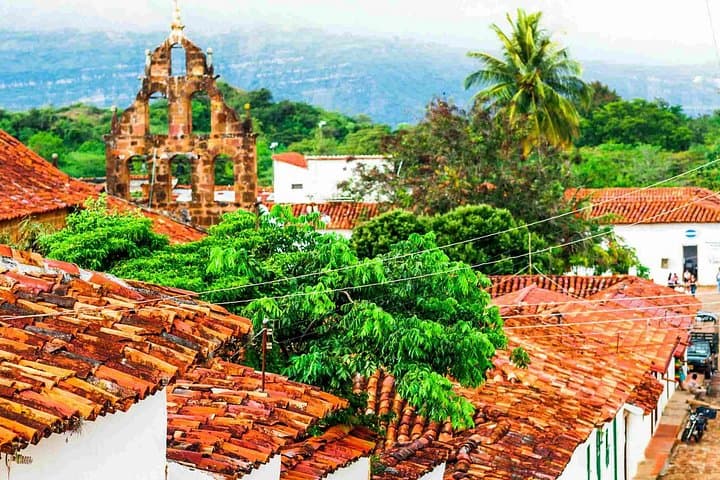
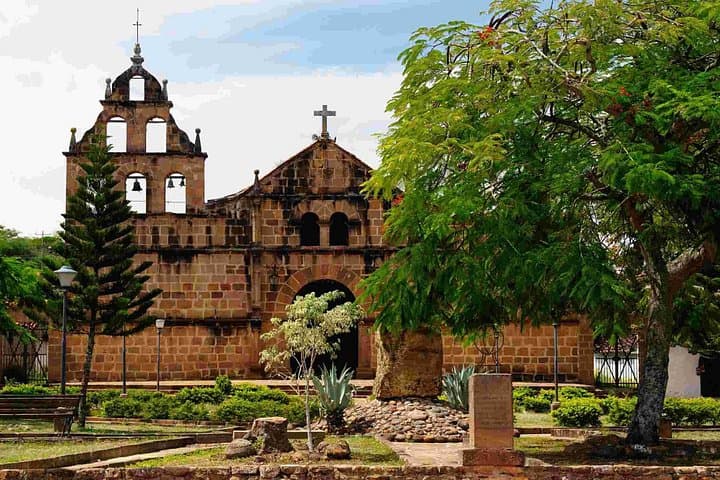
Geology here is visible underfoot: compacted sandstone and handset stones guide your steps, while erosional ridges and the canyon walls trace rivers of sediment from ancient inland seas. Culturally, the towns keep a slow pace — stone streets, low houses, and local artisans — and guides translate local stories about the Guane reservation and colonial-era changes.
Expect a medium-intensity hike of roughly 2–3 hours downhill one-way, with some steeper sections and uneven stone underfoot. Bring sturdy shoes, at least 1–2 liters of water, sun protection, and a light rain layer; the microclimate can shift quickly between dry scrub and humid pockets.
Practical notes: most tours include private transport back to Barichara, bilingual guides, and entrance to the museum. Start early to avoid midday heat, respect the site’s archaeology by staying on the stone path, and leave no trace to protect this living historic trail.