THE ADVENTURE COLLECTIVE® · Independent discovery and booking for outdoor travel

Explore Barcelona’s Gothic Quarter in two hours with a knowledgeable guide who traces the neighborhood from Roman Barcino to medieval palaces. Compact lanes, hidden plazas and layered history make this an efficient, immersive primer on the city’s old core.
Explore Barcelona’s Gothic Quarter in two hours with a knowledgeable guide who traces the neighborhood from Roman Barcino to medieval palaces. Compact lanes, hidden plazas and layered history make this an efficient, immersive primer on the city’s old core.
Cobblestones underfoot, a salt breeze threading down from the nearby port, and alleys that funnel voices from centuries past—Barcelona’s Gothic Quarter greets visitors like a city that remembers its every brick. On a two-hour guided walk, narrow lanes open onto plazas where medieval facades press close and sunlight slices through church arches.
Verified experiences and guided adventures in the surrounding area.
Operated by Tour Me Out Barcelona · Barcelona, Catalonia
Cobblestones underfoot, a salt breeze threading down from the nearby port, and alleys that funnel voices from centuries past—Barcelona’s Gothic Quarter greets visitors like a city that remembers its every brick. On a two-hour guided walk, narrow lanes open onto plazas where medieval facades press close and sunlight slices through church arches.
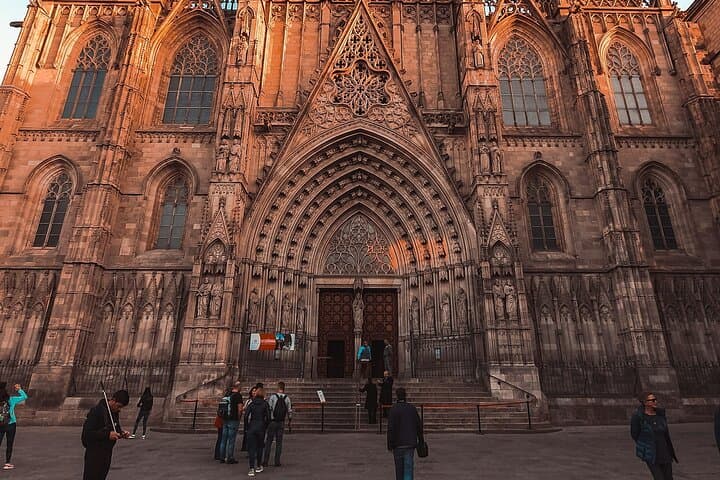
This quarter grew from the Roman settlement of Barcino; beneath streets and squares lie ruins and foundations that mark Roman, medieval and Gothic phases of urban life. The area later became the administrative heart of the Crown of Aragon, with palaces and civic halls clustered around Plaça Sant Jaume. Architects of different eras left contrasting stones: austere Roman walls, soaring 14th-century basilicas, and Baroque church fronts edged with 19th-century restorations.
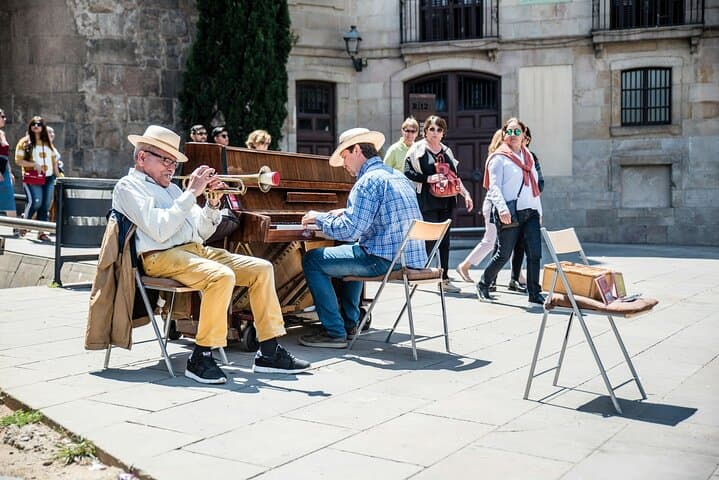
Culturally, the Gothic Quarter is still a lived neighborhood—artists, small shops and tapas bars share space with official institutions and museums such as the MUHBA. Expect to pass sites like Santa Maria del Mar and Plaça de Sant Felip Neri, and to hear stories about daily life across epochs while your guide links monuments to wider Catalan history.
Practical guidance: wear grippy shoes for uneven paving, bring a small water bottle, and plan to meet at the stated central landmark at least 10 minutes early. Tours move steadily through compact lanes—good mobility and moderate fitness are helpful. Respect residents by keeping noise low and choose a pocket that secures your wallet; pickpocketing is the most common inconvenience in busy parts of the quarter.
moderate.
2 hours.
Moderate—able to walk 2–3 miles on uneven paving and stand for short interpretive stops.
Meeting points are usually a central landmark in the Gothic Quarter—confirm the exact spot on your booking and arrive 10 minutes early.
The itinerary indicates accessibility for strollers and wheelchairs, but some narrow streets and thresholds may be uneven—contact the operator for specific accessibility needs.
This walk includes commentary and some stops; specific museum admissions are typically not included unless noted in the tour details.
Check your booking page for language options; many operators offer English and Spanish tours, with other languages on scheduled days.
The Gothic Quarter sits atop Roman Barcino; over centuries it became the political and religious core of Barcelona under the Counts of Barcelona and later the Crown of Aragon.
Heavy foot traffic strains narrow streets and historic stone; visitors can reduce impact by staying on paved paths, using local waste bins, and keeping noise levels low to respect residents.
Tour Me Out Barcelona operates guided outdoor trips and adventures with an emphasis on safety, stewardship, and memorable experiences.
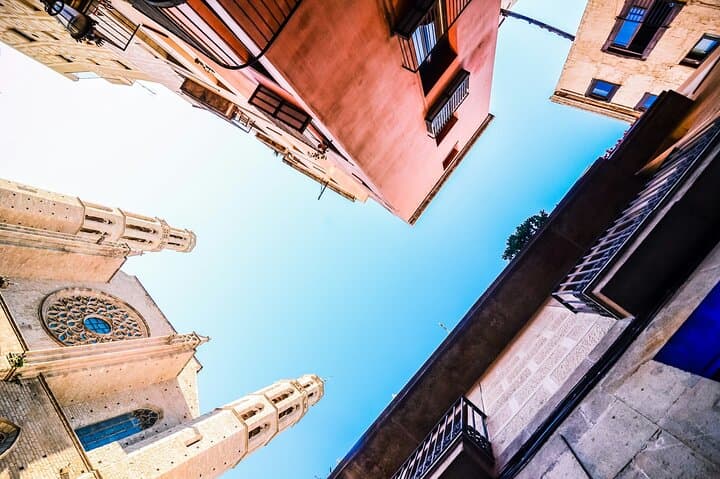
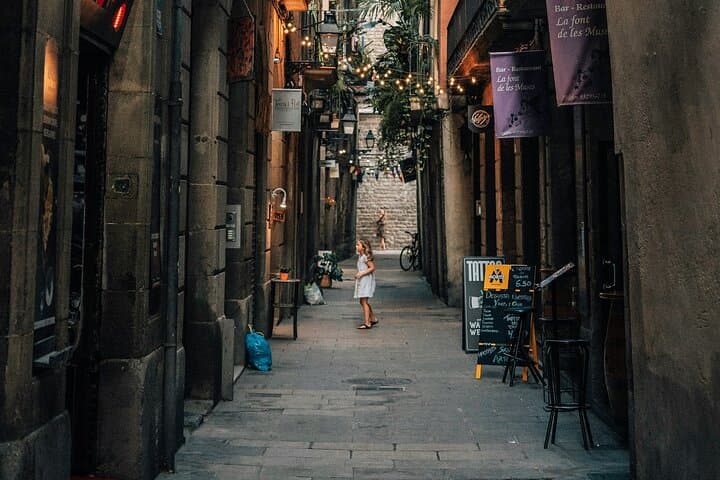
Cobblestones underfoot, a salt breeze threading down from the nearby port, and alleys that funnel voices from centuries past—Barcelona’s Gothic Quarter greets visitors like a city that remembers its every brick. On a two-hour guided walk, narrow lanes open onto plazas where medieval facades press close and sunlight slices through church arches.
Cobblestones underfoot, a salt breeze threading down from the nearby port, and alleys that funnel voices from centuries past—Barcelona’s Gothic Quarter greets visitors like a city that remembers its every brick. On a two-hour guided walk, narrow lanes open onto plazas where medieval facades press close and sunlight slices through church arches.
This quarter grew from the Roman settlement of Barcino; beneath streets and squares lie ruins and foundations that mark Roman, medieval and Gothic phases of urban life. The area later became the administrative heart of the Crown of Aragon, with palaces and civic halls clustered around Plaça Sant Jaume. Architects of different eras left contrasting stones: austere Roman walls, soaring 14th-century basilicas, and Baroque church fronts edged with 19th-century restorations.
Culturally, the Gothic Quarter is still a lived neighborhood—artists, small shops and tapas bars share space with official institutions and museums such as the MUHBA. Expect to pass sites like Santa Maria del Mar and Plaça de Sant Felip Neri, and to hear stories about daily life across epochs while your guide links monuments to wider Catalan history.
Practical guidance: wear grippy shoes for uneven paving, bring a small water bottle, and plan to meet at the stated central landmark at least 10 minutes early. Tours move steadily through compact lanes—good mobility and moderate fitness are helpful. Respect residents by keeping noise low and choose a pocket that secures your wallet; pickpocketing is the most common inconvenience in busy parts of the quarter.