THE ADVENTURE COLLECTIVE® · Independent discovery and booking for outdoor travel

Travel from Bangkok to Kanchanaburi to walk Hellfire Pass, ride a section of the historic Death Railway and visit the Bridge over the River Kwai. This six-hour day trip blends raw landscape, wartime history and a quiet, respectful pace.
Travel from Bangkok to Kanchanaburi to walk Hellfire Pass, ride a section of the historic Death Railway and visit the Bridge over the River Kwai. This six-hour day trip blends raw landscape, wartime history and a quiet, respectful pace.
You leave Bangkok before dawn and the city gives way to rice paddies and low karst ridges. The van hums along Route 323 toward Kanchanaburi; air-conditioned comfort softens the distance but the places you arrive at demand attention. At Hellfire Pass the trail narrows to a raw rock cutting where sunlight slices down into the corridor and the silence seems to measure time.
Verified experiences and guided adventures in the surrounding area.
Operated by Discova Thailand · Kanchanaburi, Kanchanaburi Province
You leave Bangkok before dawn and the city gives way to rice paddies and low karst ridges. The van hums along Route 323 toward Kanchanaburi; air-conditioned comfort softens the distance but the places you arrive at demand attention. At Hellfire Pass the trail narrows to a raw rock cutting where sunlight slices down into the corridor and the silence seems to measure time.
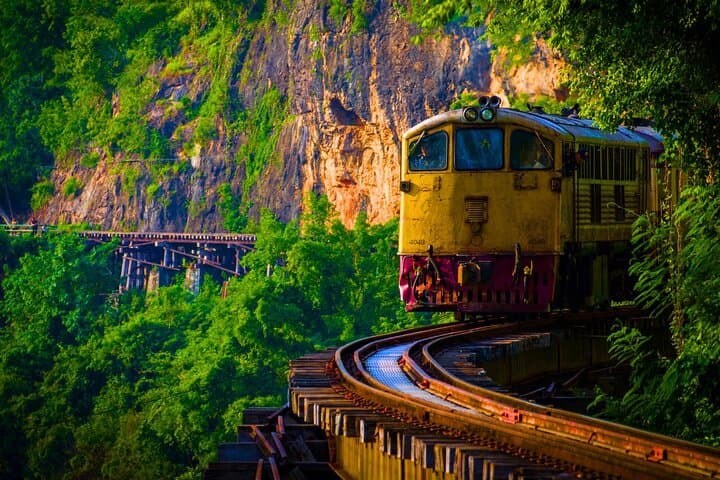
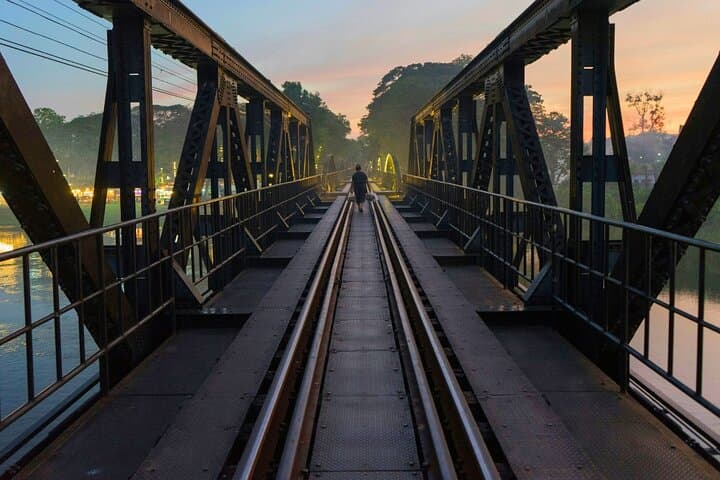
That cutting is part of the Thailand–Burma Railway, built by Allied POWs and forced laborers during World War II. The Hellfire Pass Memorial Museum frames individual stories with artifacts and photographs; the geology here — a band of hard sandstone and shale — made the cutting brutally labor-intensive, carved by hand and improvised tools. At the River Kwai bridge and the adjacent war cemetery the human cost is on plain display: names, graves and a rail line that became a symbol of suffering and survival.
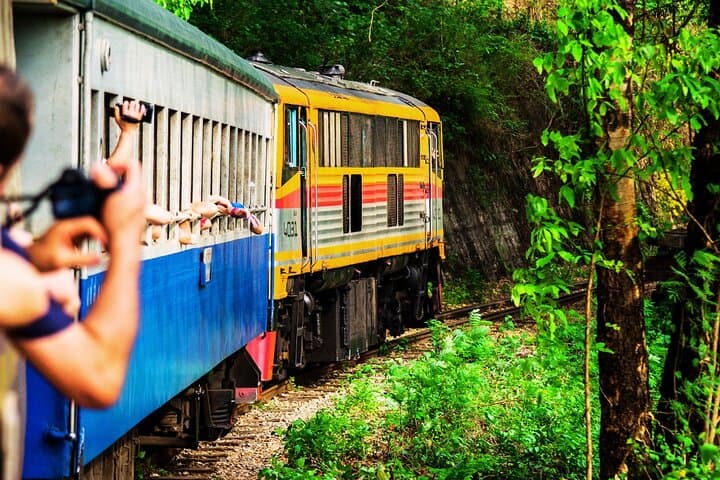
Practical moments punctuate the history. You’ll walk a maintained trail through the pass (expect uneven stone and stair sections), ride part of the historic Death Railway by train, and stop for lunch at a local restaurant. Guides provide context and a schedule that fits into a six-hour day trip from Bangkok with hotel pickup.
Bring sturdy footwear, water and a respectful mindset — these are memorial sites not playgrounds. Aim for the morning to avoid heat and crowds; check closure dates and the tour’s alternative stops. The experience is equal parts landscape and memory: the land pushes back with steep steps and the stories push forward, demanding to be heard.
easy.
6 hours.
Light walking fitness required—able to walk 30–60 minutes on uneven ground and handle short stair sections.
Yes—hotel pickup and drop-off from central Bangkok locations listed in the tour details are included via an air-conditioned vehicle.
Admission to the Hellfire Pass Memorial Museum and the train ticket along the Death Railway are included as noted in the tour inclusions.
The tour is marked suitable for all fitness levels; children and older travelers should still be able to manage short uneven walks and stair sections at Hellfire Pass.
Hellfire Pass closes on specific national holidays (dates listed by the operator); when closed, the tour substitutes an alternate site such as Wat Tham Suea (Tiger Cave Temple).
The Thailand–Burma Railway was built in 1942–43 using POWs and forced labor; thousands died during construction, and sites like Hellfire Pass and the Kanchanaburi cemetery document that legacy.
Stick to marked trails, avoid taking artifacts or disturbing grave sites, and follow museum guidance to help preserve both the memorial and the fragile landscape.
Discova Thailand operates guided outdoor trips and adventures with an emphasis on safety, stewardship, and memorable experiences.

You leave Bangkok before dawn and the city gives way to rice paddies and low karst ridges. The van hums along Route 323 toward Kanchanaburi; air-conditioned comfort softens the distance but the places you arrive at demand attention. At Hellfire Pass the trail narrows to a raw rock cutting where sunlight slices down into the corridor and the silence seems to measure time.
You leave Bangkok before dawn and the city gives way to rice paddies and low karst ridges. The van hums along Route 323 toward Kanchanaburi; air-conditioned comfort softens the distance but the places you arrive at demand attention. At Hellfire Pass the trail narrows to a raw rock cutting where sunlight slices down into the corridor and the silence seems to measure time.
That cutting is part of the Thailand–Burma Railway, built by Allied POWs and forced laborers during World War II. The Hellfire Pass Memorial Museum frames individual stories with artifacts and photographs; the geology here — a band of hard sandstone and shale — made the cutting brutally labor-intensive, carved by hand and improvised tools. At the River Kwai bridge and the adjacent war cemetery the human cost is on plain display: names, graves and a rail line that became a symbol of suffering and survival.
Practical moments punctuate the history. You’ll walk a maintained trail through the pass (expect uneven stone and stair sections), ride part of the historic Death Railway by train, and stop for lunch at a local restaurant. Guides provide context and a schedule that fits into a six-hour day trip from Bangkok with hotel pickup.
Bring sturdy footwear, water and a respectful mindset — these are memorial sites not playgrounds. Aim for the morning to avoid heat and crowds; check closure dates and the tour’s alternative stops. The experience is equal parts landscape and memory: the land pushes back with steep steps and the stories push forward, demanding to be heard.