THE ADVENTURE COLLECTIVE® · Independent discovery and booking for outdoor travel

Step onto a 430‑m glass span and explore a 7.5‑km karst cave in one action-packed day. This private tour pairs the vertigo of Zhangjiajie’s world‑record glass bridge with the underground wonder of Yellow Dragon Cave.
Step onto a 430‑m glass span and explore a 7.5‑km karst cave in one action-packed day. This private tour pairs the vertigo of Zhangjiajie’s world‑record glass bridge with the underground wonder of Yellow Dragon Cave.
The first step onto the Zhangjiajie Glass Bridge gives you a startling vertical view: a transparent floor, wind pushing at your jacket, and the canyon breathing green and mist far below. For a few strides you feel like the landscape is carrying you — the bridge’s engineering and the canyon’s scale working in tandem.
Verified experiences and guided adventures in the surrounding area.
Operated by Zhangjiajie Kangtai · Zhangjiajie, Hunan
The first step onto the Zhangjiajie Glass Bridge gives you a startling vertical view: a transparent floor, wind pushing at your jacket, and the canyon breathing green and mist far below. For a few strides you feel like the landscape is carrying you — the bridge’s engineering and the canyon’s scale working in tandem.
This strip of Hunan reveals two geologic stories. The Glass Bridge, opened with ten engineering records in 2016, spans roughly 430 meters and sits about 350 meters above the canyon floor, offering a rare vantage on the quartz sandstone pillars that define Zhangjiajie’s skyline. A short drive away, Yellow Dragon (Huanglong) Cave traces 7.5 kilometres of subterranean passages down to about 140 metres, a karst system formed as uplifted limestone and water carved caverns over millions of years.
Culturally the route threads modern spectacle with long local reverence for karst caves and mountain spirits; the area sits within the larger Wulingyuan landscape that helped inspire cinematic backdrops. Inside the cave, boat rides and illuminated formations—columns, curtains, cave pearls—feel almost theatrical, while the canyon’s river and waterfalls demand quieter attention.
Practicalities: this private, roughly 8-hour day tour typically includes entrance fees, bottled water and transport between sites; visitors should expect moderate walking, stairs in the cave, and optional extras such as a zipline, slide or elevator into the canyon.
Plan for changing microclimates (shade on the bridge, humidity underground), bring identification for ticketing, and time your visit early to avoid peak crowds. The combination of vertigo-inducing architecture and deep karst drama makes this a compact, high-impact day of Zhangjiajie exploration.
moderate.
8 hours.
Moderate fitness: able to walk stairs and stand for periods; some short hikes and cave steps required.
Most private tour packages include entrance to Zhangjiajie Glass Bridge and Yellow Dragon Cave as listed; confirm ticket inclusions at booking.
Yes—the bridge was engineered to high standards and is inspected regularly, but it is not recommended for travelers with serious heart or mobility conditions or pregnant travelers.
Yes, the cave includes boat segments operated on controlled underground waterways—these are usually part of the standard route.
Book an early morning departure, visit in shoulder seasons (spring/fall), and choose weekday tours to reduce crowding on the bridge and in the cave.
The karst region around Zhangjiajie uplifted after the Cretaceous; caves like Yellow Dragon formed as acidic water dissolved limestone and dolomite over millions of years, leaving cavern systems and dramatic pillar formations above ground.
High visitor numbers and glass-bridge maintenance require strict park rules—stay on designated paths, avoid touching cave formations, and use provided waste facilities to reduce impact.
Zhangjiajie Kangtai operates guided outdoor trips and adventures with an emphasis on safety, stewardship, and memorable experiences.
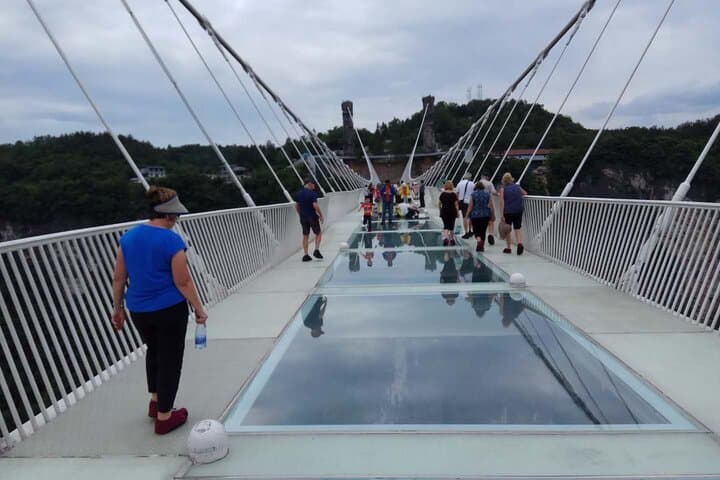


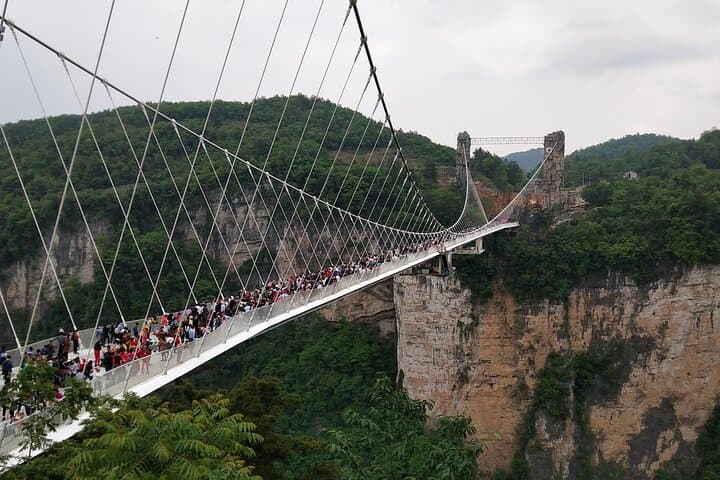
The first step onto the Zhangjiajie Glass Bridge gives you a startling vertical view: a transparent floor, wind pushing at your jacket, and the canyon breathing green and mist far below. For a few strides you feel like the landscape is carrying you — the bridge’s engineering and the canyon’s scale working in tandem.
The first step onto the Zhangjiajie Glass Bridge gives you a startling vertical view: a transparent floor, wind pushing at your jacket, and the canyon breathing green and mist far below. For a few strides you feel like the landscape is carrying you — the bridge’s engineering and the canyon’s scale working in tandem.
This strip of Hunan reveals two geologic stories. The Glass Bridge, opened with ten engineering records in 2016, spans roughly 430 meters and sits about 350 meters above the canyon floor, offering a rare vantage on the quartz sandstone pillars that define Zhangjiajie’s skyline. A short drive away, Yellow Dragon (Huanglong) Cave traces 7.5 kilometres of subterranean passages down to about 140 metres, a karst system formed as uplifted limestone and water carved caverns over millions of years.
Culturally the route threads modern spectacle with long local reverence for karst caves and mountain spirits; the area sits within the larger Wulingyuan landscape that helped inspire cinematic backdrops. Inside the cave, boat rides and illuminated formations—columns, curtains, cave pearls—feel almost theatrical, while the canyon’s river and waterfalls demand quieter attention.
Practicalities: this private, roughly 8-hour day tour typically includes entrance fees, bottled water and transport between sites; visitors should expect moderate walking, stairs in the cave, and optional extras such as a zipline, slide or elevator into the canyon.
Plan for changing microclimates (shade on the bridge, humidity underground), bring identification for ticketing, and time your visit early to avoid peak crowds. The combination of vertigo-inducing architecture and deep karst drama makes this a compact, high-impact day of Zhangjiajie exploration.