THE ADVENTURE COLLECTIVE® · Independent discovery and booking for outdoor travel

Trace St. Paul’s route through Ancient Corinth on a half-day guided tour from Athens. See the Temple of Apollo, the Isthmus Canal and the early Christian foundations with practical tips for timing, footwear and what to expect on the ground.
Trace St. Paul’s route through Ancient Corinth on a half-day guided tour from Athens. See the Temple of Apollo, the Isthmus Canal and the early Christian foundations with practical tips for timing, footwear and what to expect on the ground.
You step out of a luxury, air-conditioned vehicle onto sun-warmed limestone, the Isthmus of Corinth yawning like a narrow spine between Gulf and sea. The canal’s vertical cliffs push the horizon close; boats below look toy-sized while gulls wheel and dare the winds. Your guide points to the worn stones where a first-century letter-writer once walked — this is the ground where Paul met Priscilla and Aquila.
Verified experiences and guided adventures in the surrounding area.
Operated by Great Greece Tours · Corinth, Corinthia
You step out of a luxury, air-conditioned vehicle onto sun-warmed limestone, the Isthmus of Corinth yawning like a narrow spine between Gulf and sea. The canal’s vertical cliffs push the horizon close; boats below look toy-sized while gulls wheel and dare the winds. Your guide points to the worn stones where a first-century letter-writer once walked — this is the ground where Paul met Priscilla and Aquila.
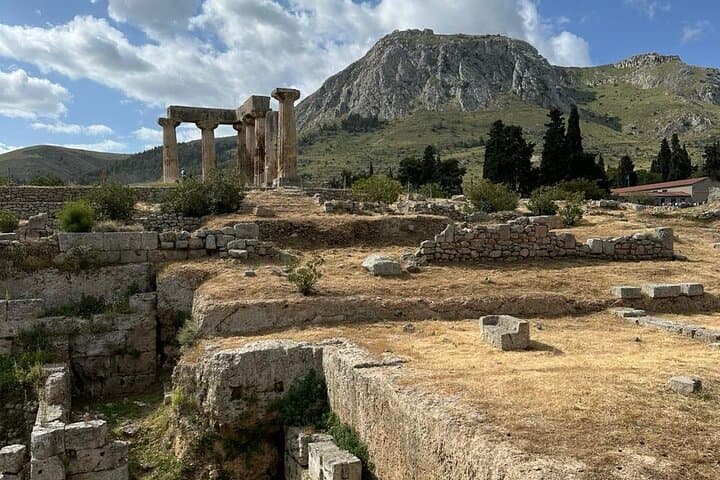
Ancient Corinth occupies a crossroads of trade, politics and early Christian history. Geologically, the isthmus is a tectonic throat between the Aegean and Ionian basins; centuries of human engineering culminated in the 19th-century canal that finally cut the land. Culturally, the site shows Greek, Roman and early Christian layers: the Temple of Apollo’s Doric columns, the Roman forum and the simple foundation of Paul’s house and meeting place.
The museum houses amphorae that map Mediterranean trade routes, while the castle and acropolis give clean, expansive views of the plains below. Expect warm sun, exposed walking, and short stretches of loose gravel and packed earth.
Practical guidance: wear sturdy walking shoes with good grip, bring sun protection and at least 1–1.5 liters of water, and carry a light layer for coastal breezes. The tour is accessible for most fitness levels, but several uneven surfaces and steps mean a steady gait helps. Timing a visit for morning or late afternoon reduces heat and light glare for photos. For a deeper visit, pause at the museum and the small church foundations to imagine how the ancient town staged both civic life and the earliest Christian gatherings.
easy.
6–7 hours.
Light fitness for walking short uneven sections and steps; suitable for most ages.
The full itinerary runs about 6–7 hours including hotel pickup and drop-off, transit time and site visits.
The operator notes wheelchair accessibility for transportation and some areas, but ancient ruins include uneven terrain and steps that may limit access to all sites.
Museum and site admissions are typically not included; check booking details or bring cash for tickets.
Yes — the tour offers hotel and cruise port pickup; confirm your pickup point when booking.
Ancient Corinth was a major Greek and Roman commercial hub; Paul visited around 51 A.D., establishing one of the earliest Christian communities recorded in the New Testament.
Visitor pressure is managed through designated paths and the museum preserves fragile finds; stick to marked routes and avoid climbing on ruins to protect fragile stone and mosaics.
Great Greece Tours operates guided outdoor trips and adventures with an emphasis on safety, stewardship, and memorable experiences.


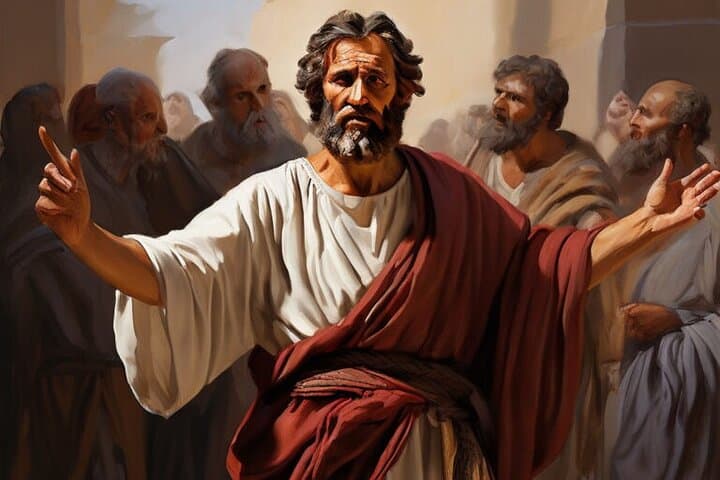
You step out of a luxury, air-conditioned vehicle onto sun-warmed limestone, the Isthmus of Corinth yawning like a narrow spine between Gulf and sea. The canal’s vertical cliffs push the horizon close; boats below look toy-sized while gulls wheel and dare the winds. Your guide points to the worn stones where a first-century letter-writer once walked — this is the ground where Paul met Priscilla and Aquila.
You step out of a luxury, air-conditioned vehicle onto sun-warmed limestone, the Isthmus of Corinth yawning like a narrow spine between Gulf and sea. The canal’s vertical cliffs push the horizon close; boats below look toy-sized while gulls wheel and dare the winds. Your guide points to the worn stones where a first-century letter-writer once walked — this is the ground where Paul met Priscilla and Aquila.
Ancient Corinth occupies a crossroads of trade, politics and early Christian history. Geologically, the isthmus is a tectonic throat between the Aegean and Ionian basins; centuries of human engineering culminated in the 19th-century canal that finally cut the land. Culturally, the site shows Greek, Roman and early Christian layers: the Temple of Apollo’s Doric columns, the Roman forum and the simple foundation of Paul’s house and meeting place.
The museum houses amphorae that map Mediterranean trade routes, while the castle and acropolis give clean, expansive views of the plains below. Expect warm sun, exposed walking, and short stretches of loose gravel and packed earth.
Practical guidance: wear sturdy walking shoes with good grip, bring sun protection and at least 1–1.5 liters of water, and carry a light layer for coastal breezes. The tour is accessible for most fitness levels, but several uneven surfaces and steps mean a steady gait helps. Timing a visit for morning or late afternoon reduces heat and light glare for photos. For a deeper visit, pause at the museum and the small church foundations to imagine how the ancient town staged both civic life and the earliest Christian gatherings.