THE ADVENTURE COLLECTIVE® · Independent discovery and booking for outdoor travel

Stroll the Guinness-listed Garden of the Beachfront in Santos on a private four-hour walk that blends coastal botany, port history and local cinema culture. Expect flat, paved paths, seabirds, and stops at cultural highlights along the way.
Stroll the Guinness-listed Garden of the Beachfront in Santos on a private four-hour walk that blends coastal botany, port history and local cinema culture. Expect flat, paved paths, seabirds, and stops at cultural highlights along the way.
Turn the corner onto Santos’ waterfront and the city opens like a living map—striped palms and patterned mosaic paths slicing the skyline from the sand. The Garden of the Beachfront (Jardim da Orla) sprawls beside the Atlantic, its lawns and botanical beds uninterrupted for roughly 7–8 km of coastline; the sea keeps time with a wind that seems to push you forward.
Verified experiences and guided adventures in the surrounding area.
Operated by Catharina Apolinário de Souza · Santos, São Paulo
Turn the corner onto Santos’ waterfront and the city opens like a living map—striped palms and patterned mosaic paths slicing the skyline from the sand. The Garden of the Beachfront (Jardim da Orla) sprawls beside the Atlantic, its lawns and botanical beds uninterrupted for roughly 7–8 km of coastline; the sea keeps time with a wind that seems to push you forward.
This promenade is both recent urban planning and old-world commerce: Santos’ port made the city a coffee capital in the 19th century, and the waterfront was reshaped throughout the 20th century into the green ribbon the Guinness Book recognized as the world’s largest beach garden. Geologically the land is low-lying coastal plain—sandy soils, reclaimed sections, and a network of seawalls and breakwaters that shape currents and local sediment patterns.
Culturally you’ll pass public art, cinema-related plaques (Santos is a UNESCO Creative City of Cinema), and neighborhood kiosks where local life plays out. Birdlife uses the green strip as a flyway; expect terns and herons to watch the tide like sentries.
Practical: this is a flat, mostly paved walk with intermittent sand access. The private, four-hour tour typically covers several kilometers at an easy-to-moderate pace with options to pause at the Coffee Museum, local markets, or quieter beach pockets. Bring sun protection, a refillable water bottle, comfortable walking shoes and a light layer for ocean breezes. The route is wheelchair- and stroller-accessible in most sections, but check routing if you need full-step-free access. Morning or late afternoon improves light and reduces heat—timing matters more than altitude here.
moderate.
4 hours.
Suitable for people with moderate fitness who can walk multiple kilometers at an easy pace; limited elevation makes it accessible for most.
The private tour runs about four hours and typically covers several kilometers along the beachfront—expect roughly 5–8 km depending on stops chosen by the group.
Most of the beachfront promenade is paved and wheelchair-accessible; the operator notes accessibility but confirm any special routing in advance to avoid steps or temporary barriers.
Local guides primarily speak Portuguese; private tours can often accommodate English with advance notice—request a bilingual guide when booking.
An air-conditioned vehicle is listed among inclusions for transfers or pick-up; refreshments vary—bring water and snacks unless the tour description specifies them.
Santos rose to global prominence as a 19th-century coffee export hub; waterfront redesign and public gardens were part of 20th-century urban modernization.
The beachfront garden is actively managed for coastal erosion and invasive species; visitors are encouraged to stay on paths and avoid trampling planted beds.
Catharina Apolinário de Souza operates guided outdoor trips and adventures with an emphasis on safety, stewardship, and memorable experiences.

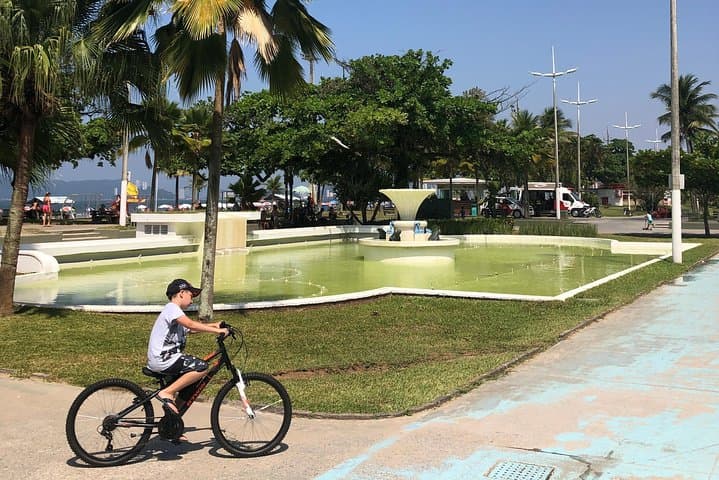
Turn the corner onto Santos’ waterfront and the city opens like a living map—striped palms and patterned mosaic paths slicing the skyline from the sand. The Garden of the Beachfront (Jardim da Orla) sprawls beside the Atlantic, its lawns and botanical beds uninterrupted for roughly 7–8 km of coastline; the sea keeps time with a wind that seems to push you forward.
Turn the corner onto Santos’ waterfront and the city opens like a living map—striped palms and patterned mosaic paths slicing the skyline from the sand. The Garden of the Beachfront (Jardim da Orla) sprawls beside the Atlantic, its lawns and botanical beds uninterrupted for roughly 7–8 km of coastline; the sea keeps time with a wind that seems to push you forward.
This promenade is both recent urban planning and old-world commerce: Santos’ port made the city a coffee capital in the 19th century, and the waterfront was reshaped throughout the 20th century into the green ribbon the Guinness Book recognized as the world’s largest beach garden. Geologically the land is low-lying coastal plain—sandy soils, reclaimed sections, and a network of seawalls and breakwaters that shape currents and local sediment patterns.
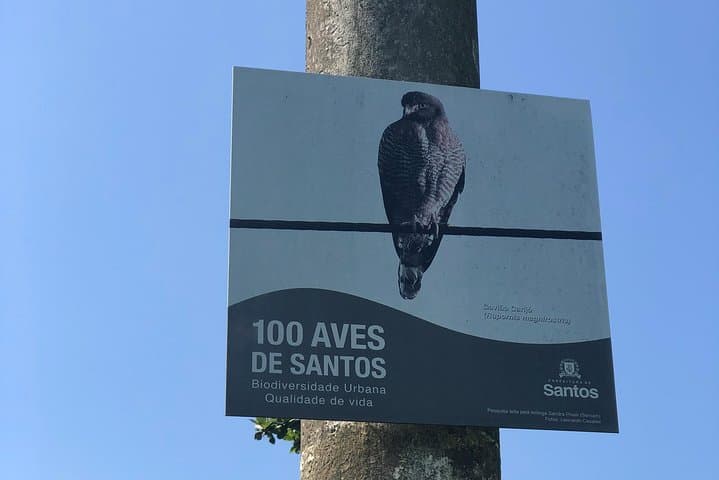
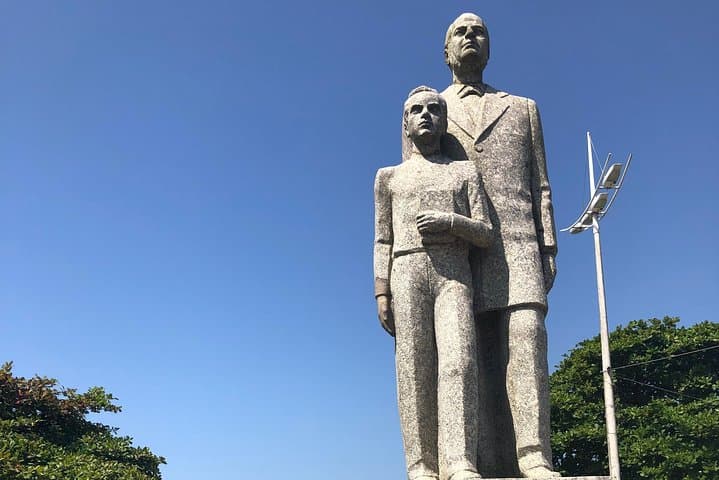
Culturally you’ll pass public art, cinema-related plaques (Santos is a UNESCO Creative City of Cinema), and neighborhood kiosks where local life plays out. Birdlife uses the green strip as a flyway; expect terns and herons to watch the tide like sentries.
Practical: this is a flat, mostly paved walk with intermittent sand access. The private, four-hour tour typically covers several kilometers at an easy-to-moderate pace with options to pause at the Coffee Museum, local markets, or quieter beach pockets. Bring sun protection, a refillable water bottle, comfortable walking shoes and a light layer for ocean breezes. The route is wheelchair- and stroller-accessible in most sections, but check routing if you need full-step-free access. Morning or late afternoon improves light and reduces heat—timing matters more than altitude here.