THE ADVENTURE COLLECTIVE® · Independent discovery and booking for outdoor travel

Walk Padua with a local guide in a three-hour small-group tour that threads the city’s squares, markets and university quarter. Explore Prato della Valle, Il Santo and Caffè Pedrocchi while learning the history and practical logistics for a smooth visit.
Walk Padua with a local guide in a three-hour small-group tour that threads the city’s squares, markets and university quarter. Explore Prato della Valle, Il Santo and Caffè Pedrocchi while learning the history and practical logistics for a smooth visit.
You arrive by train and the city opens like a map beneath your feet: wide Prato della Valle’s ring of statues frames a low sky, the Bacchiglione threads through stone bridges and the distant bells of Il Santo mark time.
Verified experiences and guided adventures in the surrounding area.
Operated by Lovivo Tour Experience · Padua, Veneto
You arrive by train and the city opens like a map beneath your feet: wide Prato della Valle’s ring of statues frames a low sky, the Bacchiglione threads through stone bridges and the distant bells of Il Santo mark time.
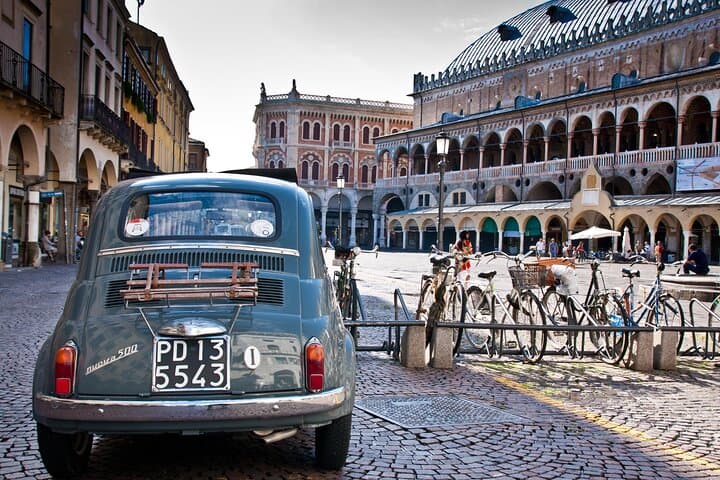
This small-group walk follows centuries of civic life: Roman foundations gave way to medieval markets in Piazza delle Erbe and Piazza della Frutta, while the Palazzo della Ragione—built 1218—still separates the twin squares with its vast Salone. The University of Padua, founded 1222, shaped a city of scholars; the Bo and its anatomical theater recall early scientific revolutions. Geologically, Padua sits on the Venetian plain—flat clay soils and reclaimed marsh that made canals and trade possible, and that now keep the city intimate and walkable.
Culture here is tactile: market stalls selling salumi and cheeses, students crowding the former ghetto’s narrow streets, and the ritual of aperitivo in Piazza dei Signori. Caffè Pedrocchi is as much a social landmark as a coffee stop; tasting a mint coffee connects you to a local rhythm of pauses and conversation.
Practically, this is a three-hour, low-effort urban walk on cobbles and narrow lanes. Expect frequent stops, some staircases in historic buildings, and crowded markets on market days. Wear grippy shoes, bring a refillable bottle, and carry a light rain layer—weather shifts quickly on the plain. Travelers should book train tickets in advance, check for any central access fees, and allow time for lines at major sites. The guide’s local knowledge turns a route of monuments into a living city you can read by foot.
easy.
3 hours.
Light walking fitness; suitable for most people comfortable with a few hours on foot and some staircases.
Meet your guide at Padua train station; the tour begins at Prato della Valle and typically finishes near Caffè Pedrocchi or the historic market.
Yes—many streets are stroller-accessible, but cobbles and occasional steps may make a light stroller preferable; check with the operator for specifics.
The itinerary focuses on exterior visits and markets; specific museum or basilica interior admissions are generally not included unless stated on the booking page.
Tours are led by a local guide—verify the language at booking. Small-group tours commonly run in English and Italian depending on demand.
Padua’s civic heart grew from Roman times into a medieval university city; the University of Padua (1222) played a key role in Renaissance science and culture.
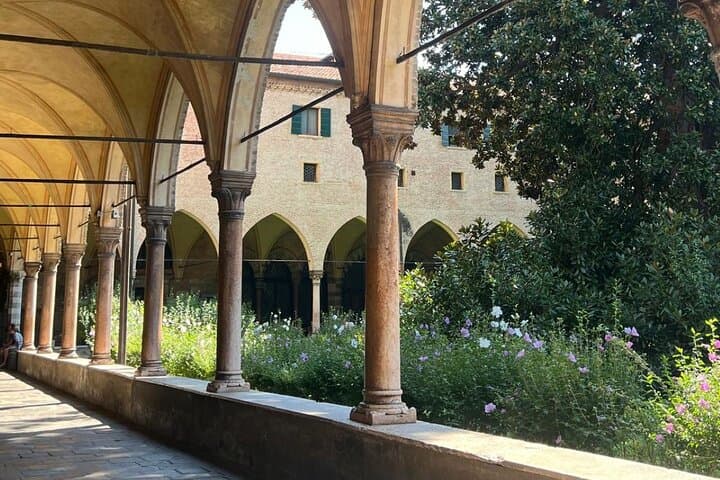
As a densely historic city, Padua emphasizes pedestrian zones and preservation; visitors should avoid littering, stick to marked paths and respect historic fabric to reduce wear on ancient stone.
Lovivo Tour Experience operates guided outdoor trips and adventures with an emphasis on safety, stewardship, and memorable experiences.
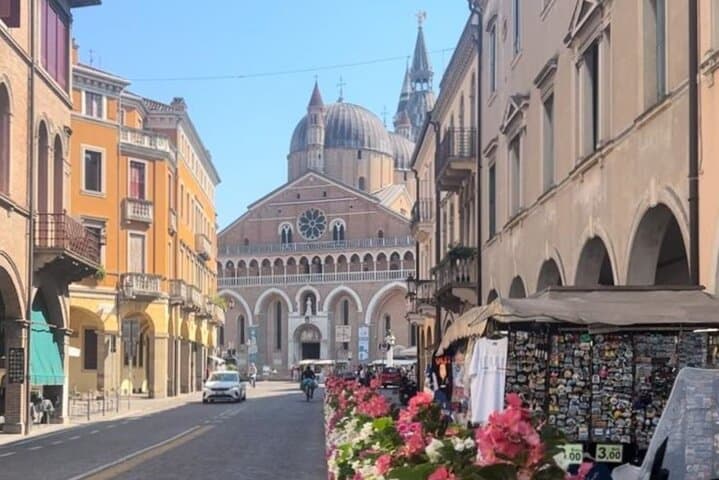
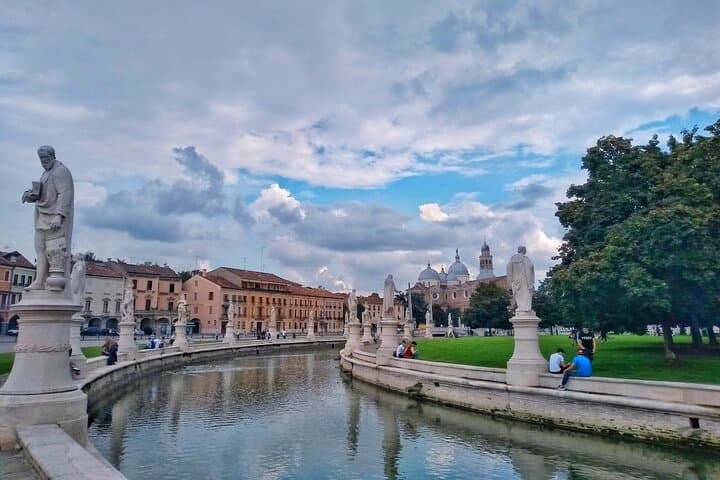
You arrive by train and the city opens like a map beneath your feet: wide Prato della Valle’s ring of statues frames a low sky, the Bacchiglione threads through stone bridges and the distant bells of Il Santo mark time.
You arrive by train and the city opens like a map beneath your feet: wide Prato della Valle’s ring of statues frames a low sky, the Bacchiglione threads through stone bridges and the distant bells of Il Santo mark time.
This small-group walk follows centuries of civic life: Roman foundations gave way to medieval markets in Piazza delle Erbe and Piazza della Frutta, while the Palazzo della Ragione—built 1218—still separates the twin squares with its vast Salone. The University of Padua, founded 1222, shaped a city of scholars; the Bo and its anatomical theater recall early scientific revolutions. Geologically, Padua sits on the Venetian plain—flat clay soils and reclaimed marsh that made canals and trade possible, and that now keep the city intimate and walkable.
Culture here is tactile: market stalls selling salumi and cheeses, students crowding the former ghetto’s narrow streets, and the ritual of aperitivo in Piazza dei Signori. Caffè Pedrocchi is as much a social landmark as a coffee stop; tasting a mint coffee connects you to a local rhythm of pauses and conversation.
Practically, this is a three-hour, low-effort urban walk on cobbles and narrow lanes. Expect frequent stops, some staircases in historic buildings, and crowded markets on market days. Wear grippy shoes, bring a refillable bottle, and carry a light rain layer—weather shifts quickly on the plain. Travelers should book train tickets in advance, check for any central access fees, and allow time for lines at major sites. The guide’s local knowledge turns a route of monuments into a living city you can read by foot.