THE ADVENTURE COLLECTIVE® · Independent discovery and booking for outdoor travel

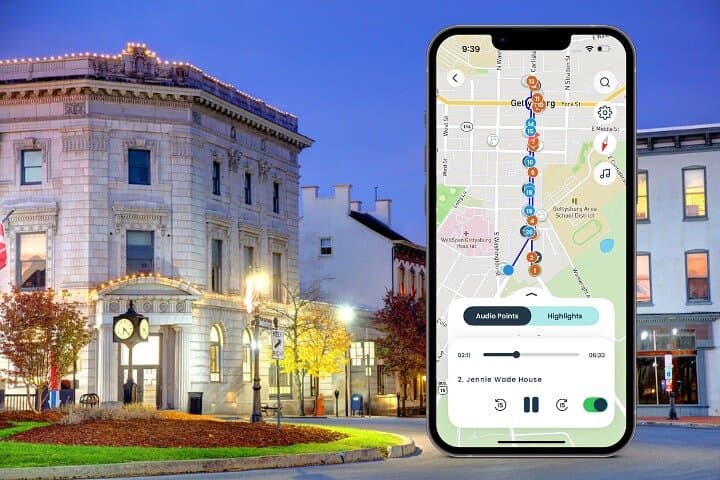
Trace the footsteps of history through Gettysburg’s streets and ridges with a Shaka Guide self-guided walking tour. Download once, follow GPS-activated narration, and explore key sites like the David Wills House and the Jennie Wade House at your own pace.
Trace the footsteps of history through Gettysburg’s streets and ridges with a Shaka Guide self-guided walking tour. Download once, follow GPS-activated narration, and explore key sites like the David Wills House and the Jennie Wade House at your own pace.
A morning in Gettysburg begins with a chill that moves across the long slopes of Cemetery Ridge and up through the town’s brick-lined streets. The guide places you at 778 Baltimore Street; cobblestone noise, bronze figures, and the hush of low stone walls replace traffic’s hum as you step into scenes from 1863.
Verified experiences and guided adventures in the surrounding area.
Operated by Shaka Guide Apps · Gettysburg, Pennsylvania
A morning in Gettysburg begins with a chill that moves across the long slopes of Cemetery Ridge and up through the town’s brick-lined streets. The guide places you at 778 Baltimore Street; cobblestone noise, bronze figures, and the hush of low stone walls replace traffic’s hum as you step into scenes from 1863.
Geology here is modest—rolling limestone ridges carved by time that made the town a decisive tactical ground. The battlefield’s open fields and hedgerows still direct sightlines the way troop formations once were funneled; monuments stand where men once held and lost ground. Culturally, downtown Gettysburg wears its history plainly: period inns, taverns that served as hospitals, and local diners where contemporary residents swap stories about reenactments and preservation efforts.
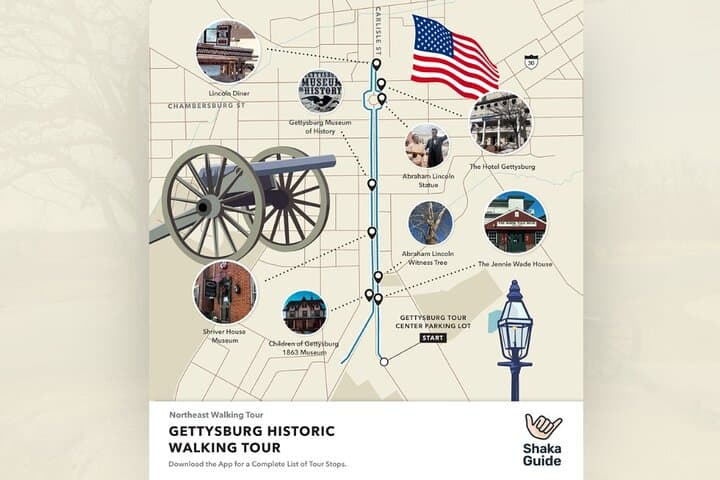
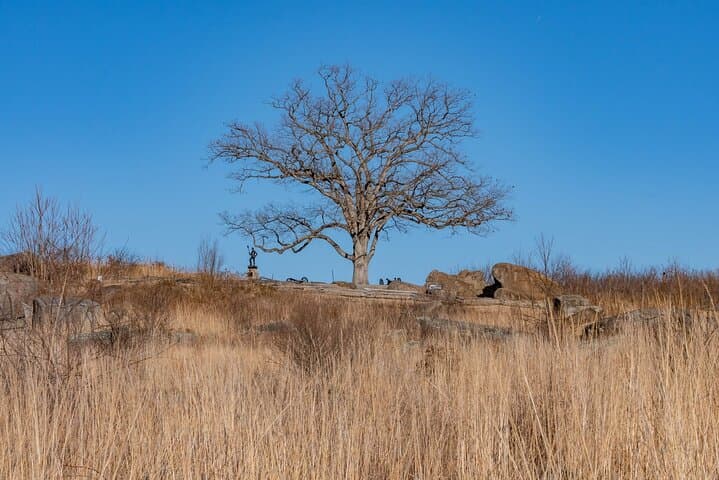
The tour threads history with places: the David Wills House where Lincoln stayed, the Jennie Wade House with its preserved bullet-marked walls, and the Abraham Lincoln Witness Tree, a living anchor to the past. Local guides and museums add context—how the town recovered, how homes doubled as aid stations, and how memory shapes community identity today.
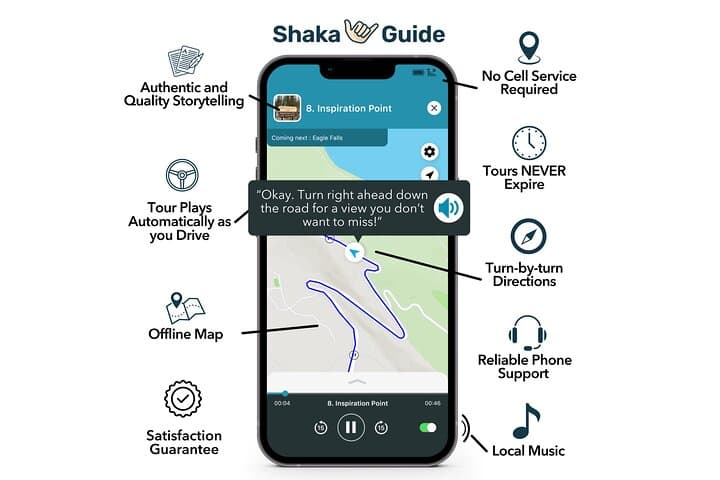
Practical guidance: download the Shaka Guide app before you arrive and load the tour on Wi‑Fi; audio narration and GPS cues work offline. Expect to be on your feet for multiple hours with frequent stops—comfortable shoes and water are nonnegotiable. Midday in summer brings strong sun; spring and fall offer crisp, changeable weather. Respect markers and private property, and allow extra time for museum visits and local meals—the Lincoln Diner and Dobbin House make good breaks. This self-guided format gives flexibility: pause, linger, and let the landscape’s quiet tell its part of the story.
easy.
12–13 hours (self-paced; can be shortened).
Suitable for most fitness levels but requires standing and walking on hard surfaces for extended periods
Redeem the 10-digit booking reference in the Shaka Guide app, download the tour over Wi‑Fi, then launch it under "My Stuff"—no continuous data needed.
Many downtown sites and sidewalks are wheelchair accessible, but some historic buildings have limited access—check individual site policies for details.
Yes—the self-guided format lets you pause, skip, or linger; the suggested route optimizes timing but is flexible to your schedule.
Admissions are generally not included; check each attraction’s hours and ticketing in advance to plan visits and meals.
Gettysburg was the turning point of the American Civil War in July 1863; Lincoln’s Gettysburg Address consecrated the Soldiers' National Cemetery and redefined the war’s purpose.
Preservation is active: stay on marked paths, don’t collect artifacts, and support local museums that fund battlefield upkeep and education.
Shaka Guide Apps operates guided outdoor trips and adventures with an emphasis on safety, stewardship, and memorable experiences.
A morning in Gettysburg begins with a chill that moves across the long slopes of Cemetery Ridge and up through the town’s brick-lined streets. The guide places you at 778 Baltimore Street; cobblestone noise, bronze figures, and the hush of low stone walls replace traffic’s hum as you step into scenes from 1863.
A morning in Gettysburg begins with a chill that moves across the long slopes of Cemetery Ridge and up through the town’s brick-lined streets. The guide places you at 778 Baltimore Street; cobblestone noise, bronze figures, and the hush of low stone walls replace traffic’s hum as you step into scenes from 1863.
Geology here is modest—rolling limestone ridges carved by time that made the town a decisive tactical ground. The battlefield’s open fields and hedgerows still direct sightlines the way troop formations once were funneled; monuments stand where men once held and lost ground. Culturally, downtown Gettysburg wears its history plainly: period inns, taverns that served as hospitals, and local diners where contemporary residents swap stories about reenactments and preservation efforts.
The tour threads history with places: the David Wills House where Lincoln stayed, the Jennie Wade House with its preserved bullet-marked walls, and the Abraham Lincoln Witness Tree, a living anchor to the past. Local guides and museums add context—how the town recovered, how homes doubled as aid stations, and how memory shapes community identity today.
Practical guidance: download the Shaka Guide app before you arrive and load the tour on Wi‑Fi; audio narration and GPS cues work offline. Expect to be on your feet for multiple hours with frequent stops—comfortable shoes and water are nonnegotiable. Midday in summer brings strong sun; spring and fall offer crisp, changeable weather. Respect markers and private property, and allow extra time for museum visits and local meals—the Lincoln Diner and Dobbin House make good breaks. This self-guided format gives flexibility: pause, linger, and let the landscape’s quiet tell its part of the story.