THE ADVENTURE COLLECTIVE® · Independent discovery and booking for outdoor travel

Walk the longest canopy bridge in Africa at Lekki Conservation Centre and trade Lagos’ traffic for mangrove-scented air and elevated boardwalks. This practical guide explains what to expect, when to go, and how to make the most of a 2–3 hour nature escape.
Walk the longest canopy bridge in Africa at Lekki Conservation Centre and trade Lagos’ traffic for mangrove-scented air and elevated boardwalks. This practical guide explains what to expect, when to go, and how to make the most of a 2–3 hour nature escape.
The path into Lekki Conservation Centre begins beneath a thick canopy where light filters down in narrow bands and the air smells of damp earth and sea salt. Walking the elevated boardwalk, the canopy bridge rises ahead like a deliberate challenge—trees leaning close enough to brush your sleeve, monkeys chattering as if comparing routes.
Verified experiences and guided adventures in the surrounding area.
Operated by Samap Travels & Tours LTD · Lagos, Lagos State
The path into Lekki Conservation Centre begins beneath a thick canopy where light filters down in narrow bands and the air smells of damp earth and sea salt. Walking the elevated boardwalk, the canopy bridge rises ahead like a deliberate challenge—trees leaning close enough to brush your sleeve, monkeys chattering as if comparing routes.
Opened in 1990 by the Nigerian Conservation Foundation, the centre preserves coastal forest and mangrove where the Atlantic meets Lagos’ fast-moving development. Geologically the reserve sits on coastal plain and lagoon-edge soils; the raised walkways protect fragile root systems and give views over fish ponds and reed beds. Culturally, the site is a popular city escape for Lagosians—weekend picnics, folklore tours, and school outings are common, and you’ll pass local families as easily as foreign visitors.
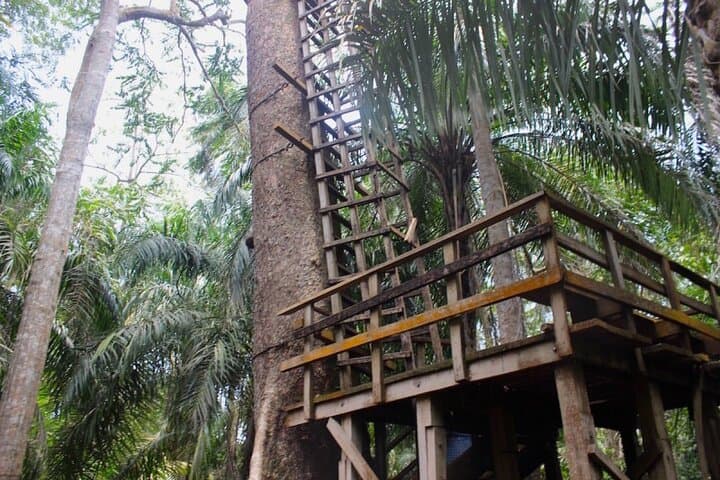
Expect to see a variety of birds, patrolling crocodiles in shaded ponds, and troops of mona and vervet monkeys that move with practiced ease. The tree house and observation platform at the canopy bridge’s midpoint offer sweeping lagoon views and a good vantage for photography.
Practical guidance: wear closed-toe shoes with good grip for the wooden walkways and bring insect repellent; parts of the trail can be muddy after rain. Mornings are cooler and bird activity peaks just after sunrise—plan an early visit to avoid heat and crowds. The centre provides onsite rest areas and a small visitor centre; guided tours often include pickup in Lagos and bottled water. Respect posted paths, avoid feeding wildlife, and leave no trace—this space functions as both refuge and classroom for urban nature in Lagos.
moderate.
2–3 hours.
Suitable for those with a moderate level of fitness; involves walking on uneven wooden platforms and climbing stairs to the canopy bridge and tree house.
Typical visits last 2–3 hours, long enough to walk the boardwalk, cross the canopy bridge, climb the tree house, and visit ponds.
Yes—many operators include private pickup and bottled water; check your booking for included transport and pickup details.
The bridge has safety railings and is generally safe, but children should be supervised and avoid running on the walkway.
Designated rest and picnic areas exist; follow centre rules about waste and do not feed wildlife.
Established by the Nigerian Conservation Foundation in 1990, the centre was created to protect coastal forest fragments amid rapid Lagos development and to provide education on conservation.
Raised walkways and controlled access minimize disturbance to delicate root systems and bird nesting areas; visitors are asked to stick to paths and carry out waste.
Samap Travels & Tours LTD operates guided outdoor trips and adventures with an emphasis on safety, stewardship, and memorable experiences.
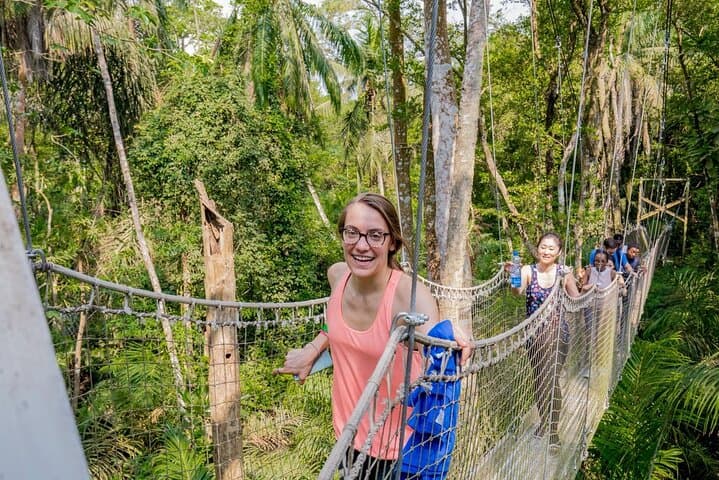


The path into Lekki Conservation Centre begins beneath a thick canopy where light filters down in narrow bands and the air smells of damp earth and sea salt. Walking the elevated boardwalk, the canopy bridge rises ahead like a deliberate challenge—trees leaning close enough to brush your sleeve, monkeys chattering as if comparing routes.
The path into Lekki Conservation Centre begins beneath a thick canopy where light filters down in narrow bands and the air smells of damp earth and sea salt. Walking the elevated boardwalk, the canopy bridge rises ahead like a deliberate challenge—trees leaning close enough to brush your sleeve, monkeys chattering as if comparing routes.
Opened in 1990 by the Nigerian Conservation Foundation, the centre preserves coastal forest and mangrove where the Atlantic meets Lagos’ fast-moving development. Geologically the reserve sits on coastal plain and lagoon-edge soils; the raised walkways protect fragile root systems and give views over fish ponds and reed beds. Culturally, the site is a popular city escape for Lagosians—weekend picnics, folklore tours, and school outings are common, and you’ll pass local families as easily as foreign visitors.
Expect to see a variety of birds, patrolling crocodiles in shaded ponds, and troops of mona and vervet monkeys that move with practiced ease. The tree house and observation platform at the canopy bridge’s midpoint offer sweeping lagoon views and a good vantage for photography.
Practical guidance: wear closed-toe shoes with good grip for the wooden walkways and bring insect repellent; parts of the trail can be muddy after rain. Mornings are cooler and bird activity peaks just after sunrise—plan an early visit to avoid heat and crowds. The centre provides onsite rest areas and a small visitor centre; guided tours often include pickup in Lagos and bottled water. Respect posted paths, avoid feeding wildlife, and leave no trace—this space functions as both refuge and classroom for urban nature in Lagos.