THE ADVENTURE COLLECTIVE® · Independent discovery and booking for outdoor travel

A private full-day excursion from Auckland that pairs Waitomo’s glowworm grotto with Rotorua’s geothermal and Māori cultural center. Expect cave boat rides, geyser eruptions, kiwi viewing, and expert local interpretation—packed into a long but accessible day.
A private full-day excursion from Auckland that pairs Waitomo’s glowworm grotto with Rotorua’s geothermal and Māori cultural center. Expect cave boat rides, geyser eruptions, kiwi viewing, and expert local interpretation—packed into a long but accessible day.
You leave Auckland early and the city thins to rolling pasture and clipped hedgerows; the road seems to push you toward pockets of shadow where underground rivers wait. At Waitomo you step into cool limestone air and silence—the cave mouth framing a ceiling pulsing with tiny blue lights. Your guide moves with practiced calm, and the flat-bottom boat takes you into a river-run grotto where glowworms hang like suspended stars, their light tempting you to breathe softer.
Verified experiences and guided adventures in the surrounding area.
Operated by Auckland & Beyond Tours · Waitomo, Waikato
You leave Auckland early and the city thins to rolling pasture and clipped hedgerows; the road seems to push you toward pockets of shadow where underground rivers wait. At Waitomo you step into cool limestone air and silence—the cave mouth framing a ceiling pulsing with tiny blue lights. Your guide moves with practiced calm, and the flat-bottom boat takes you into a river-run grotto where glowworms hang like suspended stars, their light tempting you to breathe softer.
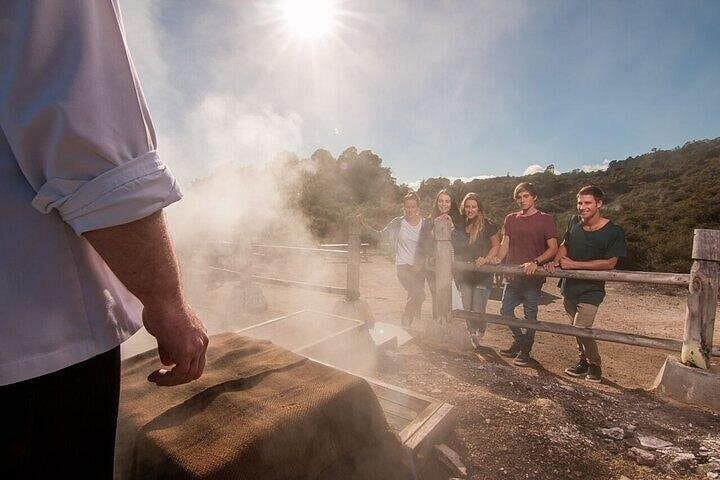
The caves are carved from Jurassic-age limestone and have long held significance for local Māori as places of lore and resource. The glowworms (Arachnocampa luminosa) are endemic, feeding on insects drawn into their sticky threads. After the grotto, the drive toward Rotorua cuts into a geothermal landscape—steam vents, mud pots and the dramatic Pohutu geyser at Te Puia, which erupts on rhythmic, human timescales. At Te Puia you’ll see traditional carving and weaving, meet kiwi in a nocturnal house, and feel geothermal heat underfoot.
Practical guidance: this is a full-day private transfer (roughly 10–12 hours on tour, including drives). Wear grippy shoes and a light waterproof; caves are damp and boardwalks can be slick. No flash photography in caves, and follow guides’ instructions to protect glowworm displays. Bring motion-sickness remedies for the road and a camera with low-light settings for the surface sights. Expect short guided walks, easy boat travel in the grotto, and a mix of cultural interpretation and geology at Te Puia. Plan for variable weather and pockets of strong geothermal smell—respect Māori spaces and leave the environment as you found it.
easy.
10–12 hours.
Suitable for most fitness levels; requires short walks on uneven or damp surfaces and boarding a small boat.
The tour runs about 10–12 hours door-to-door from central Auckland, with roughly 2.5 hours each way to Waitomo and a further 2-hour drive to Rotorua included in the loop.
Yes—Waitomo’s glowworms are active year-round in the cave’s stable, humid environment; seasonal changes don’t affect visibility inside the grotto.
Yes—infants and small children can be accommodated, but strollers may be limited to surface areas; cave access requires stepping and a brief boat ride, so plan accordingly.
You can photograph them using low-light settings or long exposures without flash; guides will advise on where and when it’s permitted to avoid disturbing the animals.
Waitomo caves and Rotorua’s geothermal valleys have long cultural significance to local Māori; caves were used for shelter and resources, and geothermal features figure in oral history and local practices.
Cave ecosystems are delicate—follow no-touch rules, avoid flash photography, and stay on marked trails; Te Puia manages visitor impact through guided access and cultural protocols.
Auckland & Beyond Tours operates guided outdoor trips and adventures with an emphasis on safety, stewardship, and memorable experiences.

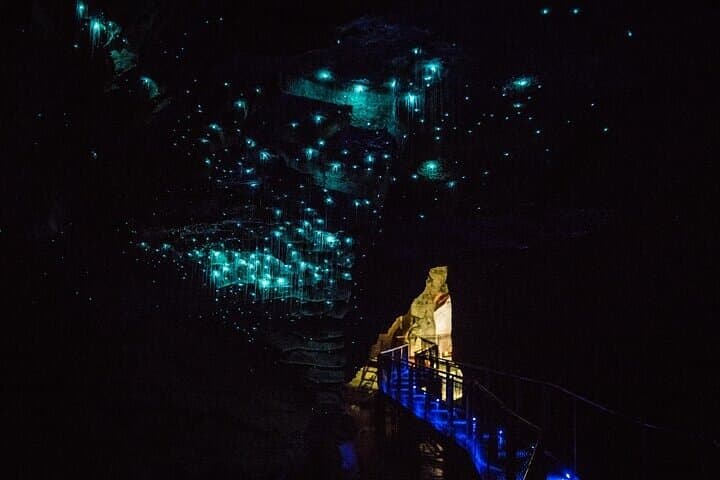
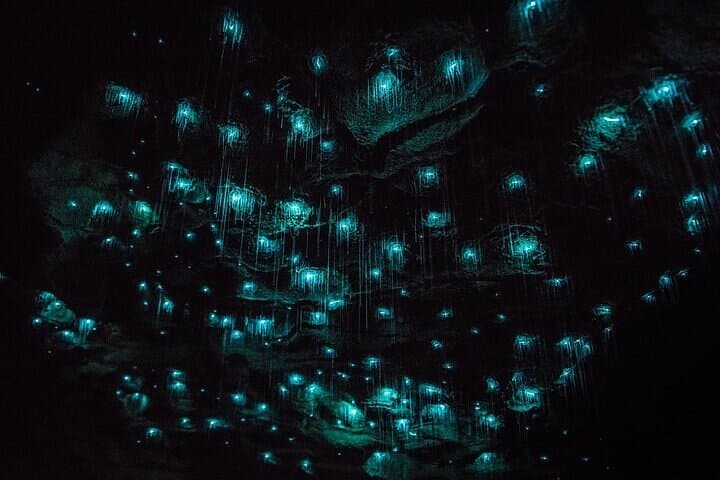
You leave Auckland early and the city thins to rolling pasture and clipped hedgerows; the road seems to push you toward pockets of shadow where underground rivers wait. At Waitomo you step into cool limestone air and silence—the cave mouth framing a ceiling pulsing with tiny blue lights. Your guide moves with practiced calm, and the flat-bottom boat takes you into a river-run grotto where glowworms hang like suspended stars, their light tempting you to breathe softer.
You leave Auckland early and the city thins to rolling pasture and clipped hedgerows; the road seems to push you toward pockets of shadow where underground rivers wait. At Waitomo you step into cool limestone air and silence—the cave mouth framing a ceiling pulsing with tiny blue lights. Your guide moves with practiced calm, and the flat-bottom boat takes you into a river-run grotto where glowworms hang like suspended stars, their light tempting you to breathe softer.
The caves are carved from Jurassic-age limestone and have long held significance for local Māori as places of lore and resource. The glowworms (Arachnocampa luminosa) are endemic, feeding on insects drawn into their sticky threads. After the grotto, the drive toward Rotorua cuts into a geothermal landscape—steam vents, mud pots and the dramatic Pohutu geyser at Te Puia, which erupts on rhythmic, human timescales. At Te Puia you’ll see traditional carving and weaving, meet kiwi in a nocturnal house, and feel geothermal heat underfoot.
Practical guidance: this is a full-day private transfer (roughly 10–12 hours on tour, including drives). Wear grippy shoes and a light waterproof; caves are damp and boardwalks can be slick. No flash photography in caves, and follow guides’ instructions to protect glowworm displays. Bring motion-sickness remedies for the road and a camera with low-light settings for the surface sights. Expect short guided walks, easy boat travel in the grotto, and a mix of cultural interpretation and geology at Te Puia. Plan for variable weather and pockets of strong geothermal smell—respect Māori spaces and leave the environment as you found it.