THE ADVENTURE COLLECTIVE® · Independent discovery and booking for outdoor travel

Small groups, historic wrecks, and reef dives near Waikiki make this two‑tank morning trip a top pick for certified divers. Expect guided wreck exploration, turtle encounters, and practical briefings from PADI professionals.
Small groups, historic wrecks, and reef dives near Waikiki make this two‑tank morning trip a top pick for certified divers. Expect guided wreck exploration, turtle encounters, and practical briefings from PADI professionals.
The boat slips away from Ala Wai Small Boat Harbor and the surf of Waikiki falls behind you — warm trade winds tapping the rail, the city shrinking to a low line of hotels. Within an hour the reef flats and the first shadow of a wreck sit below the surface; the ocean here changes tone from bright turquoise to inky blue, daring you to go deeper.
Verified experiences and guided adventures in the surrounding area.
Operated by Ocean Therapy Charters · Honolulu, Hawaii
The boat slips away from Ala Wai Small Boat Harbor and the surf of Waikiki falls behind you — warm trade winds tapping the rail, the city shrinking to a low line of hotels. Within an hour the reef flats and the first shadow of a wreck sit below the surface; the ocean here changes tone from bright turquoise to inky blue, daring you to go deeper.
Oahu’s southern shore has long been a crossroads for Pacific navigation and naval history, which is why the seafloor around Honolulu is scattered with mid‑20th century wrecks and artificial reefs. Volcanic foundations and reef terraces create short, steep drop‑offs where currents sweep nutrients past corals, attracting turtles, octopus, and schooling tropical fish. Local dive culture is pragmatic and safety‑minded: small groups, experienced PADI guides, and an emphasis on low‑impact interaction with marine life.
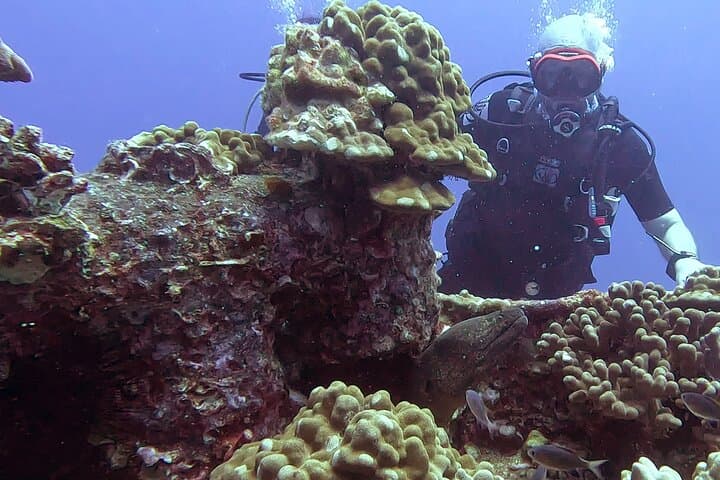
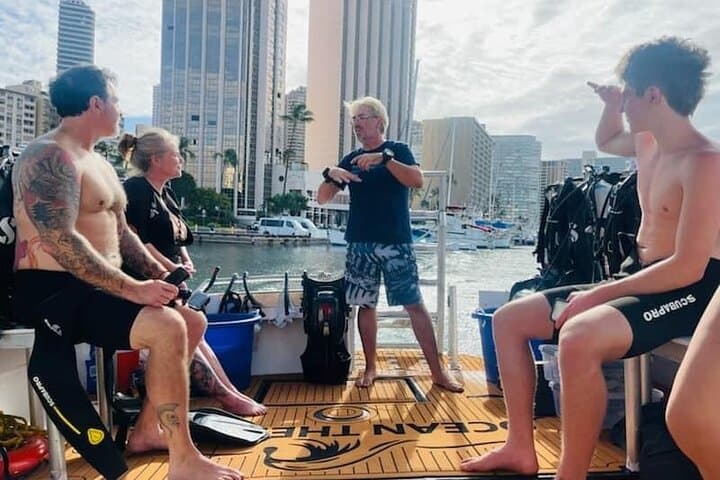
On a two‑tank morning you’ll typically do one deep wreck — choices include Corsair and the YO/San Pedro — then surface for snacks before a shallow, buoyant reef dive at a turtle cleaning station or Ewa Pinnacles. Expect brief boat rides, careful briefings, and guided descents tailored to certification levels.
Practical guidance: bring your certification card and logbook, arrive hydrated and sun‑protected, and be ready to give height/weight for gear fit. Check the 24‑hour cancellation policy and talk to staff about sea‑sickness options if you’re prone to motion. Respect marine life: no touching, no chasing, and use only reef‑safe sunscreen. With proper prep, this is one of Waikiki’s most accessible ways to swim through history and active reef systems.
moderate.
4 hours.
Moderate fitness recommended — comfortable swimming ability, able to carry/secure gear and perform controlled ascents.
Yes — this trip is for certified SCUBA divers only; you must present your certification agency and number at check‑in.
Depth varies by site but wrecks listed include mid‑range depths typical for recreational diving (often 30–60 feet for accessible sections), with profiles tailored to certified diver levels.
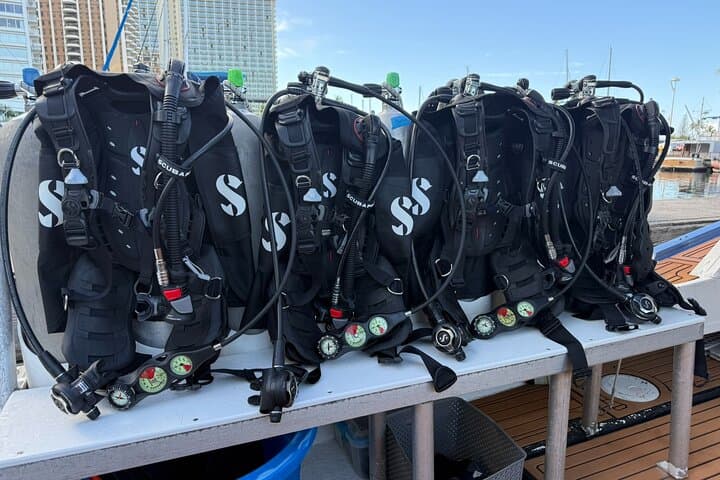
Guided dives with a PADI Dive Master or Instructor, gear rental (tanks, weights, BCD), bottled beverages and snacks are included; confirm specifics at booking.
Bring motion‑sickness medication if you’re prone; speak with staff before boarding — calm weather is common in summer but winter swells can increase motion.
Many dive sites are former naval or commercial wrecks and were added to local dive charts after mid‑20th century ship losses and reef enhancement projects.
Operators follow island guidelines: no touching wildlife, reef‑safe sunscreens encouraged, and briefings focus on minimizing contact with fragile benthic habitats.
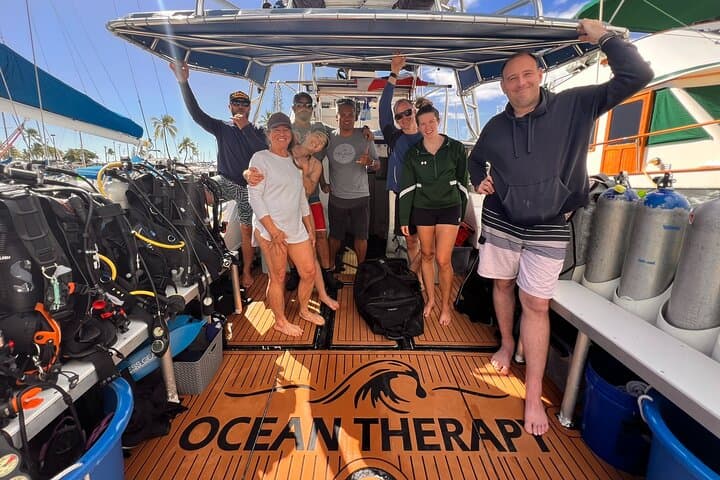
Ocean Therapy Charters operates guided outdoor trips and adventures with an emphasis on safety, stewardship, and memorable experiences.
The boat slips away from Ala Wai Small Boat Harbor and the surf of Waikiki falls behind you — warm trade winds tapping the rail, the city shrinking to a low line of hotels. Within an hour the reef flats and the first shadow of a wreck sit below the surface; the ocean here changes tone from bright turquoise to inky blue, daring you to go deeper.
The boat slips away from Ala Wai Small Boat Harbor and the surf of Waikiki falls behind you — warm trade winds tapping the rail, the city shrinking to a low line of hotels. Within an hour the reef flats and the first shadow of a wreck sit below the surface; the ocean here changes tone from bright turquoise to inky blue, daring you to go deeper.
Oahu’s southern shore has long been a crossroads for Pacific navigation and naval history, which is why the seafloor around Honolulu is scattered with mid‑20th century wrecks and artificial reefs. Volcanic foundations and reef terraces create short, steep drop‑offs where currents sweep nutrients past corals, attracting turtles, octopus, and schooling tropical fish. Local dive culture is pragmatic and safety‑minded: small groups, experienced PADI guides, and an emphasis on low‑impact interaction with marine life.
On a two‑tank morning you’ll typically do one deep wreck — choices include Corsair and the YO/San Pedro — then surface for snacks before a shallow, buoyant reef dive at a turtle cleaning station or Ewa Pinnacles. Expect brief boat rides, careful briefings, and guided descents tailored to certification levels.
Practical guidance: bring your certification card and logbook, arrive hydrated and sun‑protected, and be ready to give height/weight for gear fit. Check the 24‑hour cancellation policy and talk to staff about sea‑sickness options if you’re prone to motion. Respect marine life: no touching, no chasing, and use only reef‑safe sunscreen. With proper prep, this is one of Waikiki’s most accessible ways to swim through history and active reef systems.