THE ADVENTURE COLLECTIVE® · Independent discovery and booking for outdoor travel

Sail from Waikiki at golden hour to watch migrating humpback whales against a Hawaiian sunset. This two-hour cruise pairs natural history commentary with a guaranteed re-ride if whales aren’t sighted during season.
Sail from Waikiki at golden hour to watch migrating humpback whales against a Hawaiian sunset. This two-hour cruise pairs natural history commentary with a guaranteed re-ride if whales aren’t sighted during season.
The boat slips from the harbor as the sun leans toward the horizon and the Pacific turns molten gold. Salt air tangles with the sound of gulls; the ocean seems to dare you to keep watching. Minutes from Waikiki’s shore, the boat finds the line where migrating humpback whales break the surface—breaching, tail-lobbing, and exhaling steam that catches the last light.
Verified experiences and guided adventures in the surrounding area.
Operated by Pink Sails Waikiki · Honolulu, Hawaii
The boat slips from the harbor as the sun leans toward the horizon and the Pacific turns molten gold. Salt air tangles with the sound of gulls; the ocean seems to dare you to keep watching. Minutes from Waikiki’s shore, the boat finds the line where migrating humpback whales break the surface—breaching, tail-lobbing, and exhaling steam that catches the last light.
Humpbacks travel thousands of miles to Hawaiian waters each winter to breed and calve, a migration recorded in Hawaiian chant and modern science alike. The shoreline here is volcanic in origin; basalt cliffs and coral reefs shape the coastal currents that concentrate plankton and the small fish that draw whales and dolphins. Local crews blend natural history with island culture—calling out Hawaiian names, pointing to landmarks like Diamond Head, and sharing the etiquette of responsible viewing.
Practical guidance follows the spectacle. This is a two-hour cruise best scheduled to hit the stretch of sunset light and peak whale activity (typically December–April). Bring a layered, windproof jacket—the ocean cools quickly after sundown—and binoculars for distant flukes. Motion-sickness medication is sensible for those prone to seasickness; infants must sit on laps and pregnant travelers are advised against joining. The operator guarantees a free re-ride within the season if no whales are seen; ask about boarding location (commonly Kewalo Basin/Ala Moana area) and arrive 30 minutes early.
Expect clear safety briefings and respectful distances to wildlife. Hydrate, charge your camera, and let the sea push your pace—this is as much an education in migration and marine stewardship as it is a sunset show.
easy.
2 hours.
Suitable for most fitness levels; requires ability to board small vessels and stand for portions of the cruise
The operator offers a free re-ride within the official migration season if no whales are observed; they do not offer refunds for no-sightings.
Humpback whales are most commonly seen in Hawaiian waters from December through April—book during those months for peak chances.
Most Waikiki sunset whale cruises board from harbors near Waikiki, commonly Kewalo Basin or the Ala Moana area—confirm your specific boarding point when you book.
Yes, it’s family friendly; infants must sit on an adult’s lap. The tour notes it’s not recommended for pregnant travelers and advises following crew safety guidance.
Humpback whales hold cultural significance in Hawaiian tradition and have returned in larger numbers since sanctuary protections and conservation efforts began in the 20th century.
Responsible operators follow NOAA approach-distance rules and emphasize observation without disturbance; avoid flash photography and keep a respectful distance to reduce stress on marine life.
Pink Sails Waikiki operates guided outdoor trips and adventures with an emphasis on safety, stewardship, and memorable experiences.
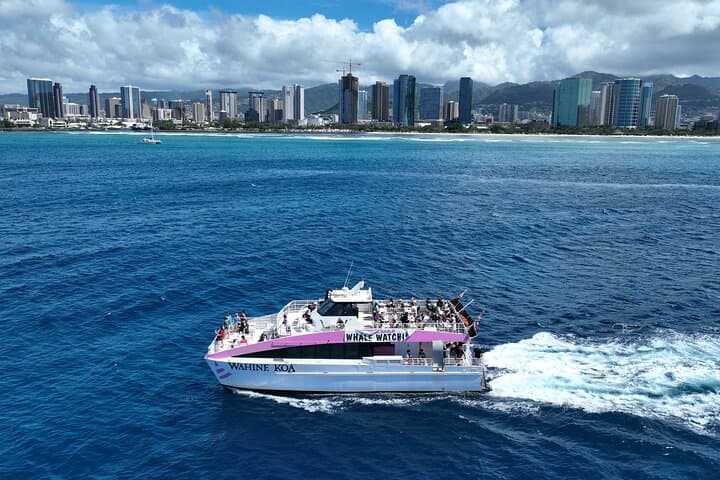
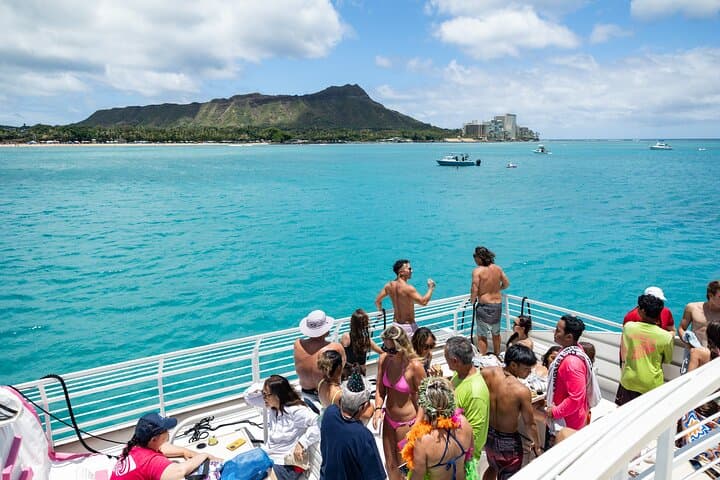
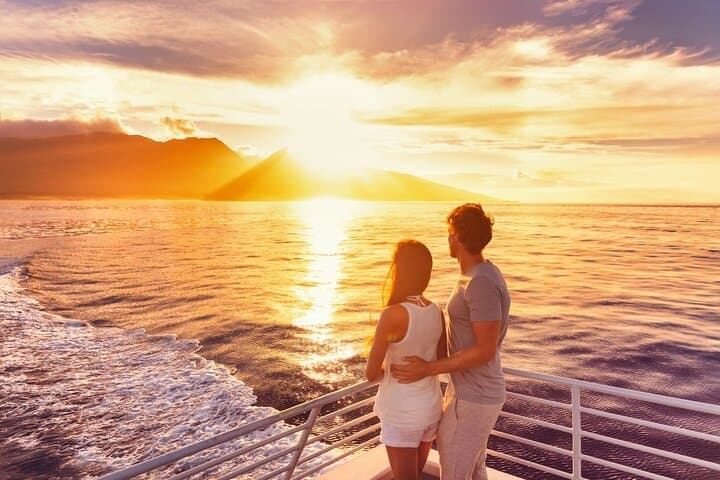
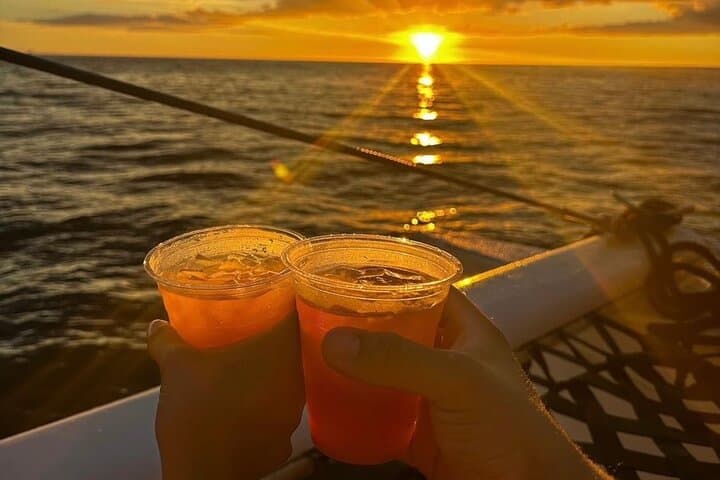
The boat slips from the harbor as the sun leans toward the horizon and the Pacific turns molten gold. Salt air tangles with the sound of gulls; the ocean seems to dare you to keep watching. Minutes from Waikiki’s shore, the boat finds the line where migrating humpback whales break the surface—breaching, tail-lobbing, and exhaling steam that catches the last light.
The boat slips from the harbor as the sun leans toward the horizon and the Pacific turns molten gold. Salt air tangles with the sound of gulls; the ocean seems to dare you to keep watching. Minutes from Waikiki’s shore, the boat finds the line where migrating humpback whales break the surface—breaching, tail-lobbing, and exhaling steam that catches the last light.
Humpbacks travel thousands of miles to Hawaiian waters each winter to breed and calve, a migration recorded in Hawaiian chant and modern science alike. The shoreline here is volcanic in origin; basalt cliffs and coral reefs shape the coastal currents that concentrate plankton and the small fish that draw whales and dolphins. Local crews blend natural history with island culture—calling out Hawaiian names, pointing to landmarks like Diamond Head, and sharing the etiquette of responsible viewing.
Practical guidance follows the spectacle. This is a two-hour cruise best scheduled to hit the stretch of sunset light and peak whale activity (typically December–April). Bring a layered, windproof jacket—the ocean cools quickly after sundown—and binoculars for distant flukes. Motion-sickness medication is sensible for those prone to seasickness; infants must sit on laps and pregnant travelers are advised against joining. The operator guarantees a free re-ride within the season if no whales are seen; ask about boarding location (commonly Kewalo Basin/Ala Moana area) and arrive 30 minutes early.
Expect clear safety briefings and respectful distances to wildlife. Hydrate, charge your camera, and let the sea push your pace—this is as much an education in migration and marine stewardship as it is a sunset show.