THE ADVENTURE COLLECTIVE® · Independent discovery and booking for outdoor travel

Two hours on Waikiki’s forgiving waves with a pro instructor — land drills, in-water coaching, and personalized pacing. Ideal for first-timers who want focused instruction and plenty of wave time.
Two hours on Waikiki’s forgiving waves with a pro instructor — land drills, in-water coaching, and personalized pacing. Ideal for first-timers who want focused instruction and plenty of wave time.
The morning light slices across Diamond Head and the long, rolling reefs of Waikiki breathe life into the lineup. A private two-hour lesson here means starting on sand — a short land session to lock in stance and paddle technique — then wading into gently breaking waves that tend to peel long and slow, inviting you to ride.
Verified experiences and guided adventures in the surrounding area.
Operated by Kahu Surf School · Honolulu, Hawaii
The morning light slices across Diamond Head and the long, rolling reefs of Waikiki breathe life into the lineup. A private two-hour lesson here means starting on sand — a short land session to lock in stance and paddle technique — then wading into gently breaking waves that tend to peel long and slow, inviting you to ride.
Surfing in Waikiki sits on top of deep cultural roots: heʻe nalu (wave sliding) has been practiced in Hawaii for centuries and the beaches here were once playgrounds for aliʻi (chiefs). Geologically, the reefs and points that shape Waikiki’s waves are the product of Honolulu’s volcanic foundations and coral growth, which together create the soft, rolling faces ideal for learners and longboard turns.
Local etiquette matters: give space to regulars, take direction from your instructor, and respect reef and marine life. Expect warm water year-round (roughly 76–80°F / 24–27°C), manageable currents, and wave heights usually from ankle-deep to shoulder-high for most beginner sessions. Instructors typically personalize drills and may help you catch 10–20 waves during a two-hour private class; many beginners stand up multiple times.
Practical guidance: arrive 10 minutes early with swimwear on, sunscreen applied, and a light snack and water. Wear a rash guard to reduce board rash and sun. If nervous about waves, ask for a land demo and gradual entry. Bookings often include boards, instruction, and basic photo/video capture, but confirm camera policy beforehand. Cancel or reschedule if weather or surf conditions are unsafe.
moderate.
2 hours.
Moderate fitness: short paddling bursts, ability to get up from prone position repeatedly and tread water.
No — lessons are tailored to skill level; instructors start with land drills and basic paddling for complete beginners.
Wear swimwear and a rash guard; barefoot is typical on the board, and reef booties are optional if you’re sensitive to rocky entries.
Yes — lessons generally include surfboard and basic instruction gear; confirm any specialty equipment with the provider.
Participants should be comfortable in waist- to chest-deep water; inform the operator of limitations so instructors can adjust intensity and proximity to shore.
Surfing is an ancient Hawaiian practice; Waikiki developed as a major surf spot in the early 20th century when longboarding and tourism grew in Honolulu.
Choose reef-safe sunscreen and avoid standing on coral; operators and visitors share responsibility for protecting fragile nearshore ecosystems.
Kahu Surf School operates guided outdoor trips and adventures with an emphasis on safety, stewardship, and memorable experiences.
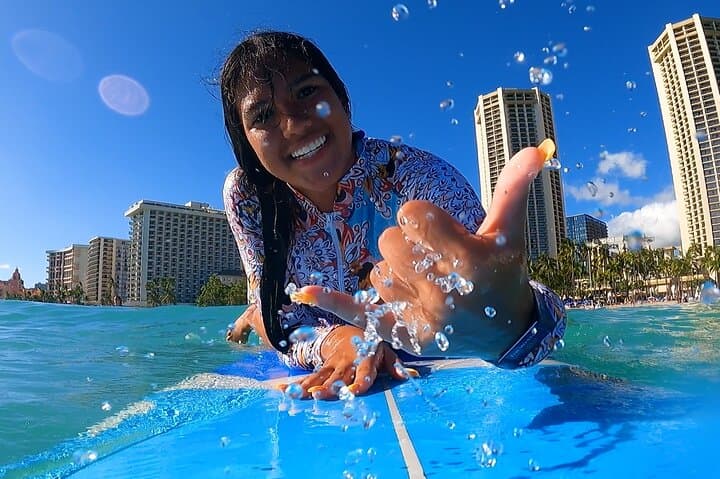
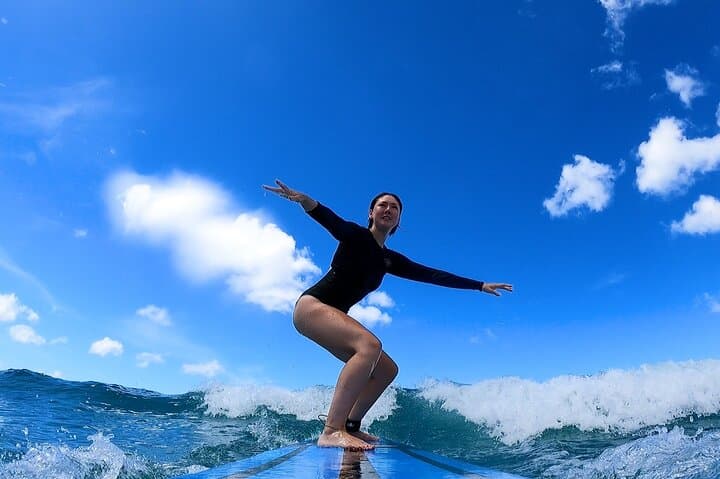
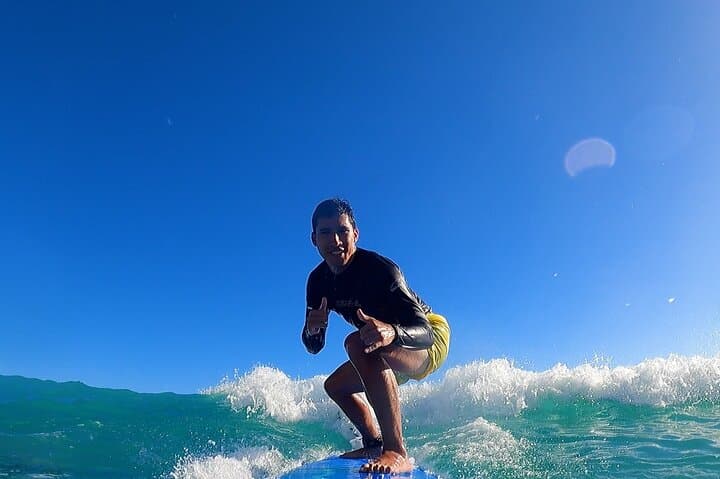
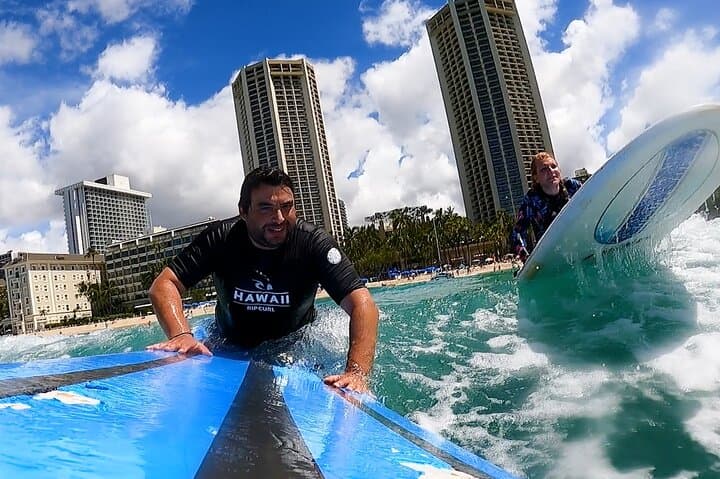
The morning light slices across Diamond Head and the long, rolling reefs of Waikiki breathe life into the lineup. A private two-hour lesson here means starting on sand — a short land session to lock in stance and paddle technique — then wading into gently breaking waves that tend to peel long and slow, inviting you to ride.
The morning light slices across Diamond Head and the long, rolling reefs of Waikiki breathe life into the lineup. A private two-hour lesson here means starting on sand — a short land session to lock in stance and paddle technique — then wading into gently breaking waves that tend to peel long and slow, inviting you to ride.
Surfing in Waikiki sits on top of deep cultural roots: heʻe nalu (wave sliding) has been practiced in Hawaii for centuries and the beaches here were once playgrounds for aliʻi (chiefs). Geologically, the reefs and points that shape Waikiki’s waves are the product of Honolulu’s volcanic foundations and coral growth, which together create the soft, rolling faces ideal for learners and longboard turns.
Local etiquette matters: give space to regulars, take direction from your instructor, and respect reef and marine life. Expect warm water year-round (roughly 76–80°F / 24–27°C), manageable currents, and wave heights usually from ankle-deep to shoulder-high for most beginner sessions. Instructors typically personalize drills and may help you catch 10–20 waves during a two-hour private class; many beginners stand up multiple times.
Practical guidance: arrive 10 minutes early with swimwear on, sunscreen applied, and a light snack and water. Wear a rash guard to reduce board rash and sun. If nervous about waves, ask for a land demo and gradual entry. Bookings often include boards, instruction, and basic photo/video capture, but confirm camera policy beforehand. Cancel or reschedule if weather or surf conditions are unsafe.