THE ADVENTURE COLLECTIVE® · Independent discovery and booking for outdoor travel

Launch from a forested ridge above the Hauraki Gulf and fly over native New Zealand bush on three 200m-plus ziplines, then slow down with an interpretive forest walk and an island mini-tour. This half-day from Auckland blends adrenaline with natural history.
Launch from a forested ridge above the Hauraki Gulf and fly over native New Zealand bush on three 200m-plus ziplines, then slow down with an interpretive forest walk and an island mini-tour. This half-day from Auckland blends adrenaline with natural history.
You step off the ferry into a bay that smells of salt, pine resin and simmering vineyard earth. Gulls wheel like impatient sentinels as a shuttle nudges past olive groves and small vineyards toward a stand of native tawa and kohekohe. On EcoZip's course the forest does not wait politely — the canopy leans close, wind threading through branches as if urging you forward. Then the cables appear: three flying-fox runs, each more than 200 metres, twin lines that let two people run side-by-side across valleys and above the forest.
Verified experiences and guided adventures in the surrounding area.
Operated by Ecozip Adventures · Matiatia, Auckland Region
You step off the ferry into a bay that smells of salt, pine resin and simmering vineyard earth. Gulls wheel like impatient sentinels as a shuttle nudges past olive groves and small vineyards toward a stand of native tawa and kohekohe. On EcoZip's course the forest does not wait politely — the canopy leans close, wind threading through branches as if urging you forward. Then the cables appear: three flying-fox runs, each more than 200 metres, twin lines that let two people run side-by-side across valleys and above the forest.
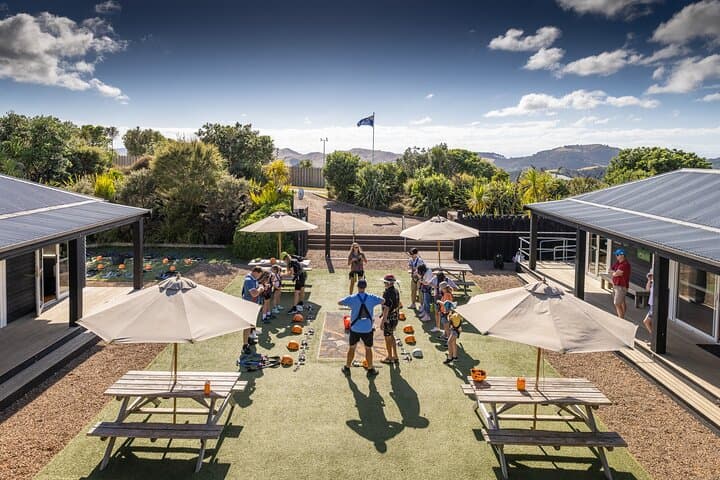
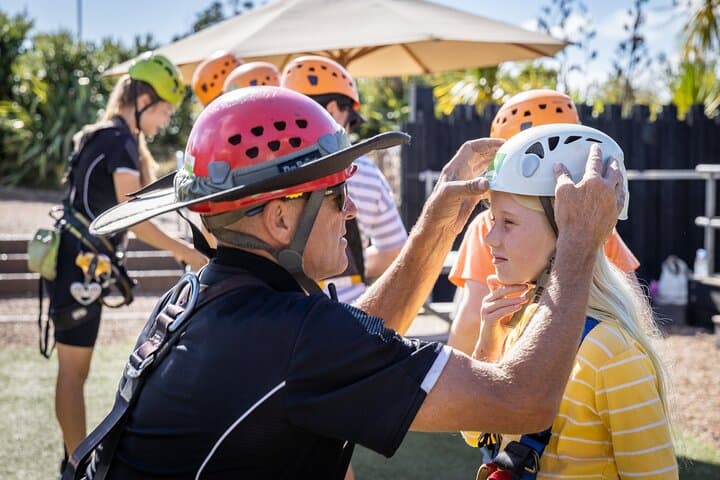
The zipline sequence on Waiheke is short and sharp: helmet, harness, a clear safety briefing, and the thrill of release. The dual-cable system keeps the ride steady while the island spreads below — the Hauraki Gulf that wraps Auckland’s islands pushing light across bays and reef. Guides stitch the experience together with a gentle interpretive walk through centuries-old native bush, pointing out rimu trunks, nikau palms and the calls of tūī and kererū. The island mini-tour that bookends the ziplines gives context: limestone outcrops, rocky coves, and small vineyards that reflect Waiheke’s more recent agricultural history.
Geologically Waiheke is a ridge of folded greywacke and softer sedimentary layers, shaped by coastal erosion and marine terraces. Māori settlement on the island dates back centuries; pā sites and middens speak to seasonal fishing and kūmara storage. Today the island balances tourism, boutique viticulture and conservation — many tracts of native bush are protected and actively regenerating.
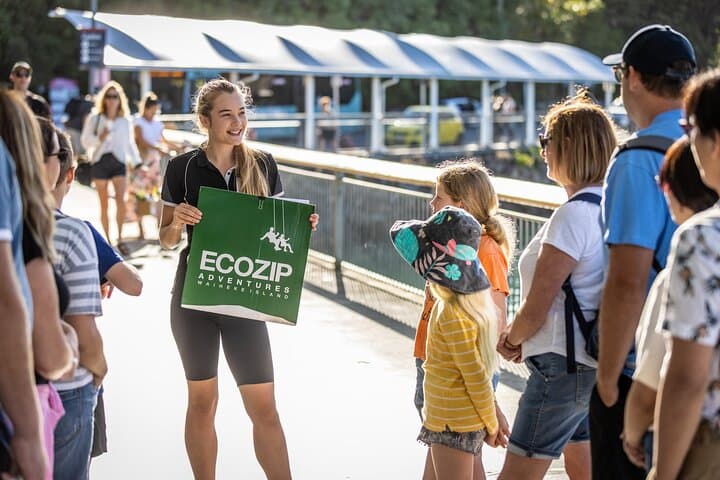
Practicalities matter: the full experience runs about three hours and meets at Matiatia ferry terminal; arrive 30 minutes early. Ferries from downtown Auckland take roughly 40 minutes (adult fares around NZ$59; children discounted). Minimum weight to take the zipline is 30 kg (66 lb), maximum 125 kg (275 lb). EcoZip asks participants to reconfirm 48 hours before departure and notes a NZ$49 fee for last-minute reschedules.
Prepare with sturdy closed-toe shoes and a light wind layer—the exposed zips often have a cooler breeze than shore level. Bring water and sunscreen; the walk is gentle but can be exposed in summer. Operators run in most weather; heavy winds or lightning will affect safety decisions. Guides manage groups of up to a dozen, keeping the experience personal and paced for photos and questions.
For travelers based in Auckland this is an easy half-day escape that mixes adrenaline with natural history. It’s quick to access yet substantial in texture: a place where wind, gulls and ancient trees all seem to have a say in how your afternoon unfolds.
moderate.
3 hours.
Suitable for most people with basic mobility; requires ability to walk on uneven ground and stand during brief instruction periods.
Participants must weigh between 30 kg (66 lb) and 125 kg (275 lb); weight is confirmed during booking and before the activity.
Fullers ferries run from downtown Auckland to Matiatia; plan for a 40-minute crossing and adult fares around NZ$59 (prices subject to change).
Children are welcome if they meet the minimum weight of 30 kg and can follow safety instructions; guardians should check age and supervision policies with the operator.
Tours run in most weather but heavy winds, lightning or unsafe conditions may cause delays or cancellations; the operator will advise and safety decisions are final.
You must reconfirm with the local operator 48 hours prior; reschedules within 48 hours incur a NZ$49 fee payable to EcoZip Adventures.
Yes—guides allow photography from platforms and the mini-tour; keep phones secure on the line and follow guide instructions for safety.
Waiheke has long been a seasonal food-gathering and settlement area for Māori; European viticulture expanded in the late 20th century, shaping the island’s orchard-and-vineyard landscape.
Much of Waiheke’s native bush is under active regeneration with pest-control programs; visitors are asked to stick to tracks and avoid disturbing wildlife.
Ecozip Adventures operates guided outdoor trips and adventures with an emphasis on safety, stewardship, and memorable experiences.
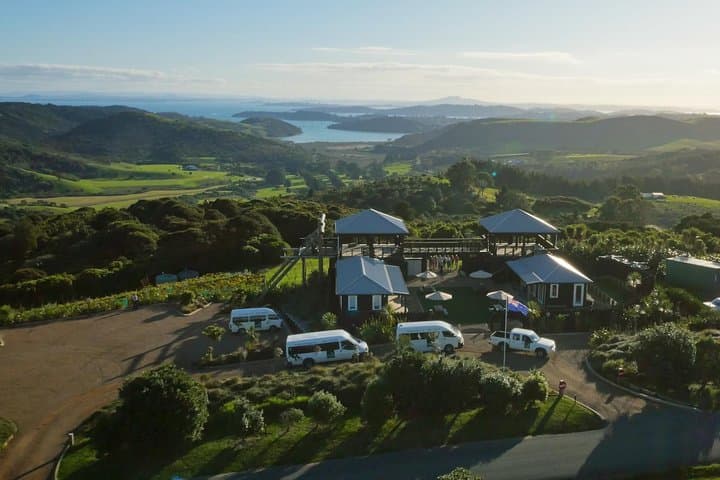
You step off the ferry into a bay that smells of salt, pine resin and simmering vineyard earth. Gulls wheel like impatient sentinels as a shuttle nudges past olive groves and small vineyards toward a stand of native tawa and kohekohe. On EcoZip's course the forest does not wait politely — the canopy leans close, wind threading through branches as if urging you forward. Then the cables appear: three flying-fox runs, each more than 200 metres, twin lines that let two people run side-by-side across valleys and above the forest.
You step off the ferry into a bay that smells of salt, pine resin and simmering vineyard earth. Gulls wheel like impatient sentinels as a shuttle nudges past olive groves and small vineyards toward a stand of native tawa and kohekohe. On EcoZip's course the forest does not wait politely — the canopy leans close, wind threading through branches as if urging you forward. Then the cables appear: three flying-fox runs, each more than 200 metres, twin lines that let two people run side-by-side across valleys and above the forest.
The zipline sequence on Waiheke is short and sharp: helmet, harness, a clear safety briefing, and the thrill of release. The dual-cable system keeps the ride steady while the island spreads below — the Hauraki Gulf that wraps Auckland’s islands pushing light across bays and reef. Guides stitch the experience together with a gentle interpretive walk through centuries-old native bush, pointing out rimu trunks, nikau palms and the calls of tūī and kererū. The island mini-tour that bookends the ziplines gives context: limestone outcrops, rocky coves, and small vineyards that reflect Waiheke’s more recent agricultural history.
Geologically Waiheke is a ridge of folded greywacke and softer sedimentary layers, shaped by coastal erosion and marine terraces. Māori settlement on the island dates back centuries; pā sites and middens speak to seasonal fishing and kūmara storage. Today the island balances tourism, boutique viticulture and conservation — many tracts of native bush are protected and actively regenerating.
Practicalities matter: the full experience runs about three hours and meets at Matiatia ferry terminal; arrive 30 minutes early. Ferries from downtown Auckland take roughly 40 minutes (adult fares around NZ$59; children discounted). Minimum weight to take the zipline is 30 kg (66 lb), maximum 125 kg (275 lb). EcoZip asks participants to reconfirm 48 hours before departure and notes a NZ$49 fee for last-minute reschedules.
Prepare with sturdy closed-toe shoes and a light wind layer—the exposed zips often have a cooler breeze than shore level. Bring water and sunscreen; the walk is gentle but can be exposed in summer. Operators run in most weather; heavy winds or lightning will affect safety decisions. Guides manage groups of up to a dozen, keeping the experience personal and paced for photos and questions.
For travelers based in Auckland this is an easy half-day escape that mixes adrenaline with natural history. It’s quick to access yet substantial in texture: a place where wind, gulls and ancient trees all seem to have a say in how your afternoon unfolds.