THE ADVENTURE COLLECTIVE® · Independent discovery and booking for outdoor travel

Walk from ferry to headland through regenerating coastal forest, then descend to vineyards for tastings at Mudbrick or Cable Bay. This five-hour tour pairs shore-swept views and moderate hiking with local wines and a relaxed rural atmosphere.
Walk from ferry to headland through regenerating coastal forest, then descend to vineyards for tastings at Mudbrick or Cable Bay. This five-hour tour pairs shore-swept views and moderate hiking with local wines and a relaxed rural atmosphere.
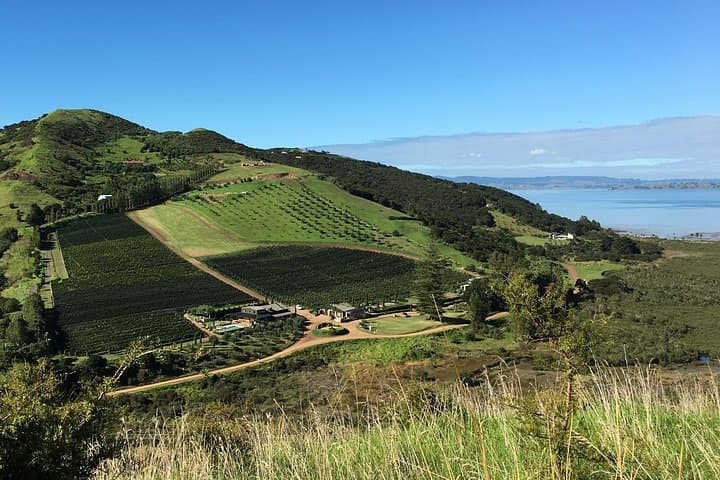
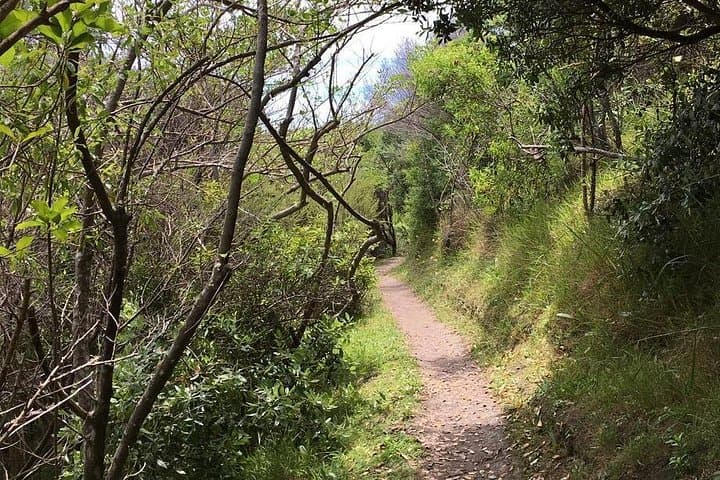
You step off the ferry and the sound of gulls mixes with the low, resinous scent of mānuka. The guide waits with a sign; within minutes you're threading a narrow track that climbs out of a small bay and into regenerating coastal forest. Sunlight spears through kanuka and pōhutukawa, and the island widens around you — vineyards and sheep paddocks sliding toward the sea like patchwork. The headland opens suddenly: a raw sweep of blue, islands of the Hauraki Gulf sitting like punctuation marks on the horizon.
Verified experiences and guided adventures in the surrounding area.
Operated by Terra & Tide · Waiheke Island, Auckland
You step off the ferry and the sound of gulls mixes with the low, resinous scent of mānuka. The guide waits with a sign; within minutes you're threading a narrow track that climbs out of a small bay and into regenerating coastal forest. Sunlight spears through kanuka and pōhutukawa, and the island widens around you — vineyards and sheep paddocks sliding toward the sea like patchwork. The headland opens suddenly: a raw sweep of blue, islands of the Hauraki Gulf sitting like punctuation marks on the horizon.
This half-day walk compresses the island's contrasts into five hours. Geologically, Waiheke is a remnant of volcanic activity and coastal uplift; the soils that once simply held scrub now feed vines, and the slopes facing the full force of the Pacific are drier and wind-hardened. The island's human story is layered too: Māori settlements used the headlands and bays for seasonal food-gathering, while European settlers in the 20th century transformed pockets of sheltered hills into orchards and, later, vineyards. Today's wine industry—small, focused producers—has made Waiheke a short, high-reward escape from Auckland.
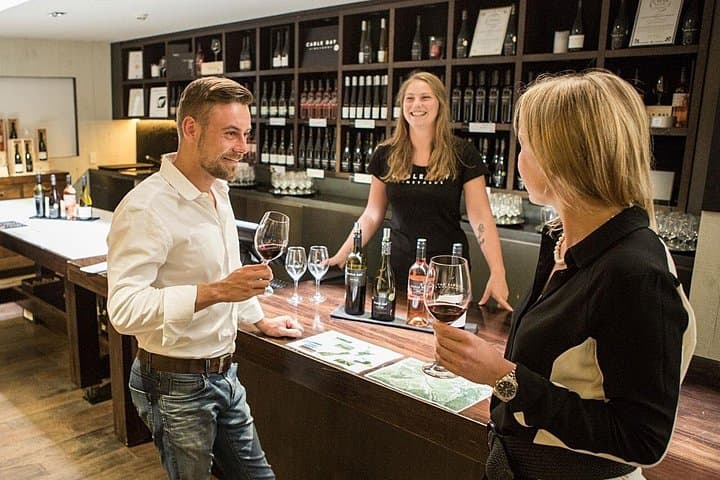
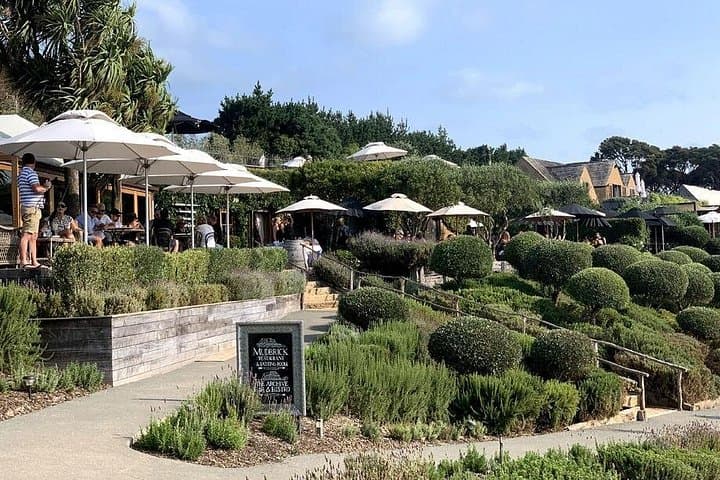
The route moves through restored and regenerating bush: expect single-track dirt trails, some short stair sections, and grassy farm tracks. Rolling hills give way to terraced vineyards where you'll pause for one or two tastings at established estates like Mudbrick or Cable Bay. Tasting options let you pick a quick flight or linger over lunch with a view; either way, the hills and the sea remain the constant backdrop.
Practical details: the walk is roughly 6–8 km with about 200–300 m total ascent depending on which vineyard you visit and any side routes you take. Terrain alternates between compacted dirt, loose gravel on exposed ridges, and well-maintained vineyard paths. The pace is moderate and the tour is advertised as suitable for most fitness levels, but expect some short climbs and uneven steps.
Timing matters—mornings and late afternoons give softer light and smaller crowds at vineyards. Bring layered rain protection (weather changes fast across the Gulf), sturdy walking shoes with decent grip, and a day pack with water; wine tastings are included but you'll want cash or card for extra tastings or lunch. Biosecurity is taken seriously here: stick to marked paths and respect pest-control signage to help protect native regeneration. If you’re coming from Auckland, plan the ferry to Waiheke so you arrive in time for the morning start; guides typically meet ferry arrivals.
This walk is part nature ramble, part coastal lookout and part vineyard experience: a compact, sensory-rich way to experience the island’s landscape, its wines and the breath of the Hauraki Gulf.
easy.
5 hours.
Suitable for most fitness levels; expect several short climbs and uneven trail sections—basic hill fitness and steady footing recommended.
The guided route is about 6–8 km and takes roughly five hours. It’s rated easy to moderate with some short climbs and uneven terrain—suitable for most participants with steady mobility.
Yes—two wine tastings are included, usually at one or two vineyards; additional tastings or lunch are available at your own cost.
Yes—ferry tickets to Waiheke are not included. Plan the morning ferry so you arrive on time; guides typically meet passengers disembarking the main morning sailing.
Infants must sit on an adult’s lap and the walk is generally family-friendly, but check with the operator about young children and the winery’s age policies.
Bring walking shoes, a light rain jacket, water, a day pack and money or card for extra tastings or food purchases.
The tour operates in most weather conditions; dress accordingly. Severe weather or insufficient participants may cause cancellation—check the operator’s policy for refunds.
Waiheke has a long Māori history of seasonal occupation and resource gathering; more recently the island developed boutique viticulture from the late 20th century, shaping its modern identity.
Local initiatives focus on pest control and native plant regeneration—stay on tracks, avoid taking shells or plants, and follow vineyard biosecurity requests to protect fragile ecosystems.
Terra & Tide operates guided outdoor trips and adventures with an emphasis on safety, stewardship, and memorable experiences.
You step off the ferry and the sound of gulls mixes with the low, resinous scent of mānuka. The guide waits with a sign; within minutes you're threading a narrow track that climbs out of a small bay and into regenerating coastal forest. Sunlight spears through kanuka and pōhutukawa, and the island widens around you — vineyards and sheep paddocks sliding toward the sea like patchwork. The headland opens suddenly: a raw sweep of blue, islands of the Hauraki Gulf sitting like punctuation marks on the horizon.
You step off the ferry and the sound of gulls mixes with the low, resinous scent of mānuka. The guide waits with a sign; within minutes you're threading a narrow track that climbs out of a small bay and into regenerating coastal forest. Sunlight spears through kanuka and pōhutukawa, and the island widens around you — vineyards and sheep paddocks sliding toward the sea like patchwork. The headland opens suddenly: a raw sweep of blue, islands of the Hauraki Gulf sitting like punctuation marks on the horizon.
This half-day walk compresses the island's contrasts into five hours. Geologically, Waiheke is a remnant of volcanic activity and coastal uplift; the soils that once simply held scrub now feed vines, and the slopes facing the full force of the Pacific are drier and wind-hardened. The island's human story is layered too: Māori settlements used the headlands and bays for seasonal food-gathering, while European settlers in the 20th century transformed pockets of sheltered hills into orchards and, later, vineyards. Today's wine industry—small, focused producers—has made Waiheke a short, high-reward escape from Auckland.
The route moves through restored and regenerating bush: expect single-track dirt trails, some short stair sections, and grassy farm tracks. Rolling hills give way to terraced vineyards where you'll pause for one or two tastings at established estates like Mudbrick or Cable Bay. Tasting options let you pick a quick flight or linger over lunch with a view; either way, the hills and the sea remain the constant backdrop.
Practical details: the walk is roughly 6–8 km with about 200–300 m total ascent depending on which vineyard you visit and any side routes you take. Terrain alternates between compacted dirt, loose gravel on exposed ridges, and well-maintained vineyard paths. The pace is moderate and the tour is advertised as suitable for most fitness levels, but expect some short climbs and uneven steps.
Timing matters—mornings and late afternoons give softer light and smaller crowds at vineyards. Bring layered rain protection (weather changes fast across the Gulf), sturdy walking shoes with decent grip, and a day pack with water; wine tastings are included but you'll want cash or card for extra tastings or lunch. Biosecurity is taken seriously here: stick to marked paths and respect pest-control signage to help protect native regeneration. If you’re coming from Auckland, plan the ferry to Waiheke so you arrive in time for the morning start; guides typically meet ferry arrivals.
This walk is part nature ramble, part coastal lookout and part vineyard experience: a compact, sensory-rich way to experience the island’s landscape, its wines and the breath of the Hauraki Gulf.