THE ADVENTURE COLLECTIVE® · Independent discovery and booking for outdoor travel

Paddle across expansive blue water, then climb a short, dramatic sandstone ridge for panoramic Lake Powell views. This private kayak-and-hike tour packs big scenery into a half-day adventure.
Paddle across expansive blue water, then climb a short, dramatic sandstone ridge for panoramic Lake Powell views. This private kayak-and-hike tour packs big scenery into a half-day adventure.
The lake opens like a wide throat of blue as you shove off from the Stateline launch ramp; sandstone cliffs rise and the wind rubs the surface into small, confident waves that nudge your kayak forward. Paddle across Wahweap Bay and the shoreline changes faster than you expect—steep red walls, small coves, and the pothole pockets carved into the rock that give this route its name.
Verified experiences and guided adventures in the surrounding area.
The lake opens like a wide throat of blue as you shove off from the Stateline launch ramp; sandstone cliffs rise and the wind rubs the surface into small, confident waves that nudge your kayak forward. Paddle across Wahweap Bay and the shoreline changes faster than you expect—steep red walls, small coves, and the pothole pockets carved into the rock that give this route its name.
Geologically this is Navajo Sandstone sculpted by water and time; you’ll see cross-bedded layers and smooth, rounded potholes where seasonal runoff collected and ground the stone into bowls. The area sits on the Colorado Plateau, and the human story here ranges from ancestral Puebloan use of high terraces to modern recreation tied to Glen Canyon Dam and the creation of Lake Powell in the 1960s.
Expect 2–4 miles (3–6 km) of paddling at calm-to-breezy conditions, followed by a short but steep viewpoint hike of roughly 0.5–1 mile roundtrip with about 200–350 ft (60–105 m) of elevation gain over slickrock and desert trail. Terrain alternates sand, pebbled shorelines, and exposed sandstone ledges—some scrambling required at the summit.
Practical notes: National Park entrance fees apply and life vests, paddles, and kayaks are provided. Bring layered sun protection, 1–2 liters of water per person, and shoes with sticky soles for slickrock. Timing your trip for morning or late afternoon reduces heat and glare and makes the cliffs glow. The tour’s private format gives time to linger at viewpoints and pick lines through the potholes—nature dares you to find the best angle.
moderate.
3–4 hours.
Suitable for people with moderate cardiovascular fitness and balance for short scrambles; you should be comfortable paddling 2–4 miles.
Meet at the Stateline launch ramp at Wahweap; the tour launches from the human-powered vessel ramp—arrive 15 minutes early to check in.
No—Glen Canyon National Recreation Area entrance fees are paid separately at the park or with a national park pass.
The hike is short (about 0.5–1 mile roundtrip) but includes exposed sandstone and roughly 200–350 ft of elevation gain; expect some steep scrambling to reach the best viewpoints.
No—basic paddling instruction is provided and the tour uses stable recreational kayaks, but participants should be reasonably comfortable on the water.
Lake Powell was formed after Glen Canyon Dam was completed in the 1960s; the rising water reshaped access to cliffs and created the coves and potholes that define Wahweap Bay.
High visitor use and fragile sandstone surfaces require staying on durable routes and packing out all trash; avoid walking on cryptobiotic soil and limit group impact.
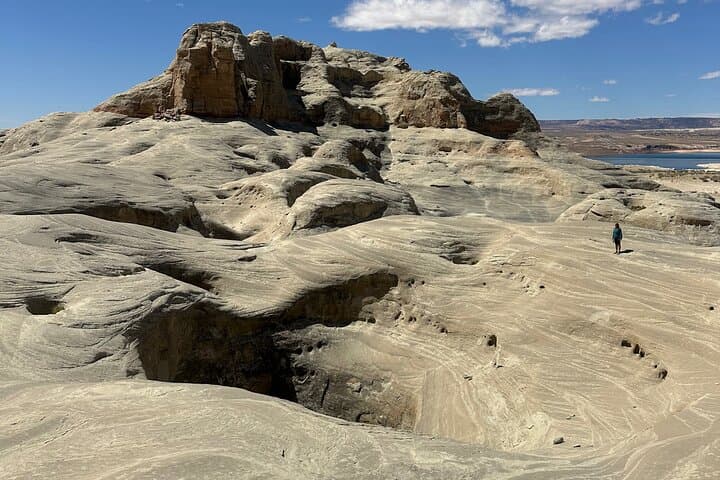
The lake opens like a wide throat of blue as you shove off from the Stateline launch ramp; sandstone cliffs rise and the wind rubs the surface into small, confident waves that nudge your kayak forward. Paddle across Wahweap Bay and the shoreline changes faster than you expect—steep red walls, small coves, and the pothole pockets carved into the rock that give this route its name.
The lake opens like a wide throat of blue as you shove off from the Stateline launch ramp; sandstone cliffs rise and the wind rubs the surface into small, confident waves that nudge your kayak forward. Paddle across Wahweap Bay and the shoreline changes faster than you expect—steep red walls, small coves, and the pothole pockets carved into the rock that give this route its name.
Geologically this is Navajo Sandstone sculpted by water and time; you’ll see cross-bedded layers and smooth, rounded potholes where seasonal runoff collected and ground the stone into bowls. The area sits on the Colorado Plateau, and the human story here ranges from ancestral Puebloan use of high terraces to modern recreation tied to Glen Canyon Dam and the creation of Lake Powell in the 1960s.
Expect 2–4 miles (3–6 km) of paddling at calm-to-breezy conditions, followed by a short but steep viewpoint hike of roughly 0.5–1 mile roundtrip with about 200–350 ft (60–105 m) of elevation gain over slickrock and desert trail. Terrain alternates sand, pebbled shorelines, and exposed sandstone ledges—some scrambling required at the summit.
Practical notes: National Park entrance fees apply and life vests, paddles, and kayaks are provided. Bring layered sun protection, 1–2 liters of water per person, and shoes with sticky soles for slickrock. Timing your trip for morning or late afternoon reduces heat and glare and makes the cliffs glow. The tour’s private format gives time to linger at viewpoints and pick lines through the potholes—nature dares you to find the best angle.