THE ADVENTURE COLLECTIVE® · Independent discovery and booking for outdoor travel

Hike through dramatic limestone canyons, swim to a hidden waterfall in Wadi Shab, then cool off at the vivid blue Bimmah Sinkhole. This full-day trip from Muscat blends scrambling, swimming, and coastal geology into an unforgettable outdoor escape.
Hike through dramatic limestone canyons, swim to a hidden waterfall in Wadi Shab, then cool off at the vivid blue Bimmah Sinkhole. This full-day trip from Muscat blends scrambling, swimming, and coastal geology into an unforgettable outdoor escape.
You arrive on the coastal road as sunlight slices the sea; the landscape shifts from scrub to abrupt cliffs, and a narrow boat waits to ferry you across a pale river mouth. Stepping onto the wadi trail, canyon walls close in, palms lean like quiet hosts, and the river dares you forward with every shallow rapid.
Verified experiences and guided adventures in the surrounding area.
Operated by Weguide-oman · Tiwi, Ash Sharqiyah
You arrive on the coastal road as sunlight slices the sea; the landscape shifts from scrub to abrupt cliffs, and a narrow boat waits to ferry you across a pale river mouth. Stepping onto the wadi trail, canyon walls close in, palms lean like quiet hosts, and the river dares you forward with every shallow rapid.
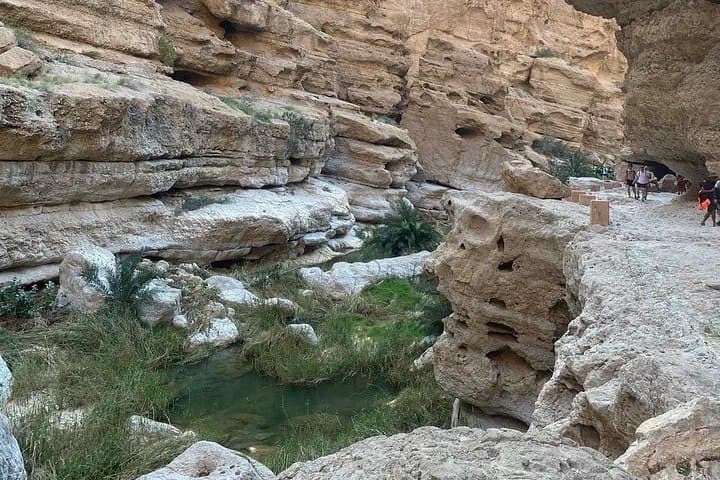
Wadi Shab is a carved corridor of Miocene limestone and sandstone where freshwater springs collect in deep, turquoise pools. The hike follows rocky terraces and dry riverbed, roughly 1.5–2 km each way with intermittent scrambling and about 100–150 m total elevation change; expect uneven footing and occasional boulder hops. The highlight is a swim through a tight, shadowed tunnel into a cool grotto where a small waterfall spills into a hidden basin — a geological pocket shaped by water and time.
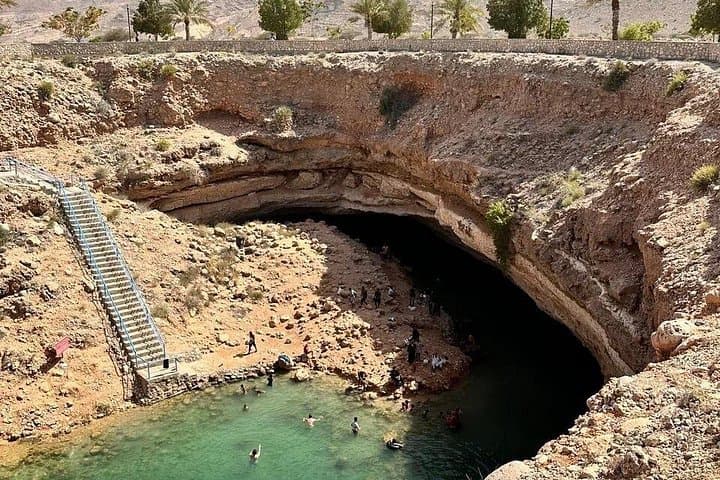
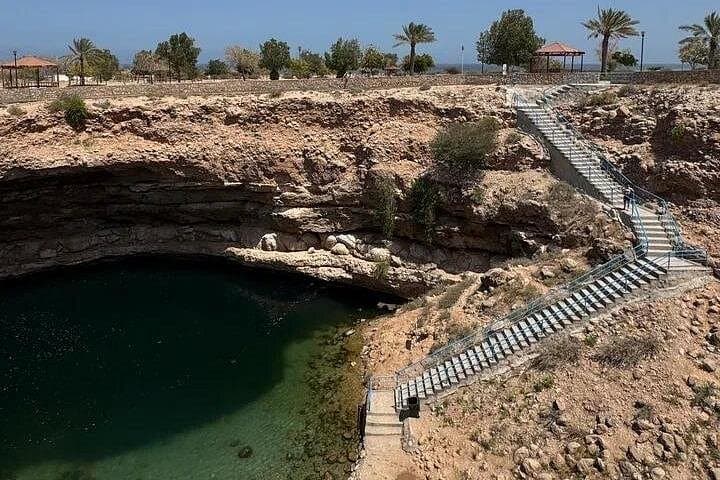
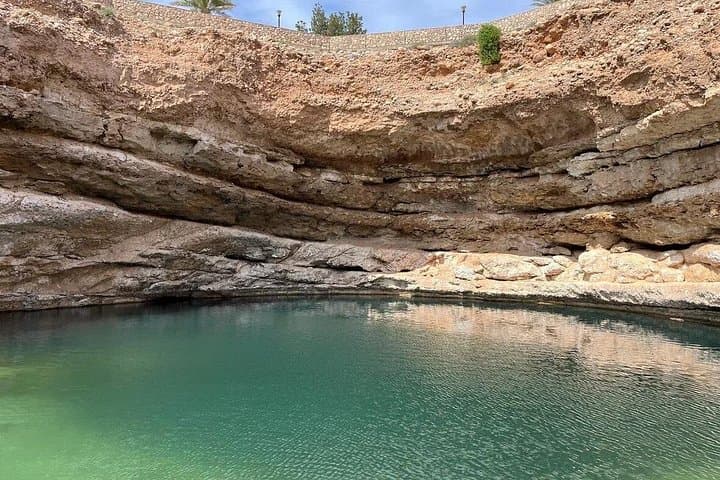
After the canyon, Bimmah Sinkhole offers a different chapter: a collapsed limestone crater fed by seawater and groundwater, its blue-green bowl ideal for a short, refreshing swim. Both sites sit in a coastal culture shaped by fishing, date palms, and centuries of caravan and seafaring routes; local villages still tend small groves and celebrate river-fed life.
Practical guidance: this is a full-day, moderate outing best done outside the hottest hours. Wear sturdy water shoes, bring at least 2–3 liters of water, reef-safe sunscreen, and a dry bag for electronics. Boat crossings are short but timed; the cave swim requires basic swimming competence. Leave no trace, respect fragile pools, and plan for 6–9 hours including transit from Muscat.
moderate.
6–9 hours (full day including transit).
Moderate fitness; able to hike 1.5–2 km on rocky terrain and swim short distances in open water
The trail to the main pools is about 1.5–2 km one way with roughly 100–150 m elevation change; allow 45–75 minutes each way depending on pace and stops.
It’s a tight, short swim through a dark passage to a sheltered waterfall — you should be a competent swimmer and comfortable in confined water; guides can advise alternatives.
Yes, older children with good stamina and swimming ability can join; infants are usually required to sit on laps on vehicle transfers — check operator policies for age limits.
Basic facilities (parking, simple toilets, shaded picnic spots) exist near both sites, but don’t expect full services; bring supplies and pack out trash.
Wadis and sinkholes here reflect Oman’s maritime and inland culture — date groves and fishing villages have long relied on spring-fed channels for sustenance and trade.
These fragile limestone and freshwater systems are vulnerable to litter and sunscreen contamination; use reef-safe products, carry out waste, and avoid trampling vegetation.
Weguide-oman operates guided outdoor trips and adventures with an emphasis on safety, stewardship, and memorable experiences.
You arrive on the coastal road as sunlight slices the sea; the landscape shifts from scrub to abrupt cliffs, and a narrow boat waits to ferry you across a pale river mouth. Stepping onto the wadi trail, canyon walls close in, palms lean like quiet hosts, and the river dares you forward with every shallow rapid.
You arrive on the coastal road as sunlight slices the sea; the landscape shifts from scrub to abrupt cliffs, and a narrow boat waits to ferry you across a pale river mouth. Stepping onto the wadi trail, canyon walls close in, palms lean like quiet hosts, and the river dares you forward with every shallow rapid.
Wadi Shab is a carved corridor of Miocene limestone and sandstone where freshwater springs collect in deep, turquoise pools. The hike follows rocky terraces and dry riverbed, roughly 1.5–2 km each way with intermittent scrambling and about 100–150 m total elevation change; expect uneven footing and occasional boulder hops. The highlight is a swim through a tight, shadowed tunnel into a cool grotto where a small waterfall spills into a hidden basin — a geological pocket shaped by water and time.
After the canyon, Bimmah Sinkhole offers a different chapter: a collapsed limestone crater fed by seawater and groundwater, its blue-green bowl ideal for a short, refreshing swim. Both sites sit in a coastal culture shaped by fishing, date palms, and centuries of caravan and seafaring routes; local villages still tend small groves and celebrate river-fed life.
Practical guidance: this is a full-day, moderate outing best done outside the hottest hours. Wear sturdy water shoes, bring at least 2–3 liters of water, reef-safe sunscreen, and a dry bag for electronics. Boat crossings are short but timed; the cave swim requires basic swimming competence. Leave no trace, respect fragile pools, and plan for 6–9 hours including transit from Muscat.