THE ADVENTURE COLLECTIVE® · Independent discovery and booking for outdoor travel

A full-day, clue-driven exploration through Wadi Rum’s sandstone labyrinths, guided by Bedouin hosts and finished with a traditional lunch. Expect hikes across sand and rock, cultural insight, and a landscape that challenges you to read its signs.
A full-day, clue-driven exploration through Wadi Rum’s sandstone labyrinths, guided by Bedouin hosts and finished with a traditional lunch. Expect hikes across sand and rock, cultural insight, and a landscape that challenges you to read its signs.
You step out of the minivan into heat that moves like a living thing—warm air lifting the smell of sand and sage, sandstone cliffs throwing long, stitched shadows across the plain. A Bedouin guide hands you tea in a chipped glass and explains the rules: a map, a few clues, and a landscape that has been used for centuries as both highway and hiding place. The desert doesn’t simply hold the prize — it nudges you, misdirects you, dares you to read its signs.
Verified experiences and guided adventures in the surrounding area.
Operated by Star Walk Camp & tours: Exploring the Enchanting Desert of Wadi Rum and Unique Experiences · Wadi Rum Village, Ma'an Governorate
You step out of the minivan into heat that moves like a living thing—warm air lifting the smell of sand and sage, sandstone cliffs throwing long, stitched shadows across the plain. A Bedouin guide hands you tea in a chipped glass and explains the rules: a map, a few clues, and a landscape that has been used for centuries as both highway and hiding place. The desert doesn’t simply hold the prize — it nudges you, misdirects you, dares you to read its signs.
Wadi Rum is a record of time in stone. Wind-sculpted mountains and tabular mesas are not decoration but geological pages: Cambrian sandstone folded and fractured, then polished by millennia of sand-bearing winds. Human history is layered on top. This valley of the moon was traversed by Nabatean caravans, and later became a theater for Lawrence of Arabia’s audacious desert campaigns. Today, Bedouin camps and carved rock inscriptions remind you that people continue to treat the desert as both home and map.
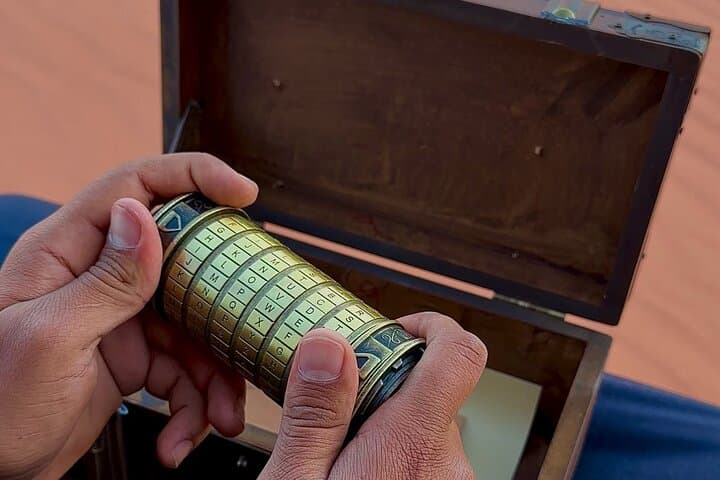
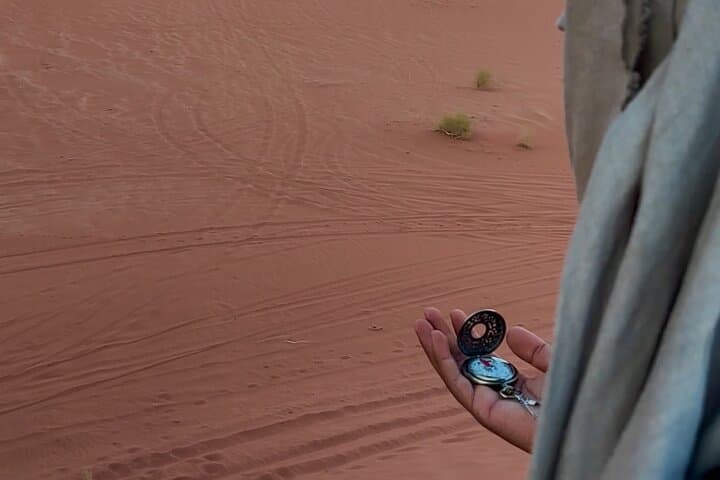
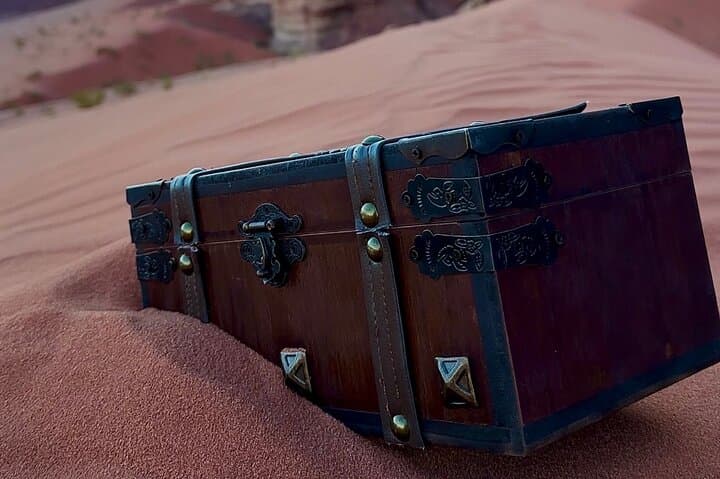
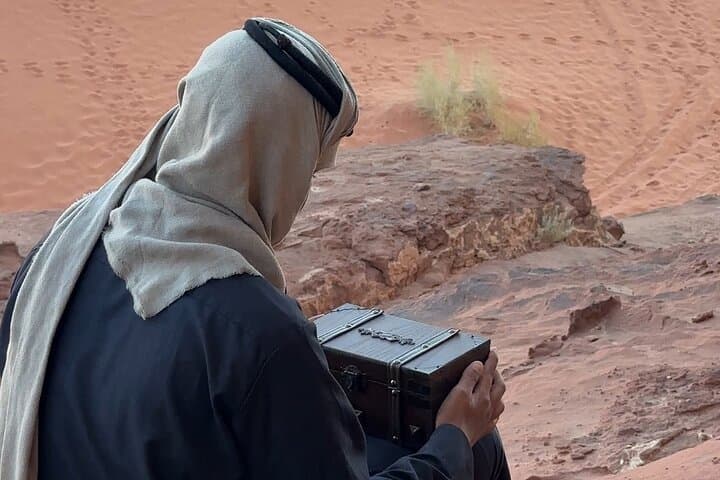
The treasure hunt itself is part puzzle, part landscape lesson. Clues will send you along a dry wadi, past petroglyph panels, and up to a narrow pass where the wind has chewed the rock into a jagged eyebrow. Your guide will point out subtle markers the locals use — a stack of stones, a particular thorn bush, a notch in a sandstone fin. These are practical signs in a place where topography does the talking.
By midday, you’ll stop for lunch: simple, robust cuisine served under a canvas awning. Flatbread, slow-roasted meat, and bowls of tangy salad are eaten with hands, while the sky above sharpens to an absolute blue. Conversation will drift between the geological history of the cliffs and contemporary Bedouin life — tourism, water scarcity, and the challenges of maintaining traditions.
Practicalities matter here. The full day runs about nine hours and requires comfortable, sturdy footwear, sun protection, and a willingness to walk on uneven sand and rock. Fitness demands are modest; much of the hunt is navigation and short bursts of scrambling. Guides carry water and local knowledge; they’ll read the desert in a way maps can’t. Expect temperatures that swing widely—hot by midday, cool by late afternoon—and plan layers accordingly.
This is a day that rewards curiosity: look closely at the rock faces for carving details, listen for the silence between wind gusts, and accept that the greatest finds are often the conversations and vistas you’ll carry home.
easy.
9 hours.
Suitable for regular hikers or reasonably active travelers who can walk several kilometers on uneven terrain.
This is a full-day experience (about 9 hours). Walking includes short hikes and some scrambling—most groups cover several kilometers but the pace is moderate with frequent stops.
Yes; guides are local Bedouin who combine traditional knowledge of the landscape with route-finding and interpretation.
Yes—families commonly join. The activity is designed to be family-friendly, but younger children should be supervised during rocky stretches.
A traditional Bedouin-style lunch is included, usually flatbread, roasted meat, salads and tea; operators can often accommodate dietary restrictions with notice.
Drone use is restricted in many parts of Wadi Rum without permits; check with your operator and Jordanian regulations before bringing one.
Tours may be cancelled for extreme weather; the operator’s policy allows refunds with at least 24 hours’ notice or if conditions are unsafe.
Wadi Rum has been inhabited and traversed for millennia—Nabatean inscriptions and evidence of ancient caravan routes are scattered through the valley.
Tour operators work with local communities to limit vehicle tracks and protect petroglyph panels; visitors should stick to trails and avoid climbing fragile rock art.
Star Walk Camp & tours: Exploring the Enchanting Desert of Wadi Rum and Unique Experiences operates guided outdoor trips and adventures with an emphasis on safety, stewardship, and memorable experiences.
You step out of the minivan into heat that moves like a living thing—warm air lifting the smell of sand and sage, sandstone cliffs throwing long, stitched shadows across the plain. A Bedouin guide hands you tea in a chipped glass and explains the rules: a map, a few clues, and a landscape that has been used for centuries as both highway and hiding place. The desert doesn’t simply hold the prize — it nudges you, misdirects you, dares you to read its signs.
You step out of the minivan into heat that moves like a living thing—warm air lifting the smell of sand and sage, sandstone cliffs throwing long, stitched shadows across the plain. A Bedouin guide hands you tea in a chipped glass and explains the rules: a map, a few clues, and a landscape that has been used for centuries as both highway and hiding place. The desert doesn’t simply hold the prize — it nudges you, misdirects you, dares you to read its signs.
Wadi Rum is a record of time in stone. Wind-sculpted mountains and tabular mesas are not decoration but geological pages: Cambrian sandstone folded and fractured, then polished by millennia of sand-bearing winds. Human history is layered on top. This valley of the moon was traversed by Nabatean caravans, and later became a theater for Lawrence of Arabia’s audacious desert campaigns. Today, Bedouin camps and carved rock inscriptions remind you that people continue to treat the desert as both home and map.
The treasure hunt itself is part puzzle, part landscape lesson. Clues will send you along a dry wadi, past petroglyph panels, and up to a narrow pass where the wind has chewed the rock into a jagged eyebrow. Your guide will point out subtle markers the locals use — a stack of stones, a particular thorn bush, a notch in a sandstone fin. These are practical signs in a place where topography does the talking.
By midday, you’ll stop for lunch: simple, robust cuisine served under a canvas awning. Flatbread, slow-roasted meat, and bowls of tangy salad are eaten with hands, while the sky above sharpens to an absolute blue. Conversation will drift between the geological history of the cliffs and contemporary Bedouin life — tourism, water scarcity, and the challenges of maintaining traditions.
Practicalities matter here. The full day runs about nine hours and requires comfortable, sturdy footwear, sun protection, and a willingness to walk on uneven sand and rock. Fitness demands are modest; much of the hunt is navigation and short bursts of scrambling. Guides carry water and local knowledge; they’ll read the desert in a way maps can’t. Expect temperatures that swing widely—hot by midday, cool by late afternoon—and plan layers accordingly.
This is a day that rewards curiosity: look closely at the rock faces for carving details, listen for the silence between wind gusts, and accept that the greatest finds are often the conversations and vistas you’ll carry home.