THE ADVENTURE COLLECTIVE® · Independent discovery and booking for outdoor travel

Travel from Wadi Rum to Petra in a private, air-conditioned transfer for a full day exploring the Nabatean rock-cut city. This round-trip option pairs convenience and comfort with several hours to walk the Siq, see the Treasury, and climb toward the Monastery.
Travel from Wadi Rum to Petra in a private, air-conditioned transfer for a full day exploring the Nabatean rock-cut city. This round-trip option pairs convenience and comfort with several hours to walk the Siq, see the Treasury, and climb toward the Monastery.
A low sun lifts the red silhouettes of Wadi Rum as the van pulls away from camp and the desert gives way to layered sandstone cliffs. The road unwinds toward Wadi Musa and the mouth of Petra, and the day unfolds as a sequence of carved facades, narrow Siq passages, and plateaus that seem to hold time in their grain.
Verified experiences and guided adventures in the surrounding area.
Operated by VIP Jordan Limo · Wadi Musa, Ma'an Governorate
A low sun lifts the red silhouettes of Wadi Rum as the van pulls away from camp and the desert gives way to layered sandstone cliffs. The road unwinds toward Wadi Musa and the mouth of Petra, and the day unfolds as a sequence of carved facades, narrow Siq passages, and plateaus that seem to hold time in their grain.
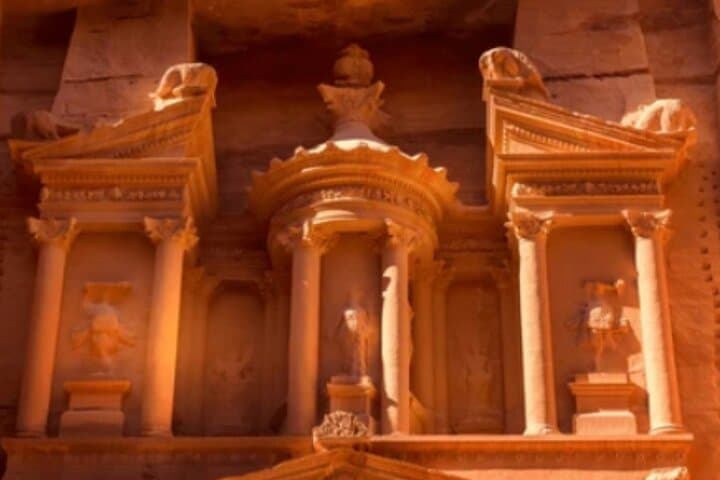
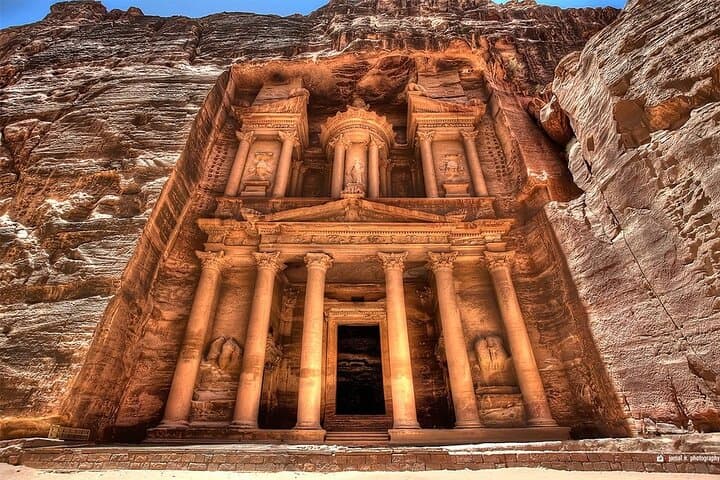
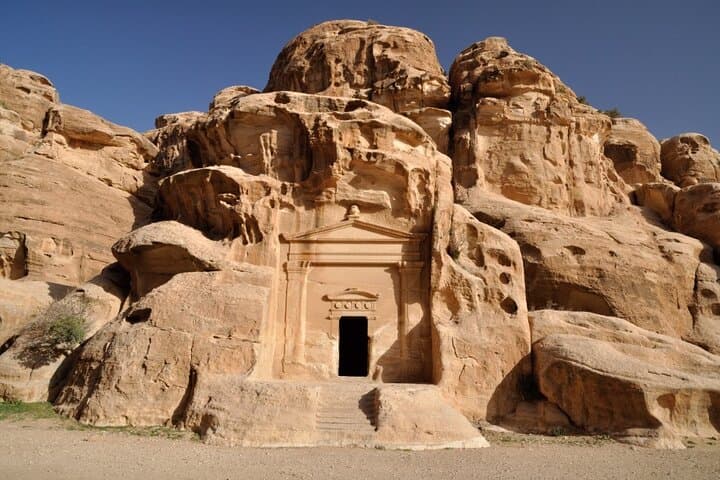
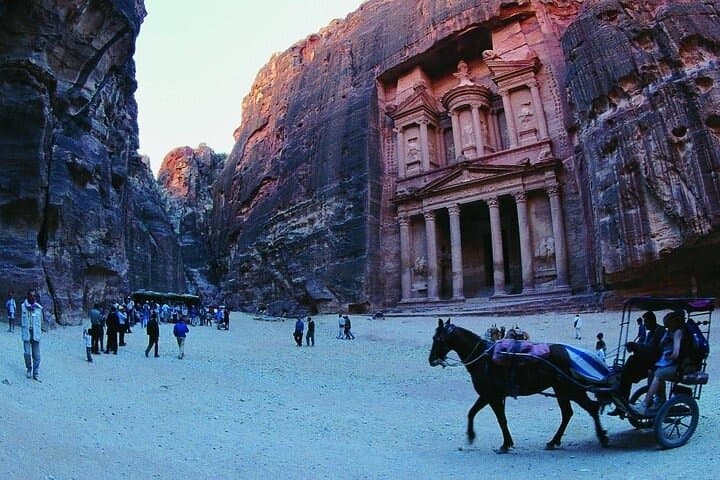
Petra was the capital of the Nabatean kingdom from roughly the 4th century BCE through the 2nd century CE; its façades are hewn from sandstone layers sculpted by wind and water over millennia. Culture here remains robust — Bedouin families run guesthouses, sell local crafts, and often meet visitors at trail junctions. Geologically, expect banded reds, pinks and ochres; weathered joints create narrow slots and broad amphitheaters that change color with the sun.
Practically: this private round-trip transfer is a 7–8 hour day, with roughly 1.5–2 hours driving each way from Wadi Rum and about 4 hours on site if you follow the main circuit. The Siq is approximately 1.2 km to the Treasury; a longer hike to the Monastery gains ~200 m and involves roughly 800 stone steps. Petra’s terrain is uneven—packed sand, flagged paths, and stairways—so plan for firm footwear and paced walking.
Bring at least 2 liters of water, sun protection, and local currency for the site ticket and vendors. Early starts avoid heat and crowds; an English-speaking driver and onboard Wi‑Fi/bottled water make logistics easy, but admission is usually purchased separately at the Petra ticket office. Stick to marked routes, respect archaeological features, and allow time to simply stand in the Treasury’s doorway and let the rock speak.
moderate.
7–8 hours.
Moderate fitness—able to walk several kilometers over uneven, stepped terrain and handle short uphill sections.
No. The booking provides private transportation and an English‑speaking driver; a licensed Petra guide is typically arranged separately at the site if you want in-depth interpretation.
Admission is usually not included and must be purchased at Petra’s ticket office or arranged in advance—bring cash or confirm online options before you travel.
The vehicle transfer can be accessible, but Petra’s core trails include narrow, stepped and uneven areas that limit wheelchair access; plan accordingly and contact operators about options for limited mobility travelers.
Allow at least 3–4 hours to see the Treasury and nearby tombs; add 2+ hours if you plan to hike to the Monastery or explore side trails.
Petra was an important Nabatean trading capital from the 4th century BCE; its rock-cut architecture and water-management systems anchored regional commerce for centuries.
Petra is a UNESCO World Heritage Site; foot traffic, erosion and souvenir collecting stress fragile sandstone—stick to paths and avoid touching carved surfaces.
VIP Jordan Limo operates guided outdoor trips and adventures with an emphasis on safety, stewardship, and memorable experiences.
A low sun lifts the red silhouettes of Wadi Rum as the van pulls away from camp and the desert gives way to layered sandstone cliffs. The road unwinds toward Wadi Musa and the mouth of Petra, and the day unfolds as a sequence of carved facades, narrow Siq passages, and plateaus that seem to hold time in their grain.
A low sun lifts the red silhouettes of Wadi Rum as the van pulls away from camp and the desert gives way to layered sandstone cliffs. The road unwinds toward Wadi Musa and the mouth of Petra, and the day unfolds as a sequence of carved facades, narrow Siq passages, and plateaus that seem to hold time in their grain.
Petra was the capital of the Nabatean kingdom from roughly the 4th century BCE through the 2nd century CE; its façades are hewn from sandstone layers sculpted by wind and water over millennia. Culture here remains robust — Bedouin families run guesthouses, sell local crafts, and often meet visitors at trail junctions. Geologically, expect banded reds, pinks and ochres; weathered joints create narrow slots and broad amphitheaters that change color with the sun.
Practically: this private round-trip transfer is a 7–8 hour day, with roughly 1.5–2 hours driving each way from Wadi Rum and about 4 hours on site if you follow the main circuit. The Siq is approximately 1.2 km to the Treasury; a longer hike to the Monastery gains ~200 m and involves roughly 800 stone steps. Petra’s terrain is uneven—packed sand, flagged paths, and stairways—so plan for firm footwear and paced walking.
Bring at least 2 liters of water, sun protection, and local currency for the site ticket and vendors. Early starts avoid heat and crowds; an English-speaking driver and onboard Wi‑Fi/bottled water make logistics easy, but admission is usually purchased separately at the Petra ticket office. Stick to marked routes, respect archaeological features, and allow time to simply stand in the Treasury’s doorway and let the rock speak.