THE ADVENTURE COLLECTIVE® · Independent discovery and booking for outdoor travel

Practice yoga as the sun falls behind sandstone cliffs, then spend a night in a traditional Bedouin goatskin tent after a guided 4x4 sunset tour of Wadi Rum. It’s a compact cultural immersion that pairs movement with desert light and local hospitality.
Practice yoga as the sun falls behind sandstone cliffs, then spend a night in a traditional Bedouin goatskin tent after a guided 4x4 sunset tour of Wadi Rum. It’s a compact cultural immersion that pairs movement with desert light and local hospitality.
The sun leans low over a sea of ochre and rose-colored rock as the 4x4 eases to a stop. The dunes hush; the wind sharpens the scent of dry thyme and warmed stone. On a flat slab of sandstone, a short yoga sequence unfolds — deliberate, slow — while light slides across the valley and the size of the desert becomes a private thing.
Verified experiences and guided adventures in the surrounding area.
Operated by Bedouin Yoga Camp · Wadi Rum Village, Ma'an Governorate
The sun leans low over a sea of ochre and rose-colored rock as the 4x4 eases to a stop. The dunes hush; the wind sharpens the scent of dry thyme and warmed stone. On a flat slab of sandstone, a short yoga sequence unfolds — deliberate, slow — while light slides across the valley and the size of the desert becomes a private thing.
This is Wadi Rum: a place where millennia of wind have carved cliffs, arches, and corridors from sandstone and granite. The plain reads like geological notes — tilted strata, fluted walls, and occasional pockets of alluvial sand where life pockets into micro-ecosystems. It’s also the desert that drew T.E. Lawrence in the early 20th century and later became shorthand for cinematic landscapes. The local Bedouin communities, whose routes predate modern borders, still guide travelers through tracks known only to people who live by star and season.
The two-day experience begins in Rum Village with a Bedouin-guided 3–4 hour 4x4 circuit that ends at a sunset overlook. Along the way, guides point out ancient petroglyphs, narrow canyons worn smooth by water long gone, and natural rock bridges. Night is at a traditional goat-skin tent camp powered in part by solar; tents come with linens and the chance to sit by an open fire drinking strong Bedouin tea while elders recount how women gave birth and families traveled across the wadi.
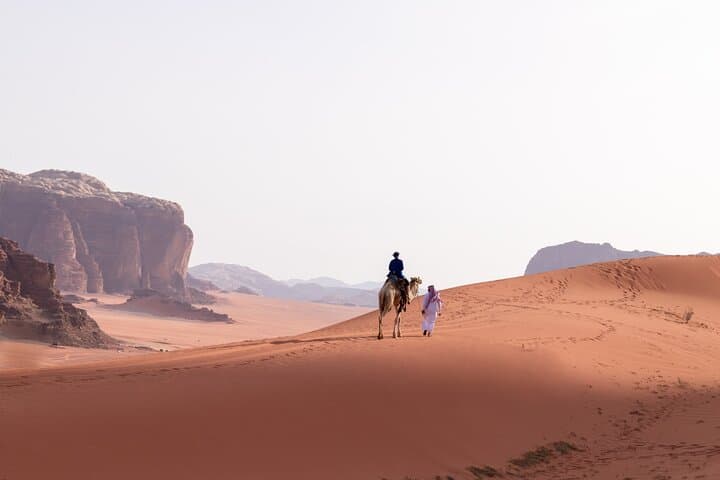
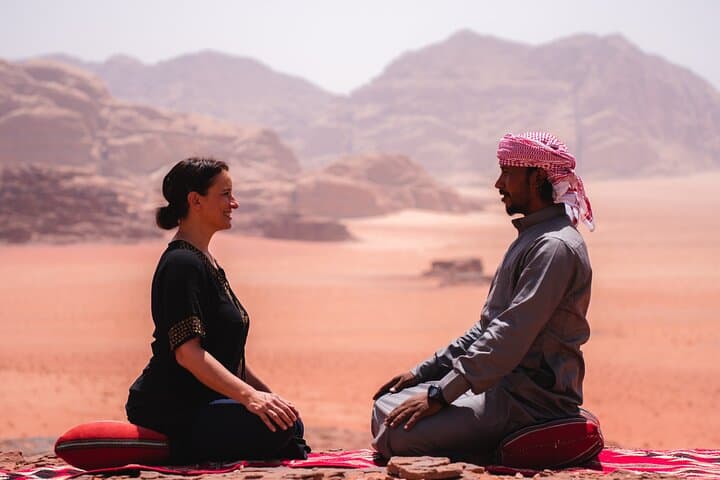
Morning brings a guided Hatha and Yin yoga class, short meditations, and time to watch the quotidian movements of desert life: lizards, beetles, and flocks moving like punctuation across the sand. Optional camel rides and shared facilities in camp round out the offering.
Practicalities: the whole program requires a Jordan Pass (entrance fee not included), moderate fitness for brief hikes and getting in and out of vehicles, and sun-smart planning — daytime desert temperatures vary widely by season. The 4x4 portion is off-road; expect sand, sudden drops, and the jolt of climbing over dune lips. The camp uses solar power and basic shared bathrooms; bring personal toiletries and be prepared for cool nights. Yoga mats, blocks, and belts are supplied.
Why go: the combination of guided movement, Bedouin hospitality, and a desert that both humbles and clarifies makes for an adventure that’s equal parts cultural immersion and low-impact wilderness trip. Arrive with curiosity, respect for local customs, and gear to keep you comfortable on both hot afternoons and brisk desert mornings.
moderate.
2 days (overnight).
Moderate fitness for short hikes, getting in/out of 4x4s, and a gentle yoga practice; not strenuous but requires mobility.
No — entrance fees to Wadi Rum via the Jordan Pass are not included; purchase beforehand to streamline entry.
Yes — the program mixes gentle Hatha and Yin elements suitable for beginners and those wanting a restorative practice.
Tents are traditional goatskin-style with hotel-quality linens; facilities are shared and basic, with solar power for lights.
No — mats, blocks, and belts are provided, though some travelers bring a personal towel or grip for hygiene.
Meeting is at the Rest House in Rum Village; transfers from Aqaba or Petra are possible but must be arranged separately.
Optional camel rides are available for an extra fee; private 4x4 upgrades may also be offered depending on booking options.
Wadi Rum has long been a caravan and pastoral route; its modern fame grew after T.E. Lawrence’s travels and its use as a film location for Mars-like landscapes.
Travelers are encouraged to carry out waste and stick to existing tracks — the fragile soils and cultural sites are vulnerable to off-road erosion and graffiti.
Bedouin Yoga Camp operates guided outdoor trips and adventures with an emphasis on safety, stewardship, and memorable experiences.
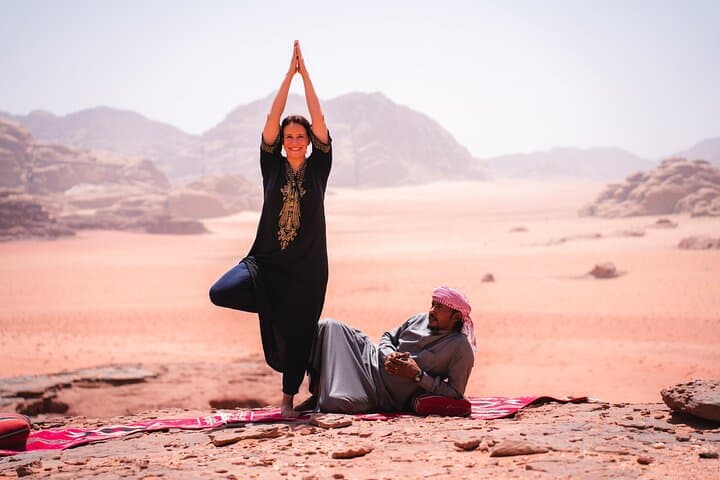
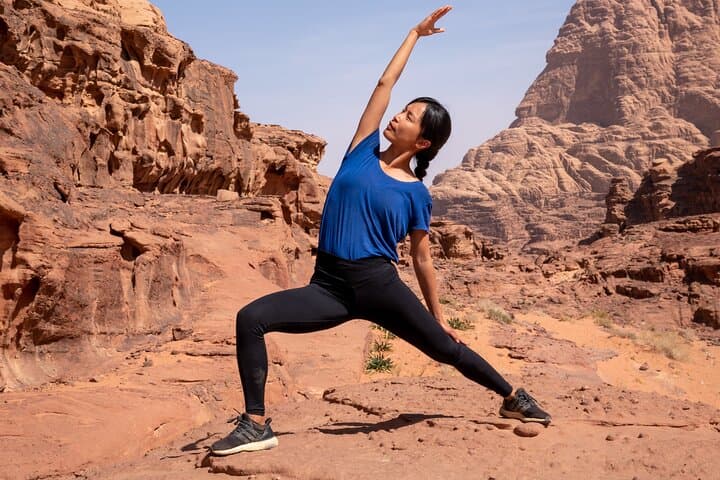
The sun leans low over a sea of ochre and rose-colored rock as the 4x4 eases to a stop. The dunes hush; the wind sharpens the scent of dry thyme and warmed stone. On a flat slab of sandstone, a short yoga sequence unfolds — deliberate, slow — while light slides across the valley and the size of the desert becomes a private thing.
The sun leans low over a sea of ochre and rose-colored rock as the 4x4 eases to a stop. The dunes hush; the wind sharpens the scent of dry thyme and warmed stone. On a flat slab of sandstone, a short yoga sequence unfolds — deliberate, slow — while light slides across the valley and the size of the desert becomes a private thing.
This is Wadi Rum: a place where millennia of wind have carved cliffs, arches, and corridors from sandstone and granite. The plain reads like geological notes — tilted strata, fluted walls, and occasional pockets of alluvial sand where life pockets into micro-ecosystems. It’s also the desert that drew T.E. Lawrence in the early 20th century and later became shorthand for cinematic landscapes. The local Bedouin communities, whose routes predate modern borders, still guide travelers through tracks known only to people who live by star and season.
The two-day experience begins in Rum Village with a Bedouin-guided 3–4 hour 4x4 circuit that ends at a sunset overlook. Along the way, guides point out ancient petroglyphs, narrow canyons worn smooth by water long gone, and natural rock bridges. Night is at a traditional goat-skin tent camp powered in part by solar; tents come with linens and the chance to sit by an open fire drinking strong Bedouin tea while elders recount how women gave birth and families traveled across the wadi.
Morning brings a guided Hatha and Yin yoga class, short meditations, and time to watch the quotidian movements of desert life: lizards, beetles, and flocks moving like punctuation across the sand. Optional camel rides and shared facilities in camp round out the offering.
Practicalities: the whole program requires a Jordan Pass (entrance fee not included), moderate fitness for brief hikes and getting in and out of vehicles, and sun-smart planning — daytime desert temperatures vary widely by season. The 4x4 portion is off-road; expect sand, sudden drops, and the jolt of climbing over dune lips. The camp uses solar power and basic shared bathrooms; bring personal toiletries and be prepared for cool nights. Yoga mats, blocks, and belts are supplied.
Why go: the combination of guided movement, Bedouin hospitality, and a desert that both humbles and clarifies makes for an adventure that’s equal parts cultural immersion and low-impact wilderness trip. Arrive with curiosity, respect for local customs, and gear to keep you comfortable on both hot afternoons and brisk desert mornings.