THE ADVENTURE COLLECTIVE® · Independent discovery and booking for outdoor travel

A three-day circuit that pairs Wadi Rum’s red-rock desert with two days inside Petra’s carved city. Expect jeep tracks, optional camel rides, Bedouin nights and focused time to explore Petra’s highlights without rushing.
A three-day circuit that pairs Wadi Rum’s red-rock desert with two days inside Petra’s carved city. Expect jeep tracks, optional camel rides, Bedouin nights and focused time to explore Petra’s highlights without rushing.
You arrive at the Jordanian side of the Eilat border and a wind-swept valley opens: orange cliffs puncture the horizon and dunes shift like slow waves. In Wadi Rum the desert moves with a weathered confidence—rock bridges and vertical faces that have directed caravans and inspired Lawrence of Arabia. A 4–5 hour jeep loop will take you across sand flats and through Khazali Canyon; an optional hour on camelback gives a slower, intimate pace.
Verified experiences and guided adventures in the surrounding area.
Operated by Jordan Horizon Tours · Wadi Musa, Ma'an Governorate
You arrive at the Jordanian side of the Eilat border and a wind-swept valley opens: orange cliffs puncture the horizon and dunes shift like slow waves. In Wadi Rum the desert moves with a weathered confidence—rock bridges and vertical faces that have directed caravans and inspired Lawrence of Arabia. A 4–5 hour jeep loop will take you across sand flats and through Khazali Canyon; an optional hour on camelback gives a slower, intimate pace.
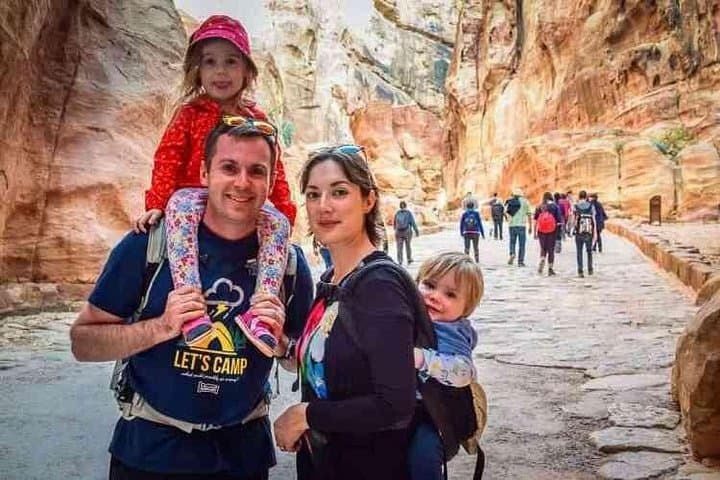
Petra reverses the landscape’s grammar. The Siq’s 1.2 km narrow cut allows sandstone bands to reveal centuries of mineral painting before the Treasury appears. Over two days the itinerary mixes guided highlights (the Treasury, Royal Tombs, Theatre and Qasr al-Bint) with time to climb to the High Place of Sacrifice or follow lesser-used trails that reach panoramic ridgelines.
Geology here is exposed: wind-sculpted sandstone in Wadi Rum and stratified Nabatean sandstone in Petra, carved by water and trade routes. Culture threads through both—Bedouin hospitality in desert camps and Nabatean engineering in Petra’s water channels.
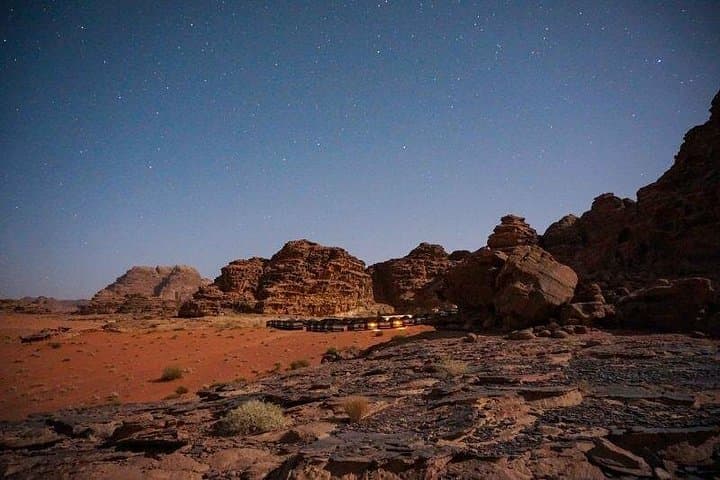
Practical edge: expect moderate walking on uneven stone and sand, 1.5 hour transfers between Wadi Rum and Petra, and early starts to avoid midday heat. Carry 2–3 liters of water, sun protection, and comfortable footwear with grip. Bring Jordanian dinar or card, keep passport and visa details handy at the border, and allow time for border formalities. Nights range from a Bedouin camp under a clear sky to a simple Petra hotel—two very different ways to sleep in Jordan’s great open rooms.
moderate.
2–3 days.
Moderate fitness: able to walk 4–10 km on uneven terrain and stand for several hours during guided tours.
Visa requirements vary by nationality; the tour notes free visa on arrival for many nationalities, but confirm your status before travel and carry passport copies.
Camps range from traditional to comfort-style; this tour includes a Bedouin camp with dinner and breakfast—expect shared facilities and simple sleeping arrangements.
The jeep ride covers sandy and rocky tracks with short walks at sites; no technical skills required but participants should manage short hikes and uneven ground.
Yes—the itinerary offers a second free day in Petra or optional guided trails for an additional surcharge; plan return border timing if extending your visit.
Petra was the Nabatean capital and a key caravan hub; Wadi Rum’s landscape is interlaced with Bedouin history and Lawrence of Arabia-era routes.
Both sites are geologically fragile—stay on marked routes in Petra and follow Leave No Trace principles in Wadi Rum to protect sandstone formations and Bedouin grazing areas.
Jordan Horizon Tours operates guided outdoor trips and adventures with an emphasis on safety, stewardship, and memorable experiences.
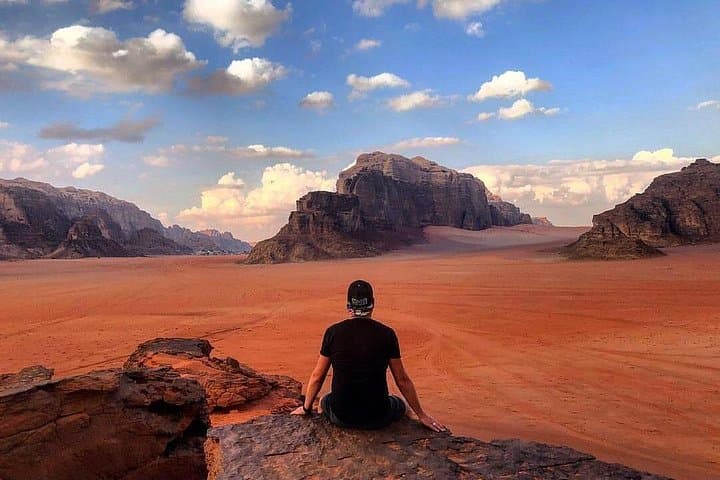
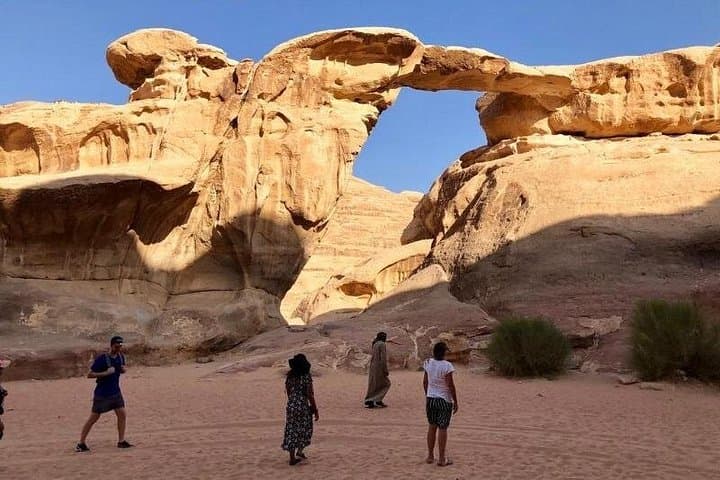
You arrive at the Jordanian side of the Eilat border and a wind-swept valley opens: orange cliffs puncture the horizon and dunes shift like slow waves. In Wadi Rum the desert moves with a weathered confidence—rock bridges and vertical faces that have directed caravans and inspired Lawrence of Arabia. A 4–5 hour jeep loop will take you across sand flats and through Khazali Canyon; an optional hour on camelback gives a slower, intimate pace.
You arrive at the Jordanian side of the Eilat border and a wind-swept valley opens: orange cliffs puncture the horizon and dunes shift like slow waves. In Wadi Rum the desert moves with a weathered confidence—rock bridges and vertical faces that have directed caravans and inspired Lawrence of Arabia. A 4–5 hour jeep loop will take you across sand flats and through Khazali Canyon; an optional hour on camelback gives a slower, intimate pace.
Petra reverses the landscape’s grammar. The Siq’s 1.2 km narrow cut allows sandstone bands to reveal centuries of mineral painting before the Treasury appears. Over two days the itinerary mixes guided highlights (the Treasury, Royal Tombs, Theatre and Qasr al-Bint) with time to climb to the High Place of Sacrifice or follow lesser-used trails that reach panoramic ridgelines.
Geology here is exposed: wind-sculpted sandstone in Wadi Rum and stratified Nabatean sandstone in Petra, carved by water and trade routes. Culture threads through both—Bedouin hospitality in desert camps and Nabatean engineering in Petra’s water channels.
Practical edge: expect moderate walking on uneven stone and sand, 1.5 hour transfers between Wadi Rum and Petra, and early starts to avoid midday heat. Carry 2–3 liters of water, sun protection, and comfortable footwear with grip. Bring Jordanian dinar or card, keep passport and visa details handy at the border, and allow time for border formalities. Nights range from a Bedouin camp under a clear sky to a simple Petra hotel—two very different ways to sleep in Jordan’s great open rooms.