THE ADVENTURE COLLECTIVE® · Independent discovery and booking for outdoor travel

A five-hour private jeep loop through Wadi Rum that hits Lawrence’s House, Khazali Canyon, natural rock bridges and the Red Dune—blending short walks, Bedouin hospitality and desert geology. Ideal for travelers who want a compact but thorough introduction to the valley of the moon.
A five-hour private jeep loop through Wadi Rum that hits Lawrence’s House, Khazali Canyon, natural rock bridges and the Red Dune—blending short walks, Bedouin hospitality and desert geology. Ideal for travelers who want a compact but thorough introduction to the valley of the moon.
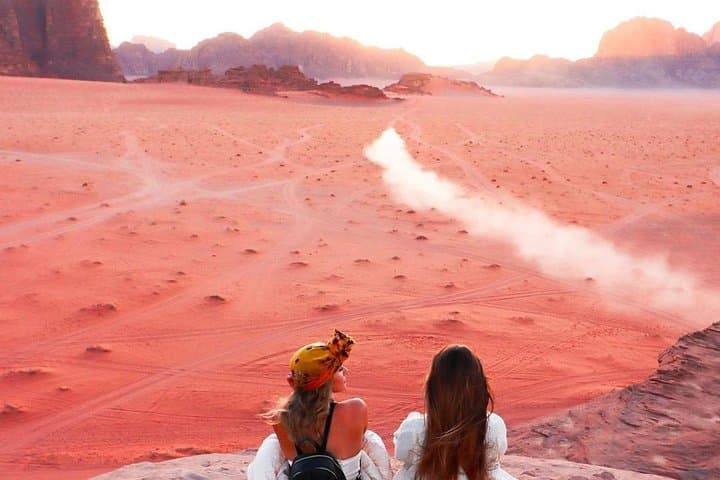
The engine shudders once, then the jeep surges forward across the flat that separates Rum village from its mountains. Sand jumps and slides like a living thing under the tires, and the scarlet faces of sandstone plates rise up ahead as if arranged by an unseen hand. For five hours the desert will decide your pace—one minute cooling shade in a narrow siq, the next an exposed ridge where wind shapes every grain.
Verified experiences and guided adventures in the surrounding area.
Operated by VisitWadiRum · Wadi Rum Village, Aqaba Governorate
The engine shudders once, then the jeep surges forward across the flat that separates Rum village from its mountains. Sand jumps and slides like a living thing under the tires, and the scarlet faces of sandstone plates rise up ahead as if arranged by an unseen hand. For five hours the desert will decide your pace—one minute cooling shade in a narrow siq, the next an exposed ridge where wind shapes every grain.
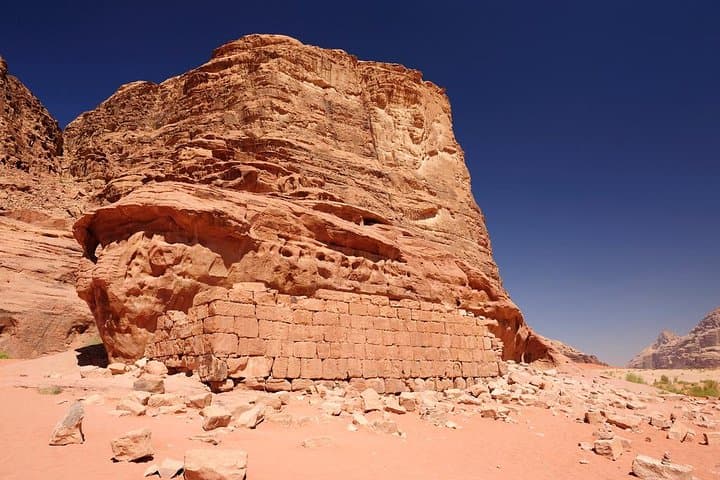
This loop through Wadi Rum stitches together human and geological time. You begin near the remains of a Nabataean temple and pass the small, scrappy house associated with T.E. Lawrence—recent ruins that hint at the guerrilla campaigns recorded in Seven Pillars of Wisdom. The rock here is Cambrian sandstone: wind-sculpted arches, honeycomb weathering and vertical joints that split the plain into corridors and bridges. Khazali Canyon offers a short, shaded siq of roughly 150 meters where ancient Thamudic and Nabataean inscriptions—footprints, animals and caravan graffiti—still look out from the stone.
Cultural moments are deliberate and human-paced. Drivers will pour Bedouin tea in a protected nook, and you’ll get a chance to meet local guides who still herd goats and move camp with the seasons. Lunch is served under awnings of muslin or in the lee of a rock; it’s simple, warm and savory—exactly what this land asks for.
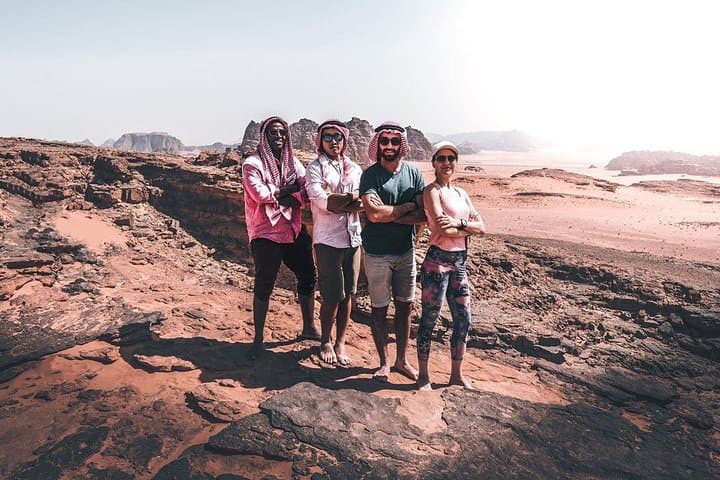
Practicalities are straightforward. The route mixes low-speed 4x4 tracks with short walks—expect sections of loose sand and compacted desert crust and a dune climb that gains roughly 20–30 meters. The tour is private and designed for all fitness levels, though midday heat in summer changes the math: mornings and late afternoons are cooler and more photogenic.
Bring sun protection, a refillable water bottle and sturdy footwear for rocky steps and dune sand. If you want to climb rock bridges for photos, check with your guide first; some routes are easy but exposed. Wadi Rum is a protected area—entry fees and simple rules help preserve petroglyphs and Bedouin sites, so stay on agreed trails and leave no trace.
By the time the jeep eases back toward the visitor parking, the desert's cadence has shifted: shadows lengthen, the sand cools, and the rocks take on a deeper, almost iron hue. The trip is short by desert standards, but it’s a compact primer—history, geology and Bedouin hospitality folded into five efficient hours that make Wadi Rum feel both immediate and ancient.
Timing tip: schedule this trip early in your visit so you can orient yourself to the landscape and plan an overnight camp if the desert asks you to stay longer.
easy.
5 hours.
Suitable for most fitness levels; requires short 100–300m walks and a modest dune climb with limited scrambling.
The tour listing does not explicitly include the protected area entrance fee; pay the fee at the Wadi Rum visitor center on arrival or confirm with the operator before booking.
The jeep does most of the work; expect several short walks (100–300m) and a dune climb with minimal elevation gain—suitable for most guests.
Yes—infants must sit on an adult's lap as noted in the booking; the tour is family-friendly but watch children near cliffs and dunes.
Facilities are limited in the field; the visitor center has restrooms, and the guide will arrange shaded stops for tea and lunch.
Some bridges are accessible with short climbs, but always follow your guide’s advice—rocks can be loose and some routes are exposed.
No—the operator provides experienced drivers and 4x4 vehicles; passengers do not need driving skills.
Wadi Rum holds traces of Nabataean settlement and Thamudic inscriptions; Lawrence used this terrain strategically during the Arab Revolt and the ruins nearby are linked to his operations.
Wadi Rum is a protected area managed with local Bedouin cooperation; visitors should follow entrance rules, avoid touching inscriptions and reduce plastic waste to protect fragile desert ecology.
VisitWadiRum operates guided outdoor trips and adventures with an emphasis on safety, stewardship, and memorable experiences.

The engine shudders once, then the jeep surges forward across the flat that separates Rum village from its mountains. Sand jumps and slides like a living thing under the tires, and the scarlet faces of sandstone plates rise up ahead as if arranged by an unseen hand. For five hours the desert will decide your pace—one minute cooling shade in a narrow siq, the next an exposed ridge where wind shapes every grain.
The engine shudders once, then the jeep surges forward across the flat that separates Rum village from its mountains. Sand jumps and slides like a living thing under the tires, and the scarlet faces of sandstone plates rise up ahead as if arranged by an unseen hand. For five hours the desert will decide your pace—one minute cooling shade in a narrow siq, the next an exposed ridge where wind shapes every grain.
This loop through Wadi Rum stitches together human and geological time. You begin near the remains of a Nabataean temple and pass the small, scrappy house associated with T.E. Lawrence—recent ruins that hint at the guerrilla campaigns recorded in Seven Pillars of Wisdom. The rock here is Cambrian sandstone: wind-sculpted arches, honeycomb weathering and vertical joints that split the plain into corridors and bridges. Khazali Canyon offers a short, shaded siq of roughly 150 meters where ancient Thamudic and Nabataean inscriptions—footprints, animals and caravan graffiti—still look out from the stone.
Cultural moments are deliberate and human-paced. Drivers will pour Bedouin tea in a protected nook, and you’ll get a chance to meet local guides who still herd goats and move camp with the seasons. Lunch is served under awnings of muslin or in the lee of a rock; it’s simple, warm and savory—exactly what this land asks for.
Practicalities are straightforward. The route mixes low-speed 4x4 tracks with short walks—expect sections of loose sand and compacted desert crust and a dune climb that gains roughly 20–30 meters. The tour is private and designed for all fitness levels, though midday heat in summer changes the math: mornings and late afternoons are cooler and more photogenic.
Bring sun protection, a refillable water bottle and sturdy footwear for rocky steps and dune sand. If you want to climb rock bridges for photos, check with your guide first; some routes are easy but exposed. Wadi Rum is a protected area—entry fees and simple rules help preserve petroglyphs and Bedouin sites, so stay on agreed trails and leave no trace.
By the time the jeep eases back toward the visitor parking, the desert's cadence has shifted: shadows lengthen, the sand cools, and the rocks take on a deeper, almost iron hue. The trip is short by desert standards, but it’s a compact primer—history, geology and Bedouin hospitality folded into five efficient hours that make Wadi Rum feel both immediate and ancient.
Timing tip: schedule this trip early in your visit so you can orient yourself to the landscape and plan an overnight camp if the desert asks you to stay longer.