THE ADVENTURE COLLECTIVE® · Independent discovery and booking for outdoor travel

Hit the tracks for a half-day Jeep tour through Wadi Rum’s red sands and rock bridges. Expect petroglyphs, an oasis spring, sand dunes, and a sunset tea with a Bedouin guide.
Hit the tracks for a half-day Jeep tour through Wadi Rum’s red sands and rock bridges. Expect petroglyphs, an oasis spring, sand dunes, and a sunset tea with a Bedouin guide.
The jeep kicks up a rust-colored plume as it bucks across a flat of packed sand, and the desert opens in a sequence of frames — sheer sandstone walls, wind-carved arches, and a smear of green where water finds purchase. In the morning light, the rocks glow warm and patient; at sunset the valley throws long shadows that seem to rearrange the landscape with every passing minute. Your guide shuts off the engine; the silence is big enough to hear sand shift under boot soles.
Verified experiences and guided adventures in the surrounding area.
Operated by Wadi Rum Desert Dreams · Wadi Rum Village, Aqaba Governorate
The jeep kicks up a rust-colored plume as it bucks across a flat of packed sand, and the desert opens in a sequence of frames — sheer sandstone walls, wind-carved arches, and a smear of green where water finds purchase. In the morning light, the rocks glow warm and patient; at sunset the valley throws long shadows that seem to rearrange the landscape with every passing minute. Your guide shuts off the engine; the silence is big enough to hear sand shift under boot soles.
Wadi Rum has been a crossroads for millennia. Nabatean and Thamudic inscriptions scrape the canyon walls; later, Lawrence of Arabia passed through these same passes, leaving a modern legacy of myth and motion. Geologically, the valley is a playground of sandstone and granite sculpted by wind and episodic floods — arches like Little Bridge and the 15-meter sweep of Umm Fruth Rock Bridge are products of slow weathering and sudden force.
The culture here is Bedouin and direct. Small tents with handwoven rugs and steaming cups of tea offer a hospitable pause at several stops. Guides are often local Bedouins who read the terrain the way sailors read the sea: every dune, wash, and rock has a memory and a purpose. When you climb Lawrence Spring, you’re standing where caravans and camels stopped for the same cool water that still trickles down the slopes.
Practically speaking, this is a 3.5–4.5-hour shared jeep loop with optional short walks and light scrambling. Stops include Lawrence Spring, Khazali Canyon with its petroglyphs, the Red Sand Dune, Little Bridge, Umm Fruth Rock Bridge, and either an Abu Khashaba canyon walk (morning) or a sunset viewpoint with tea (sunset departure). Terrain shifts rapidly from hard-packed tracks to soft sand — expect a mix of bumpy vehicle travel and brief on-foot sections that can be steep on loose surfaces.
Plan your window around light: morning tours reveal color and cooler temperatures; sunset tours give you the dramatic silhouette show and a tea around a small fire. Bring closed shoes for climbing, sun protection, at least 1–1.5 liters of water, and a light layer for wind and the temperature dip at sunset. If you have back issues or are pregnant, some stops involve awkward movements; check with the operator before booking.
Beyond the Instagram shots, Wadi Rum rewards small curiosities: watch for carved inscriptions in Khazali Canyon, listen for birds that use collected rainwater, and accept an offered cup of tea — it’s as much an entry into local life as any monument. Whether you come for geology, history, or simply the way the desert makes you slow down, a half-day jeep tour is an efficient, sensory-rich introduction to one of Jordan’s most kinetic landscapes.
moderate.
4–4.5 hours.
Light to moderate fitness for short hikes and scrambling on loose sand and rock
Meet at the Rest House in Wadi Rum Village (Rum Village); the tour returns there after the loop.
Yes—book the sunset slot to end at a viewpoint with Bedouin tea and panoramic light.
Yes—most stops are family-friendly, but some climbing (Umm Fruth, dunes) may be challenging for very young children or those with mobility issues.
This operator’s listing includes transfers and bottled water but confirms park entrance fees with the provider when booking.
Guides typically speak English; many are Bedouin locals fluent in Arabic and experienced with international visitors.
Yes—guides leave the vehicle at stops and usually watch personal items, but don’t leave valuables unattended.
Wadi Rum has been a corridor for Nabatean trade and later a backdrop to Lawrence of Arabia’s WWI-era operations; inscriptions across canyons record this layered human presence.
Visitors are encouraged to stick to established tracks to limit erosion and avoid climbing fragile rock art; support local Bedouin camps to keep tourism benefits in the community.
Wadi Rum Desert Dreams operates guided outdoor trips and adventures with an emphasis on safety, stewardship, and memorable experiences.

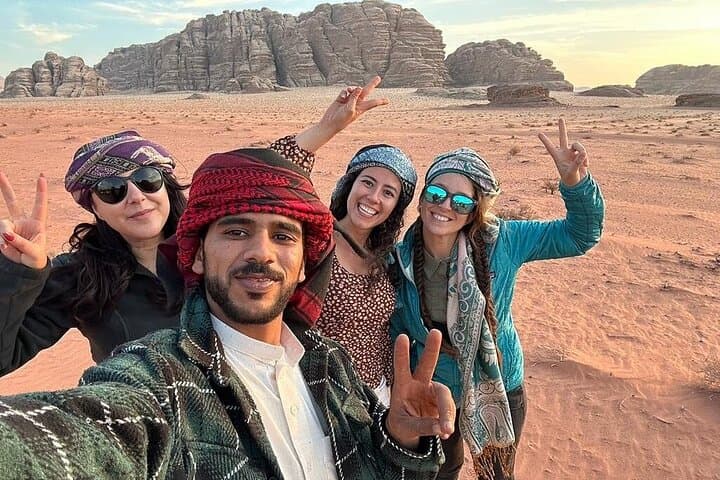
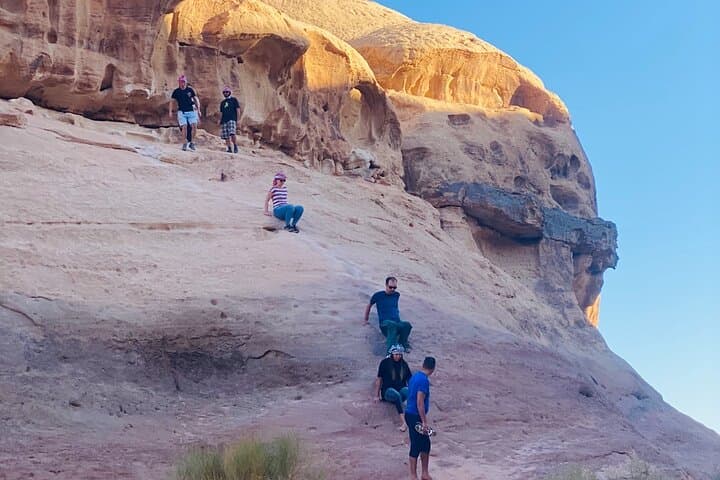
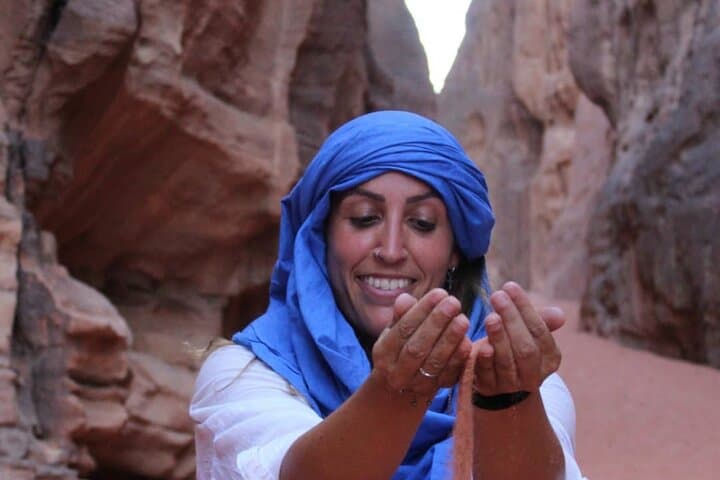
The jeep kicks up a rust-colored plume as it bucks across a flat of packed sand, and the desert opens in a sequence of frames — sheer sandstone walls, wind-carved arches, and a smear of green where water finds purchase. In the morning light, the rocks glow warm and patient; at sunset the valley throws long shadows that seem to rearrange the landscape with every passing minute. Your guide shuts off the engine; the silence is big enough to hear sand shift under boot soles.
The jeep kicks up a rust-colored plume as it bucks across a flat of packed sand, and the desert opens in a sequence of frames — sheer sandstone walls, wind-carved arches, and a smear of green where water finds purchase. In the morning light, the rocks glow warm and patient; at sunset the valley throws long shadows that seem to rearrange the landscape with every passing minute. Your guide shuts off the engine; the silence is big enough to hear sand shift under boot soles.
Wadi Rum has been a crossroads for millennia. Nabatean and Thamudic inscriptions scrape the canyon walls; later, Lawrence of Arabia passed through these same passes, leaving a modern legacy of myth and motion. Geologically, the valley is a playground of sandstone and granite sculpted by wind and episodic floods — arches like Little Bridge and the 15-meter sweep of Umm Fruth Rock Bridge are products of slow weathering and sudden force.
The culture here is Bedouin and direct. Small tents with handwoven rugs and steaming cups of tea offer a hospitable pause at several stops. Guides are often local Bedouins who read the terrain the way sailors read the sea: every dune, wash, and rock has a memory and a purpose. When you climb Lawrence Spring, you’re standing where caravans and camels stopped for the same cool water that still trickles down the slopes.
Practically speaking, this is a 3.5–4.5-hour shared jeep loop with optional short walks and light scrambling. Stops include Lawrence Spring, Khazali Canyon with its petroglyphs, the Red Sand Dune, Little Bridge, Umm Fruth Rock Bridge, and either an Abu Khashaba canyon walk (morning) or a sunset viewpoint with tea (sunset departure). Terrain shifts rapidly from hard-packed tracks to soft sand — expect a mix of bumpy vehicle travel and brief on-foot sections that can be steep on loose surfaces.
Plan your window around light: morning tours reveal color and cooler temperatures; sunset tours give you the dramatic silhouette show and a tea around a small fire. Bring closed shoes for climbing, sun protection, at least 1–1.5 liters of water, and a light layer for wind and the temperature dip at sunset. If you have back issues or are pregnant, some stops involve awkward movements; check with the operator before booking.
Beyond the Instagram shots, Wadi Rum rewards small curiosities: watch for carved inscriptions in Khazali Canyon, listen for birds that use collected rainwater, and accept an offered cup of tea — it’s as much an entry into local life as any monument. Whether you come for geology, history, or simply the way the desert makes you slow down, a half-day jeep tour is an efficient, sensory-rich introduction to one of Jordan’s most kinetic landscapes.