THE ADVENTURE COLLECTIVE® · Independent discovery and booking for outdoor travel

Combine a jeep ride, camel trek and overnight Bedouin camp to experience Wadi Rum’s red dunes, rock inscriptions and wide desert skies. This practical guide explains what to expect, where the highlights are, and how to prepare for the desert’s swings in temperature.
Combine a jeep ride, camel trek and overnight Bedouin camp to experience Wadi Rum’s red dunes, rock inscriptions and wide desert skies. This practical guide explains what to expect, where the highlights are, and how to prepare for the desert’s swings in temperature.
You step out of the jeep into a silence so wide it seems to move—the wind carving ribs into sandstone, the red sand pressing cool underfoot as evening leans toward the horizon.
Verified experiences and guided adventures in the surrounding area.
Operated by Sunrise Camp · Wadi Rum Village, Aqaba Governorate
You step out of the jeep into a silence so wide it seems to move—the wind carving ribs into sandstone, the red sand pressing cool underfoot as evening leans toward the horizon.
This mixed jeep-and-camel tour in Wadi Rum threads through Khazali Canyon and Lawrence's Spring, past Nabatean and Thamudic inscriptions, and finishes with a dune-top sunset before an overnight in a Bedouin-style camp. Geologically, the valley is a carved mosaic of sandstone and granite sculpted by millennia of wind and flash floods; the colors shift from ochre to crimson as light slides away. Culturally the landscape carries layers: ancient petroglyphs, Bedouin tea rituals, and traces of T.E. Lawrence’s passage.
Expect short walks between vehicle points—easy rock scrambling in canyons and a dune climb for the best view. Guides point out faded inscriptions, fig trees at springs, and the quieter creek beds where herbs release scent in spring. Nights are cold; the desert sky dares you to look up and count the constellations.
Practicalities: the trip runs about six hours before camp, with meals and bottled water included; physical demand is low but bring sturdy shoes for loose sand and rocky steps. Time your visit for golden-hour photos; leave the inscriptions untouched and pack out trash. If camping, carry a warm layer, headlamp, and a refillable water bottle—the desert is beautiful, but fragile, and your choices matter to both the landscape and local Bedouin hosts.
easy.
6 hours (daytime segment) plus overnight.
Suitable for people in basic physical condition; able to walk short distances on sand and uneven rock.
The daytime experience is about six hours and concludes at the desert camp where you stay overnight; the full schedule includes meals at the camp.
Yes—breakfast, lunch, dinner and bottled water are included as noted in the itinerary.
Camel rides are part of the mixed experience but the operator typically accommodates guests who prefer the jeep for sections; check at booking.
Yes—sites like Khazali Canyon and Anfishieh have Nabatean and Thamudic inscriptions visible from maintained paths; avoid touching them.
Wadi Rum bears layers of human history from Thamudic and Nabatean inscriptions to Bedouin settlement; T.E. Lawrence later popularized the region during the Arab Revolt.
The desert is ecologically sensitive—stick to trails, respect inscriptions and camps, minimize campfire impact, and pack out all waste to protect the fragile environment.
Sunrise Camp operates guided outdoor trips and adventures with an emphasis on safety, stewardship, and memorable experiences.

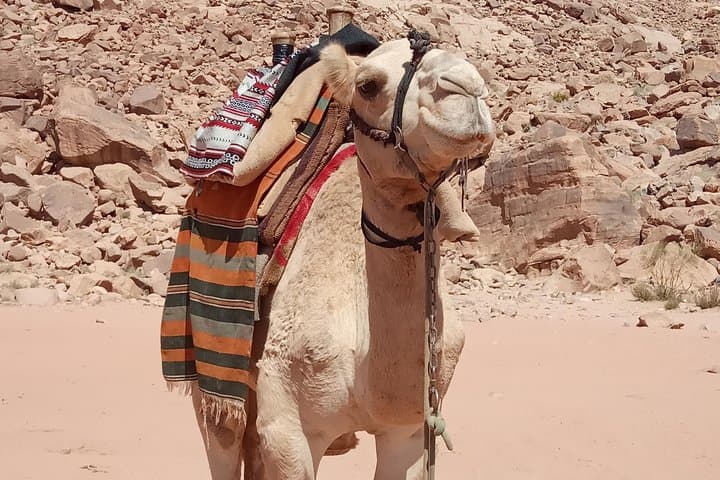


You step out of the jeep into a silence so wide it seems to move—the wind carving ribs into sandstone, the red sand pressing cool underfoot as evening leans toward the horizon.
You step out of the jeep into a silence so wide it seems to move—the wind carving ribs into sandstone, the red sand pressing cool underfoot as evening leans toward the horizon.
This mixed jeep-and-camel tour in Wadi Rum threads through Khazali Canyon and Lawrence's Spring, past Nabatean and Thamudic inscriptions, and finishes with a dune-top sunset before an overnight in a Bedouin-style camp. Geologically, the valley is a carved mosaic of sandstone and granite sculpted by millennia of wind and flash floods; the colors shift from ochre to crimson as light slides away. Culturally the landscape carries layers: ancient petroglyphs, Bedouin tea rituals, and traces of T.E. Lawrence’s passage.
Expect short walks between vehicle points—easy rock scrambling in canyons and a dune climb for the best view. Guides point out faded inscriptions, fig trees at springs, and the quieter creek beds where herbs release scent in spring. Nights are cold; the desert sky dares you to look up and count the constellations.
Practicalities: the trip runs about six hours before camp, with meals and bottled water included; physical demand is low but bring sturdy shoes for loose sand and rocky steps. Time your visit for golden-hour photos; leave the inscriptions untouched and pack out trash. If camping, carry a warm layer, headlamp, and a refillable water bottle—the desert is beautiful, but fragile, and your choices matter to both the landscape and local Bedouin hosts.