THE ADVENTURE COLLECTIVE® · Independent discovery and booking for outdoor travel

Spend a day tearing across Wadi Rum’s red dunes by 4x4, stop at Nabataean inscriptions and natural arches, then sleep under the stars in a private Bedouin tent. This full-day jeep tour with meals pairs off-road thrills with cultural encounters and an unforgettable night in the desert.
Spend a day tearing across Wadi Rum’s red dunes by 4x4, stop at Nabataean inscriptions and natural arches, then sleep under the stars in a private Bedouin tent. This full-day jeep tour with meals pairs off-road thrills with cultural encounters and an unforgettable night in the desert.
The jeep bumps off the packed track and the world narrows to rust-red rock and the steady hiss of sand sliding down a dune. By noon the sun has warmed the stone until it breathes heat; camels amble past a spring where green moss clings stubbornly to the water. That first day in Wadi Rum is a blur of ridgelines, thyme-scented air, and sudden pockets of shade where a Bedouin guide will hand you tea and a story.
Verified experiences and guided adventures in the surrounding area.
Operated by Wadi Rum Zain Tours · Wadi Rum Village, Aqaba Governorate
The jeep bumps off the packed track and the world narrows to rust-red rock and the steady hiss of sand sliding down a dune. By noon the sun has warmed the stone until it breathes heat; camels amble past a spring where green moss clings stubbornly to the water. That first day in Wadi Rum is a blur of ridgelines, thyme-scented air, and sudden pockets of shade where a Bedouin guide will hand you tea and a story.
Wadi Rum's landscape is the result of wind, water, and deep time. Sandstone and granite have been carved by millennia of wind into arches, bridges and mushroom-shaped outcrops; iron oxide paints the dunes a distinctive red, while pockets of white sand appear like islands beyond the ridges. This was once a crossroads: Nabataean inscriptions and Thamudic petroglyphs dot canyons like Khazali, and T.E. Lawrence's routes—occupied during the Arab Revolt—thread through the same cliffs you’ll see on the circuit.
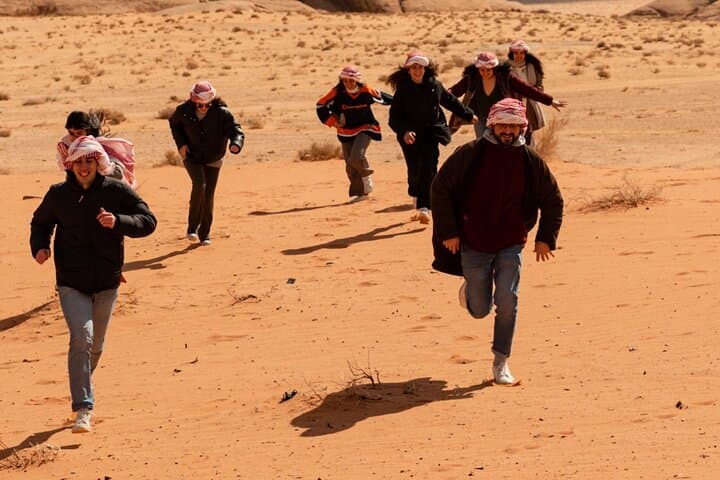
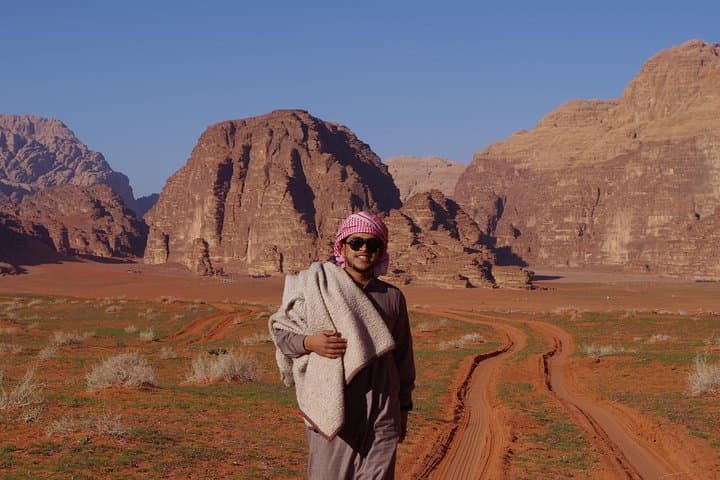
Local culture is immediate and hospitable. Bedouin families host guests in canvas tents, cook over open flames, and keep oral histories tied to the land. Expect to learn practical skills—tying a headscarf, pouring tea just-so—and to hear songs under a sky that seems to tilt closer by the minute.
What you'll do: the day tour is a 4x4 loop with multiple short stops—Lawrence Spring, Khazali Canyon, Al Ramal dune, Little Bridge, Um Frouth Arch—and optional short hikes. Many stops involve easy walks of 20–60 minutes; the Burdah Rock Bridge viewpoint is the most demanding, with a scramble that can add ~1.5–2 km round-trip and roughly 150–200 m of ascent if you choose to reach the summit. Terrain alternates hard-packed desert tracks, soft dunes and rocky slabs; expect sand in your shoes.
Practicalities: the tour runs 8–24 hours depending on chosen timing and includes transfers from Wadi Rum Village, all meals and tented accommodation. Water is provided, but carry an extra 1–2 liters during hikes. Sturdy shoes with good tread and sun protection are essential; a light fleece is useful at night when temperatures drop rapidly. Respect local customs—modest dress at village stops—and follow your guide’s instructions on climbing and sheltering from wind.
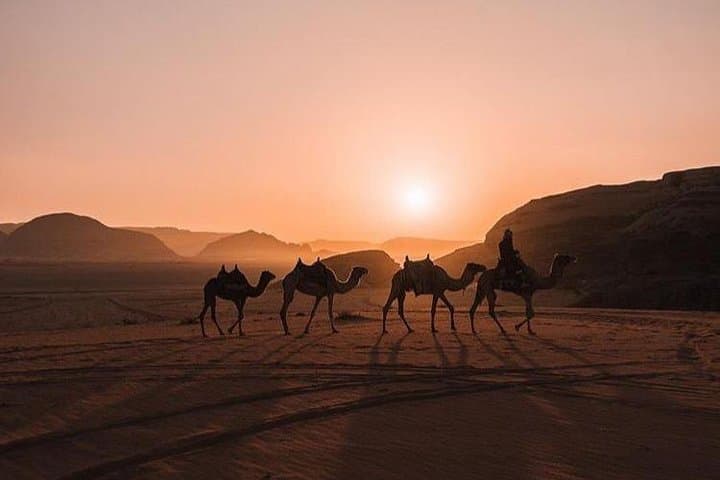
Timing matters: aim for late afternoon climbs and the sunset viewpoint—sunset and the post-dusk Milky Way viewing are the real highlights. Bring a headlamp for the walk back to camp and a camera with a wide lens for dunes and arches. Above all, move at the desert’s pace: quick bursts of activity followed by long, quiet pauses beside a steaming cup of tea.
moderate.
8–24 hours.
Basic to moderate fitness for dune climbs and short scrambles; the trip suits active travelers who can handle brief hikes and standing in sand.
Meet at the Rest House in Wadi Rum Village; the tour returns there after the overnight camp and activities.
Overnight is in a private tent with basic bedding; it’s cozy and clean but not luxury—bring a warm layer for cold nights.
Yes—many stops are easy and the jeep handles rough terrain; consult the operator about specific mobility limitations and the Burdah hike which is strenuous.
Breakfast, lunch, dinner and tea are included; inform the operator ahead of time for dietary restrictions and they will try to accommodate local options.
Sandboarding is possible at Al Ramal dune and small, guided climbs or scrambles are offered at certain arches—follow the guide’s safety instructions.
The operator may cancel for severe weather; cancellations at least 24 hours in advance are refundable per the tour policy.
Wadi Rum has been a travel corridor for millennia—Nabataean petroglyphs and T.E. Lawrence’s routes are common sights that link the desert to Bedouin and Arab Revolt history.
Water is scarce—use provided water sparingly and support local guides who practice low-impact camping; avoid graffiti on rock art and stick to established trails.
Wadi Rum Zain Tours operates guided outdoor trips and adventures with an emphasis on safety, stewardship, and memorable experiences.
The jeep bumps off the packed track and the world narrows to rust-red rock and the steady hiss of sand sliding down a dune. By noon the sun has warmed the stone until it breathes heat; camels amble past a spring where green moss clings stubbornly to the water. That first day in Wadi Rum is a blur of ridgelines, thyme-scented air, and sudden pockets of shade where a Bedouin guide will hand you tea and a story.
The jeep bumps off the packed track and the world narrows to rust-red rock and the steady hiss of sand sliding down a dune. By noon the sun has warmed the stone until it breathes heat; camels amble past a spring where green moss clings stubbornly to the water. That first day in Wadi Rum is a blur of ridgelines, thyme-scented air, and sudden pockets of shade where a Bedouin guide will hand you tea and a story.
Wadi Rum's landscape is the result of wind, water, and deep time. Sandstone and granite have been carved by millennia of wind into arches, bridges and mushroom-shaped outcrops; iron oxide paints the dunes a distinctive red, while pockets of white sand appear like islands beyond the ridges. This was once a crossroads: Nabataean inscriptions and Thamudic petroglyphs dot canyons like Khazali, and T.E. Lawrence's routes—occupied during the Arab Revolt—thread through the same cliffs you’ll see on the circuit.
Local culture is immediate and hospitable. Bedouin families host guests in canvas tents, cook over open flames, and keep oral histories tied to the land. Expect to learn practical skills—tying a headscarf, pouring tea just-so—and to hear songs under a sky that seems to tilt closer by the minute.
What you'll do: the day tour is a 4x4 loop with multiple short stops—Lawrence Spring, Khazali Canyon, Al Ramal dune, Little Bridge, Um Frouth Arch—and optional short hikes. Many stops involve easy walks of 20–60 minutes; the Burdah Rock Bridge viewpoint is the most demanding, with a scramble that can add ~1.5–2 km round-trip and roughly 150–200 m of ascent if you choose to reach the summit. Terrain alternates hard-packed desert tracks, soft dunes and rocky slabs; expect sand in your shoes.
Practicalities: the tour runs 8–24 hours depending on chosen timing and includes transfers from Wadi Rum Village, all meals and tented accommodation. Water is provided, but carry an extra 1–2 liters during hikes. Sturdy shoes with good tread and sun protection are essential; a light fleece is useful at night when temperatures drop rapidly. Respect local customs—modest dress at village stops—and follow your guide’s instructions on climbing and sheltering from wind.
Timing matters: aim for late afternoon climbs and the sunset viewpoint—sunset and the post-dusk Milky Way viewing are the real highlights. Bring a headlamp for the walk back to camp and a camera with a wide lens for dunes and arches. Above all, move at the desert’s pace: quick bursts of activity followed by long, quiet pauses beside a steaming cup of tea.