THE ADVENTURE COLLECTIVE® · Independent discovery and booking for outdoor travel

Trek six days through Wadi Rum under a luminous full moon—sleep in desert camps, walk 6–8 hours daily among sandstone cliffs and ancient rock inscriptions, and finish the journey in Petra and the Dead Sea. This guided, private itinerary blends Bedouin hospitality with strenuous desert trekking.
Trek six days through Wadi Rum under a luminous full moon—sleep in desert camps, walk 6–8 hours daily among sandstone cliffs and ancient rock inscriptions, and finish the journey in Petra and the Dead Sea. This guided, private itinerary blends Bedouin hospitality with strenuous desert trekking.
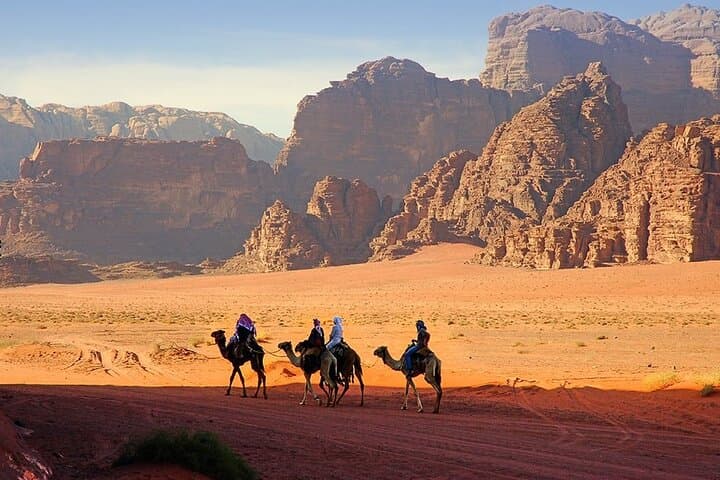
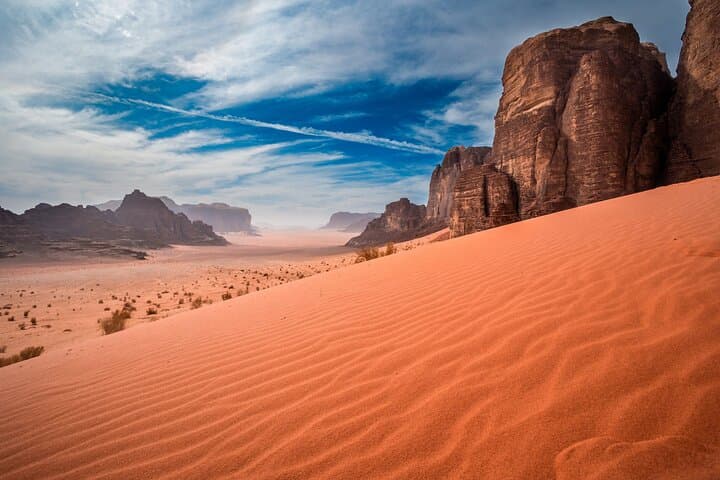
By daylight the valley walls of Wadi Rum stand like ancient pages—red, ochre and rust—holding the quiet of millennia. At dusk the desert exhales: temperatures fall, shadows lengthen along steep sandstone faces, and a full moon edges up the horizon to wash the valley in silver. On this multi-day trek travelers walk where Bedouin caravans once threaded, sleeping under a sky that seems to have been cleared of everything but stars and memory.
Verified experiences and guided adventures in the surrounding area.
Operated by Nyazi Tours · Wadi Rum, Ma'an
By daylight the valley walls of Wadi Rum stand like ancient pages—red, ochre and rust—holding the quiet of millennia. At dusk the desert exhales: temperatures fall, shadows lengthen along steep sandstone faces, and a full moon edges up the horizon to wash the valley in silver. On this multi-day trek travelers walk where Bedouin caravans once threaded, sleeping under a sky that seems to have been cleared of everything but stars and memory.
Wadi Rum’s story spans geology and human history. Wind and water carved the towering mesas and narrow canyons from Jurassic sandstone; Thamudic and Nabatean inscriptions dot the rock, and on scattered ledges you’ll find the faint marks of early travelers. During the 20th century T.E. Lawrence’s association with Arabia—and Hollywood’s use of these landscapes for Lawrence of Arabia and Mars-set films—added another layer to Rum’s global legend.
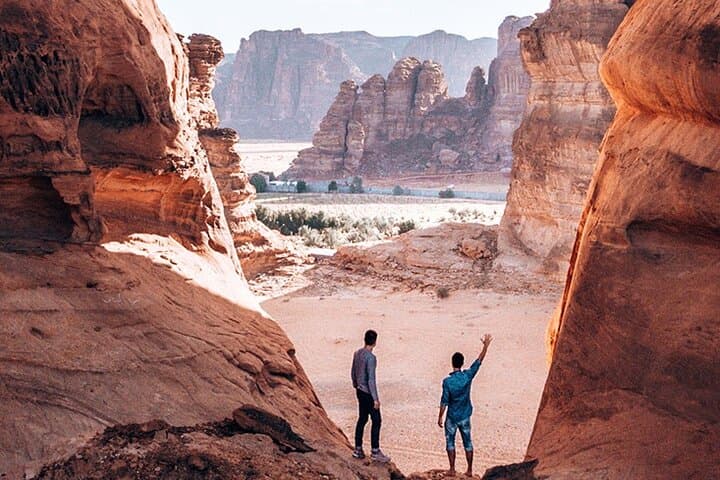
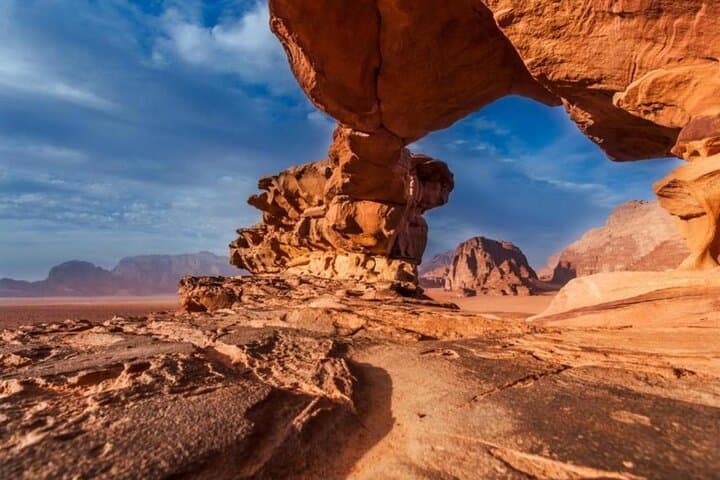
Culturally the trek is simple and deliberate: slow days on trail, Bedouin hospitality at camp, and a cadence set by coffee breaks and shared meals. Guides here are not just route-finders; they are storytellers who translate rock inscriptions, point out seasonal plants and read the desert’s subtle signs. Geologically, expect sandstone arches, steep gullies, and wind-swept pavement; the terrain alternates between hard-packed sand and rocky scree that demands steady footing.
Practicalities matter: the itinerary calls for 6–8 hours of trekking each day for six days in Wadi Rum, within a nine-day program that begins in Aqaba and ends in Petra and the Dead Sea. Trekking is remote—be prepared to carry water, manage your pace and rely on guides for navigation and campsite logistics. The operator supplies tents (shared), mattresses and most meals; travelers should bring a warm sleeping layer for cold desert nights and a reliable headlamp for moving around camp.
Health and safety: this program is physically demanding and not recommended for people with spinal, heart, or pregnancy-related restrictions. Footwear with ankle support and good traction is essential; sun protection and at least 3 liters of water per day are the baseline for comfort and safety. On full-moon nights, the landscape changes: moonlight removes the need for headlamps but reveals every contour—an advantage for overnight navigation and photography.
Timing makes the difference. Aim for spring or autumn for temperate daytime trekking and crisp stargazing; summer can be punishingly hot, winter cold at night. Respect the desert—pack out trash, limit campfires to approved sites and follow your guide’s lead to protect fragile rock art and plant life.
By the last morning, when the caravan leaves the last red ridge behind, most trekkers arrive quieter and more focused—less because the desert has been conquered and more because it has simply been listened to.
challenging.
6–8 hours per day over 6 days trekking (9-day tour total).
High level of cardiovascular fitness and stamina; comfortable with long days of walking on uneven desert terrain.
No—daily trekking follows daylight for most navigation; the full-moon element enhances nights in camp and allows moonlit short sections or early starts/late finishes when safe.
Accommodation mixes outdoor camping in shared tents with two nights in indoor camps and 3-star hotels in Aqaba and Petra as per the itinerary.
Some nationalities require visas; the tour includes a free visa for certain cases—confirm with the operator and your embassy before travel.
Camps are in remote desert locations with private transportation and guided logistics; basic supplies and meals are provided but bring personal medications and preferred snacks.
This program requires a high level of fitness and is not recommended for those with serious back, heart conditions or pregnant travelers—beginner hikers should prepare with training hikes first.
Yes—a full moon illuminates the landscape but reduces visible stars; for Milky Way photography consider new-moon nights, while full-moon nights offer dramatic moonlit terrain shots.
Wadi Rum preserves Thamudic and Nabatean rock inscriptions and later gained international attention through T.E. Lawrence and film productions that showcased its otherworldly landscapes.
The desert is ecologically fragile—avoid off-route driving, minimize campfire use and pack out all waste; support guides who follow local conservation practices.
Nyazi Tours operates guided outdoor trips and adventures with an emphasis on safety, stewardship, and memorable experiences.
By daylight the valley walls of Wadi Rum stand like ancient pages—red, ochre and rust—holding the quiet of millennia. At dusk the desert exhales: temperatures fall, shadows lengthen along steep sandstone faces, and a full moon edges up the horizon to wash the valley in silver. On this multi-day trek travelers walk where Bedouin caravans once threaded, sleeping under a sky that seems to have been cleared of everything but stars and memory.
By daylight the valley walls of Wadi Rum stand like ancient pages—red, ochre and rust—holding the quiet of millennia. At dusk the desert exhales: temperatures fall, shadows lengthen along steep sandstone faces, and a full moon edges up the horizon to wash the valley in silver. On this multi-day trek travelers walk where Bedouin caravans once threaded, sleeping under a sky that seems to have been cleared of everything but stars and memory.
Wadi Rum’s story spans geology and human history. Wind and water carved the towering mesas and narrow canyons from Jurassic sandstone; Thamudic and Nabatean inscriptions dot the rock, and on scattered ledges you’ll find the faint marks of early travelers. During the 20th century T.E. Lawrence’s association with Arabia—and Hollywood’s use of these landscapes for Lawrence of Arabia and Mars-set films—added another layer to Rum’s global legend.
Culturally the trek is simple and deliberate: slow days on trail, Bedouin hospitality at camp, and a cadence set by coffee breaks and shared meals. Guides here are not just route-finders; they are storytellers who translate rock inscriptions, point out seasonal plants and read the desert’s subtle signs. Geologically, expect sandstone arches, steep gullies, and wind-swept pavement; the terrain alternates between hard-packed sand and rocky scree that demands steady footing.
Practicalities matter: the itinerary calls for 6–8 hours of trekking each day for six days in Wadi Rum, within a nine-day program that begins in Aqaba and ends in Petra and the Dead Sea. Trekking is remote—be prepared to carry water, manage your pace and rely on guides for navigation and campsite logistics. The operator supplies tents (shared), mattresses and most meals; travelers should bring a warm sleeping layer for cold desert nights and a reliable headlamp for moving around camp.
Health and safety: this program is physically demanding and not recommended for people with spinal, heart, or pregnancy-related restrictions. Footwear with ankle support and good traction is essential; sun protection and at least 3 liters of water per day are the baseline for comfort and safety. On full-moon nights, the landscape changes: moonlight removes the need for headlamps but reveals every contour—an advantage for overnight navigation and photography.
Timing makes the difference. Aim for spring or autumn for temperate daytime trekking and crisp stargazing; summer can be punishingly hot, winter cold at night. Respect the desert—pack out trash, limit campfires to approved sites and follow your guide’s lead to protect fragile rock art and plant life.
By the last morning, when the caravan leaves the last red ridge behind, most trekkers arrive quieter and more focused—less because the desert has been conquered and more because it has simply been listened to.