THE ADVENTURE COLLECTIVE® · Independent discovery and booking for outdoor travel

Drive through wind-sculpted canyons and sleep under the stars on a full-day Wadi Rum jeep tour that ends in a traditional Bedouin camp. Expect short hikes, bumpy desert tracks, and an evening of tea, stories, and stargazing.
Drive through wind-sculpted canyons and sleep under the stars on a full-day Wadi Rum jeep tour that ends in a traditional Bedouin camp. Expect short hikes, bumpy desert tracks, and an evening of tea, stories, and stargazing.
The jeep hums, tires slipping through powder-red sand, and a wall of stone rises up—sheer, striped faces that seem to have been carved by wind rather than time. By late afternoon the light pulls the red out of the desert like a hand, and the crew slows at Um Sabatah to let the sunset do the work: long shadows, a brief coolness, and the hush that falls before a desert night.
Verified experiences and guided adventures in the surrounding area.
The jeep hums, tires slipping through powder-red sand, and a wall of stone rises up—sheer, striped faces that seem to have been carved by wind rather than time. By late afternoon the light pulls the red out of the desert like a hand, and the crew slows at Um Sabatah to let the sunset do the work: long shadows, a brief coolness, and the hush that falls before a desert night.
This two-day loop through Wadi Rum moves between ten of the protected area’s most famous landmarks—Lawrence’s Spring, Khazali Canyon, Burdah and Um Fruth natural bridges, and the Seven Pillars of Wisdom—linked by off-road tracks that cut across sand flats and rocky pavements. Geologically, Wadi Rum is a museum of sandstone and granite: layers once deposited under a shallow sea are now split and sculpted into towers, arches, and slot canyons. The valley floor sits around 800–1,000 meters; short hikes on this tour climb a few hundred vertical meters at most, so you feel the desert rather than suffer it.
Human history is stitched into the rock. Nabatean inscriptions and petroglyphs surface at Khazali Canyon, where Bedouin voices still carry the cadence of a desert language that predates modern borders. The modern myth of Lawrence of Arabia hangs here too—his name is stamped on springs and viewpoints—but the real story belongs to the local Bedouin families who guide, cook, and host visitors, carrying traditions of hospitality and desert navigation.
Practicalities are straightforward: the tour includes a 30–45 minute canyon hike and plenty of short scrambles; expect several hours of bumpy jeep travel across soft sand and rocky tracks. Camps are basic but comfortable—mattresses on carpets, shared toilets, a communal fire, and simple, freshly prepared Bedouin meals (vegetarian options are usually available). Nights are for stargazing; with minimal light pollution the Milky Way reads like a roadmap.
Plan for temperature swings—hot days, chilly nights—and for bright sun on red sand that reflects light. Bring at least 3 liters of water per person for daytime activities, sun protection, and sturdy boots for scree and limestone steps. Respect local customs: modest clothing and asking before photographing people and private camps is both polite and expected.
Combine this trip with a night in nearby Wadi Rum Village or a longer itinerary connecting Petra and Aqaba. For photographers and slow walkers, arriving in the late afternoon to catch the sunset, then waking before dawn to watch the desert go from gray to gold, is the clearest way to understand why this place draws people back.
If you want the desert to feel alive, let the wind guide you: it will shape the route, erase footprints, and outline the next ridge you’ll climb.
moderate.
2 days (approx. 48 hours).
Moderate—suitable for travelers comfortable with short hikes and scrambling up rock steps; able to walk 30–45 minutes unassisted.
The guided canyon walk is typically 30–45 minutes through Khazali or a similar slot canyon—short but steep in places, with rock steps and petroglyphs to view.
Camps offer mattress bedding on traditional carpets, shared toilets (basic), communal dining, and hot meals prepared by hosts; facilities vary between campsites.
Families with older children who are comfortable with off-road travel and short hikes generally do well; very young children may find the jeep rides and terrain challenging.
Most operators can provide vegetarian or simple alternatives if notified in advance—report allergies or preferences when booking.
Pack warm layers, a sleeping layer if you’re prone to cold, and a headlamp—the temperature can drop dramatically after sunset.
Visits to the protected reserve are guided by licensed operators; this tour includes guiding and park access as part of the itinerary.
Wadi Rum preserves Nabatean petroglyphs and has been a crossroads for Bedouin tribes for millennia; its modern fame rose with T.E. Lawrence and cinematic portrayals.
Wadi Rum is a protected reserve—stay on designated tracks, avoid climbing fragile inscriptions, and support local Bedouin operators who steward the landscape.
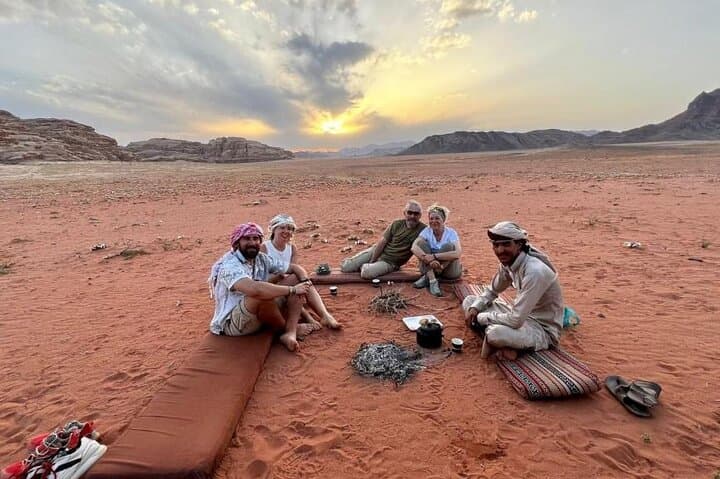
The jeep hums, tires slipping through powder-red sand, and a wall of stone rises up—sheer, striped faces that seem to have been carved by wind rather than time. By late afternoon the light pulls the red out of the desert like a hand, and the crew slows at Um Sabatah to let the sunset do the work: long shadows, a brief coolness, and the hush that falls before a desert night.
The jeep hums, tires slipping through powder-red sand, and a wall of stone rises up—sheer, striped faces that seem to have been carved by wind rather than time. By late afternoon the light pulls the red out of the desert like a hand, and the crew slows at Um Sabatah to let the sunset do the work: long shadows, a brief coolness, and the hush that falls before a desert night.
This two-day loop through Wadi Rum moves between ten of the protected area’s most famous landmarks—Lawrence’s Spring, Khazali Canyon, Burdah and Um Fruth natural bridges, and the Seven Pillars of Wisdom—linked by off-road tracks that cut across sand flats and rocky pavements. Geologically, Wadi Rum is a museum of sandstone and granite: layers once deposited under a shallow sea are now split and sculpted into towers, arches, and slot canyons. The valley floor sits around 800–1,000 meters; short hikes on this tour climb a few hundred vertical meters at most, so you feel the desert rather than suffer it.
Human history is stitched into the rock. Nabatean inscriptions and petroglyphs surface at Khazali Canyon, where Bedouin voices still carry the cadence of a desert language that predates modern borders. The modern myth of Lawrence of Arabia hangs here too—his name is stamped on springs and viewpoints—but the real story belongs to the local Bedouin families who guide, cook, and host visitors, carrying traditions of hospitality and desert navigation.
Practicalities are straightforward: the tour includes a 30–45 minute canyon hike and plenty of short scrambles; expect several hours of bumpy jeep travel across soft sand and rocky tracks. Camps are basic but comfortable—mattresses on carpets, shared toilets, a communal fire, and simple, freshly prepared Bedouin meals (vegetarian options are usually available). Nights are for stargazing; with minimal light pollution the Milky Way reads like a roadmap.
Plan for temperature swings—hot days, chilly nights—and for bright sun on red sand that reflects light. Bring at least 3 liters of water per person for daytime activities, sun protection, and sturdy boots for scree and limestone steps. Respect local customs: modest clothing and asking before photographing people and private camps is both polite and expected.
Combine this trip with a night in nearby Wadi Rum Village or a longer itinerary connecting Petra and Aqaba. For photographers and slow walkers, arriving in the late afternoon to catch the sunset, then waking before dawn to watch the desert go from gray to gold, is the clearest way to understand why this place draws people back.
If you want the desert to feel alive, let the wind guide you: it will shape the route, erase footprints, and outline the next ridge you’ll climb.