THE ADVENTURE COLLECTIVE® · Independent discovery and booking for outdoor travel

Rattle across red sand, slip into narrow canyons carved with ancient petroglyphs, and watch the desert ignite at sunset from an 80m-high rock bridge. This full-day Wadi Rum jeep tour—optionally followed by a night in a luxury Bedouin tent with private bathroom—mixes adrenaline, archaeology, and quiet starlit nights.
Rattle across red sand, slip into narrow canyons carved with ancient petroglyphs, and watch the desert ignite at sunset from an 80m-high rock bridge. This full-day Wadi Rum jeep tour—optionally followed by a night in a luxury Bedouin tent with private bathroom—mixes adrenaline, archaeology, and quiet starlit nights.
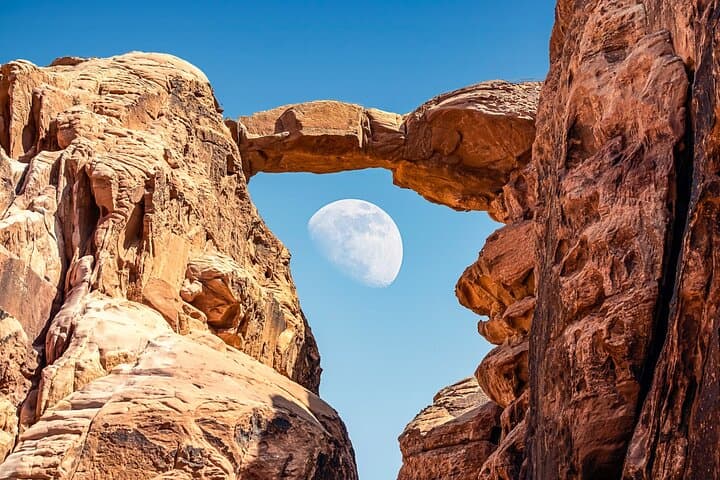
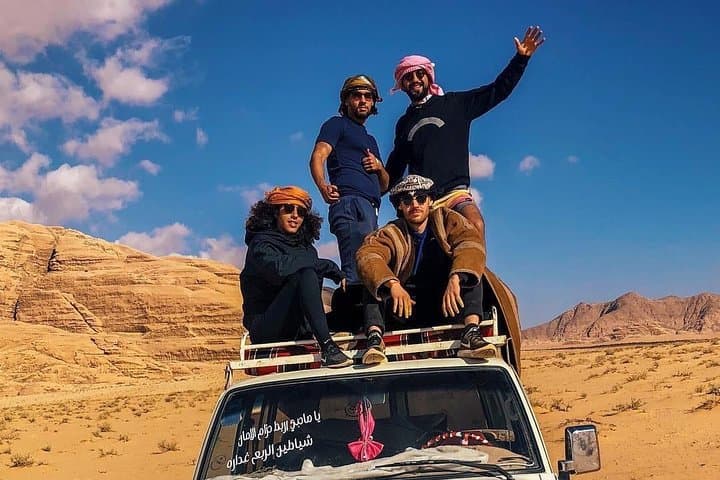
When the 4x4 eases off the paved road and the last power line disappears over the lip of the plain, Wadi Rum asserts itself with a low, wind-swept voice. Red sandstone towers and honeycombed cliffs rise like weathered monuments while the jeep—an obedient island of metal—rattles across rippled sand, sending small storms of dust in its wake. For eight hours, or longer if you stay, the landscape pulls you from one arresting scene to the next: a narrow canyon full of millennia-old petroglyphs, a dune you can walk barefoot, a rock bridge perched 80 meters above the desert floor where the sunset detonates color across the valley.
Verified experiences and guided adventures in the surrounding area.
Operated by Wadi Rum Bedouin Guide Tours · Wadi Rum Village, Ma'an Governorate
When the 4x4 eases off the paved road and the last power line disappears over the lip of the plain, Wadi Rum asserts itself with a low, wind-swept voice. Red sandstone towers and honeycombed cliffs rise like weathered monuments while the jeep—an obedient island of metal—rattles across rippled sand, sending small storms of dust in its wake. For eight hours, or longer if you stay, the landscape pulls you from one arresting scene to the next: a narrow canyon full of millennia-old petroglyphs, a dune you can walk barefoot, a rock bridge perched 80 meters above the desert floor where the sunset detonates color across the valley.
This is the Wadi Rum Protected Area, a UNESCO Biosphere Reserve shaped by wind, water and human hands. Nabataean inscriptions and Thamudic carvings hang like graffiti from Khazali Canyon’s walls; Lawrence of Arabia’s name is threaded through local stories and a few ruined structures. Geologically, the massif is Cambrian sandstone and granite; differential erosion sculpts arches and mushroom-shaped rocks that seem to defy gravity.
Culturally the tour moves at Bedouin pace: you start at the Wadi Rum Rest House—about 7 km from the official visitor center—where tea is offered and plans are sketched. Lunch is a simple spread of gallaya, hummus, tuna, salad and flatbread taken beneath fig trees after a short scramble to Lawrence’s Spring (approx. 2 km southwest of the village). Sand-boarding on Al Hasany’s red dune is complimentary and addictive; you can pay extra (20 JD) to add a camel ride for a slower, older rhythm of the desert.
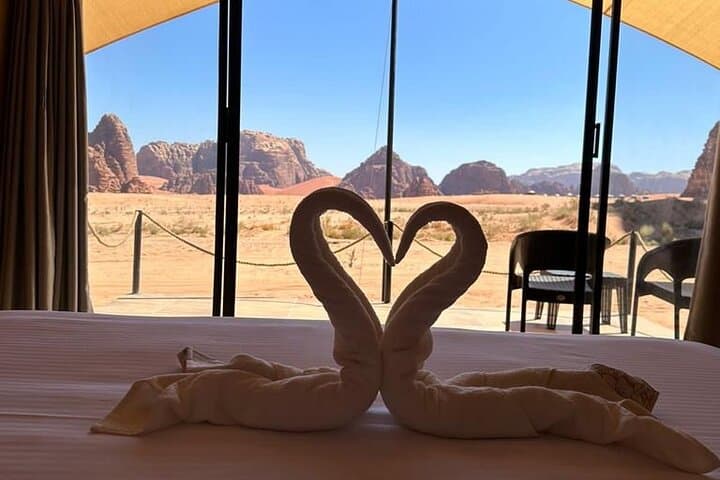
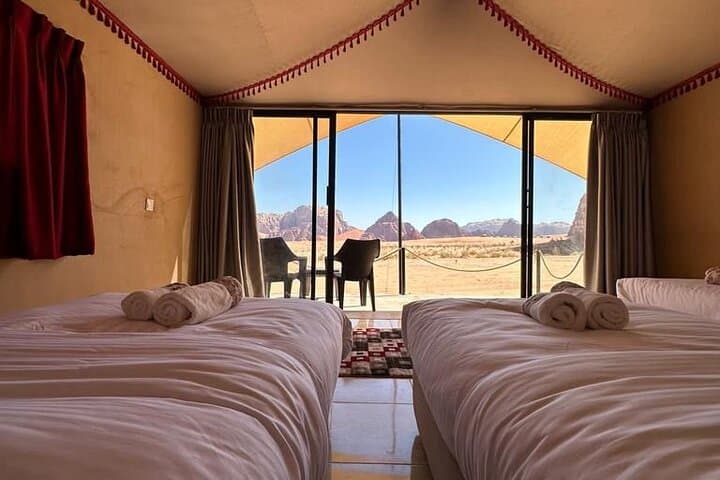
Practicalities matter here. The guided 4x4 circuit hits Little Rock Bridge, Khazali Canyon, Mushroom Rock, Burdah Rock Bridge (the main sunset viewpoint), and Abu Khashaba—expect short hikes and some scrambling; the highest viewpoint gains are a few dozen meters but include uneven rock. The overnight option swaps a sleeping bag under the stars for a luxury Bedouin tent with a private bathroom, dinner and breakfast included; you’ll be returned to the rest house the following morning.
Timing is everything: aim for late afternoon at Burdah Bridge for the best light and cooler temperatures. Bring at least 2–3 liters of water, sun protection, sturdy closed-toe shoes for canyon scrambles, and a headlamp if you plan to photograph the night sky. Respect fragile inscriptions, pack out waste, and follow your guide’s route—the protected area is both culturally sensitive and ecologically fragile. Wadi Rum can be elemental—sun will press on you by day, wind will rearrange the sand by hour—but done thoughtfully, a full-day jeep tour with a luxury tent night is a clear, unforgettable way into one of Jordan’s most cinematic deserts.
moderate.
8–24 hours.
Suitable for travelers in average physical condition; includes short hikes, scrambling and walking on sand.
No—tours meet at the Wadi Rum Rest House in the village (about 7 km from the Visitor Center); some operators can arrange transfers from Aqaba or Wadi Musa for an extra fee.
Yes—sand-boarding on the Red Sand Dune (Al Hasany) is offered for free as part of the tour.
The overnight option includes dinner, breakfast, a bed in a private luxury Bedouin tent with a private bathroom, and morning transfer back to the rest house.
Yes—camel rides are optional and typically cost around 20 JD per person as an add-on.
Yes—sites like Khazali Canyon have visible Thamudic and Nabataean carvings; follow your guide and avoid touching the rock art to help conserve it.
The operator allows full refunds up to 24 hours before departure; tours generally run in most weather but extreme conditions may prompt changes—check at booking.
Wadi Rum preserves millennia of human presence—Nabataean inscriptions and Thamudic petroglyphs share the landscape with stories of T. E. Lawrence and the Arab Revolt.
Wadi Rum is a protected area managed for both biodiversity and cultural heritage; visitors should stick to marked routes, avoid disturbing wildlife, and pack out all trash.
Wadi Rum Bedouin Guide Tours operates guided outdoor trips and adventures with an emphasis on safety, stewardship, and memorable experiences.
When the 4x4 eases off the paved road and the last power line disappears over the lip of the plain, Wadi Rum asserts itself with a low, wind-swept voice. Red sandstone towers and honeycombed cliffs rise like weathered monuments while the jeep—an obedient island of metal—rattles across rippled sand, sending small storms of dust in its wake. For eight hours, or longer if you stay, the landscape pulls you from one arresting scene to the next: a narrow canyon full of millennia-old petroglyphs, a dune you can walk barefoot, a rock bridge perched 80 meters above the desert floor where the sunset detonates color across the valley.
When the 4x4 eases off the paved road and the last power line disappears over the lip of the plain, Wadi Rum asserts itself with a low, wind-swept voice. Red sandstone towers and honeycombed cliffs rise like weathered monuments while the jeep—an obedient island of metal—rattles across rippled sand, sending small storms of dust in its wake. For eight hours, or longer if you stay, the landscape pulls you from one arresting scene to the next: a narrow canyon full of millennia-old petroglyphs, a dune you can walk barefoot, a rock bridge perched 80 meters above the desert floor where the sunset detonates color across the valley.
This is the Wadi Rum Protected Area, a UNESCO Biosphere Reserve shaped by wind, water and human hands. Nabataean inscriptions and Thamudic carvings hang like graffiti from Khazali Canyon’s walls; Lawrence of Arabia’s name is threaded through local stories and a few ruined structures. Geologically, the massif is Cambrian sandstone and granite; differential erosion sculpts arches and mushroom-shaped rocks that seem to defy gravity.
Culturally the tour moves at Bedouin pace: you start at the Wadi Rum Rest House—about 7 km from the official visitor center—where tea is offered and plans are sketched. Lunch is a simple spread of gallaya, hummus, tuna, salad and flatbread taken beneath fig trees after a short scramble to Lawrence’s Spring (approx. 2 km southwest of the village). Sand-boarding on Al Hasany’s red dune is complimentary and addictive; you can pay extra (20 JD) to add a camel ride for a slower, older rhythm of the desert.
Practicalities matter here. The guided 4x4 circuit hits Little Rock Bridge, Khazali Canyon, Mushroom Rock, Burdah Rock Bridge (the main sunset viewpoint), and Abu Khashaba—expect short hikes and some scrambling; the highest viewpoint gains are a few dozen meters but include uneven rock. The overnight option swaps a sleeping bag under the stars for a luxury Bedouin tent with a private bathroom, dinner and breakfast included; you’ll be returned to the rest house the following morning.
Timing is everything: aim for late afternoon at Burdah Bridge for the best light and cooler temperatures. Bring at least 2–3 liters of water, sun protection, sturdy closed-toe shoes for canyon scrambles, and a headlamp if you plan to photograph the night sky. Respect fragile inscriptions, pack out waste, and follow your guide’s route—the protected area is both culturally sensitive and ecologically fragile. Wadi Rum can be elemental—sun will press on you by day, wind will rearrange the sand by hour—but done thoughtfully, a full-day jeep tour with a luxury tent night is a clear, unforgettable way into one of Jordan’s most cinematic deserts.