THE ADVENTURE COLLECTIVE® · Independent discovery and booking for outdoor travel

Drive across wind-carved sandstone, climb ochre dunes, and sip Bedouin tea at ancient springs on a full-day 4x4 circuit of Wadi Rum. This practical guide covers the route, cultural context and what to pack so you arrive ready for sand, sun and spectacular light.
Drive across wind-carved sandstone, climb ochre dunes, and sip Bedouin tea at ancient springs on a full-day 4x4 circuit of Wadi Rum. This practical guide covers the route, cultural context and what to pack so you arrive ready for sand, sun and spectacular light.
The jeep rocks forward and the desert exhales: a wind that pulls sand into ribbons across a floor of red and ochre. By the time you climb the dune-rim to watch the valley unfold, the engine settles and the guide unmuffles a sentence about Lawrence and the Nabateans. For six to eight hours the world compresses to stone, sand and the track your driver reads like a map of memory — little bridges carved by time, narrow canyons that whisper inscriptions, and a Bedouin teapot sparking steam on a small fire.
Verified experiences and guided adventures in the surrounding area.
Operated by Wadi Rum Desert Home · Wadi Rum Village, Aqaba Governorate
The jeep rocks forward and the desert exhales: a wind that pulls sand into ribbons across a floor of red and ochre. By the time you climb the dune-rim to watch the valley unfold, the engine settles and the guide unmuffles a sentence about Lawrence and the Nabateans. For six to eight hours the world compresses to stone, sand and the track your driver reads like a map of memory — little bridges carved by time, narrow canyons that whisper inscriptions, and a Bedouin teapot sparking steam on a small fire.
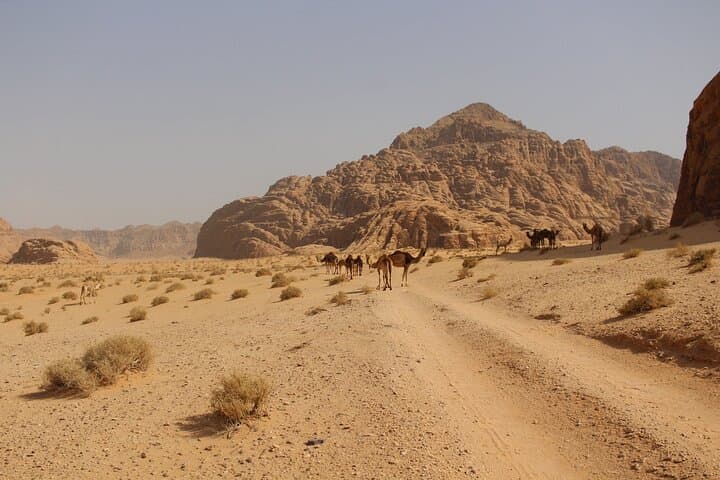
Wadi Rum is a place of geologic theater. Granite and sandstone have been scored into arches and towers by millennia of wind and flash-floods; Um Fruth and Burdah Bridges are the most dramatic acts. Khazali and Kashaba canyons hide Nabatean graffiti — names and figures scratched into sheltered walls — evidence that this was a corridor of movement long before tourism. Lawrence's footfalls remain in local lore: Lawrence Spring and Lawrence House point to the Arab Revolt era and give the landscape a human anchor amid its monumentality.
Culture here is present and active. Bedouin camps are more than photo props: hosts offer tea, invite conversation, and if you stay for lunch, they’ll serve simple stews cooked under the sand. Guides are usually local Bedouin who judge the light, the sand and the safest lines over soft rock; their knowledge turns a sequence of stops into a coherent story.
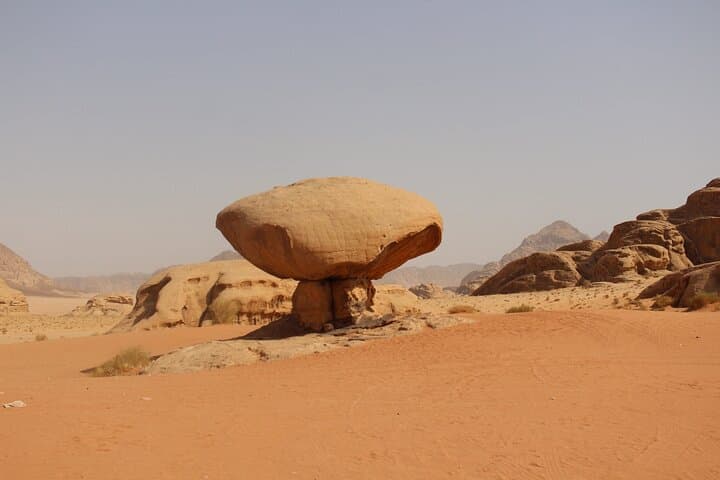
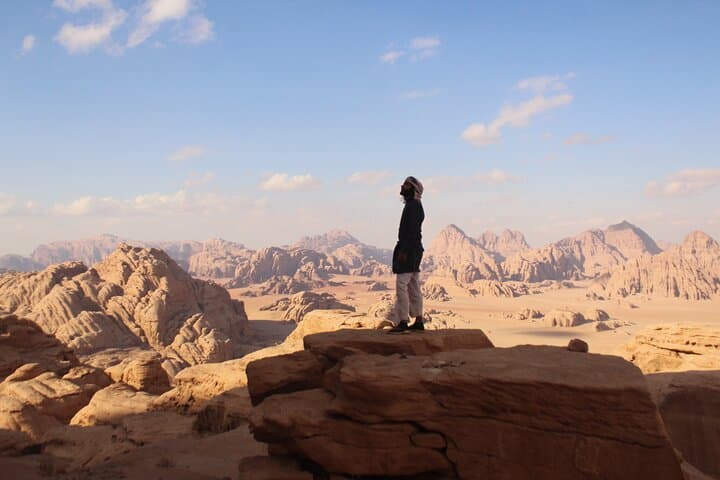
The tour itself is a paced loop — expect a mix of on-road driving and short hikes at major sites: Khazali Canyon for inscriptions (10–20 minute walks), mushroom rock for photos, Sand Dunes for a quick climb and Um Fruth for the viewpoint and photos. The day closes at a panoramic ridge for sunset, when the light deepens the reds and the desert seems to collect itself for a last show.
Practical matters: arrive with sun protection and 2–3 liters of water, and wear closed shoes for short rocky scrambles. The terrain is uneven but the walking is brief; a moderate fitness level is sufficient. Confirm pickup logistics — most tours begin in Wadi Rum village and return there or to nearby camps. If you want lunch cooked in the desert, request it when booking. Respect restricted areas, stick to marked tracks where possible, and bring cash for tips and small purchases.
Timing matters: sunrise and late afternoon bring the softest light and coolest air; midday is hot on summer days. For photographers, the last hour before sunset is the richest. For quieter moments, ask your guide to detour to lesser-visited corrals and small canyons. In a landscape that seems permanent, the human stories — Nabatean travelers, Bedouin guides, and Lawrence’s presence — are what make the geology speak.
This full-day jeep tour is an efficient way to see Wadi Rum’s highlights with a local guide: a compact, tactile immersion into desert geology, history and living culture.
moderate.
6–8 hours.
Moderate fitness needed for short hikes and scrambling at viewpoints; comfortable walking for 10–30 minutes at stops.
The tour lasts about 6–8 hours; start times vary by operator but commonly run in the morning to maximize daylight and avoid peak heat.
Lunch can often be added (a desert-cooked meal) but confirm when booking — complimentary Bedouin tea and bottled water are usually provided.
Yes — expect off-road driving over dunes and washboard tracks; if you have back or neck issues the tour is not recommended.
Children are allowed but should be monitored during short hikes and near cliffs; bring extra water and sun protection for them.
Tipping is customary; plan to tip guides and drivers in local currency if you’re satisfied with the service.
No — there are uneven surfaces and short walks that make this tour unsuitable for those with significant mobility limitations.
Khazali Canyon contains Nabatean inscriptions and the route connects to stories of T.E. Lawrence from the Arab Revolt era, linking ancient trade routes to 20th-century history.
Wadi Rum is managed with local Bedouin involvement; stick to tracks, pack out waste, and support guided services to minimize environmental impact.
Wadi Rum Desert Home operates guided outdoor trips and adventures with an emphasis on safety, stewardship, and memorable experiences.

The jeep rocks forward and the desert exhales: a wind that pulls sand into ribbons across a floor of red and ochre. By the time you climb the dune-rim to watch the valley unfold, the engine settles and the guide unmuffles a sentence about Lawrence and the Nabateans. For six to eight hours the world compresses to stone, sand and the track your driver reads like a map of memory — little bridges carved by time, narrow canyons that whisper inscriptions, and a Bedouin teapot sparking steam on a small fire.
The jeep rocks forward and the desert exhales: a wind that pulls sand into ribbons across a floor of red and ochre. By the time you climb the dune-rim to watch the valley unfold, the engine settles and the guide unmuffles a sentence about Lawrence and the Nabateans. For six to eight hours the world compresses to stone, sand and the track your driver reads like a map of memory — little bridges carved by time, narrow canyons that whisper inscriptions, and a Bedouin teapot sparking steam on a small fire.
Wadi Rum is a place of geologic theater. Granite and sandstone have been scored into arches and towers by millennia of wind and flash-floods; Um Fruth and Burdah Bridges are the most dramatic acts. Khazali and Kashaba canyons hide Nabatean graffiti — names and figures scratched into sheltered walls — evidence that this was a corridor of movement long before tourism. Lawrence's footfalls remain in local lore: Lawrence Spring and Lawrence House point to the Arab Revolt era and give the landscape a human anchor amid its monumentality.
Culture here is present and active. Bedouin camps are more than photo props: hosts offer tea, invite conversation, and if you stay for lunch, they’ll serve simple stews cooked under the sand. Guides are usually local Bedouin who judge the light, the sand and the safest lines over soft rock; their knowledge turns a sequence of stops into a coherent story.
The tour itself is a paced loop — expect a mix of on-road driving and short hikes at major sites: Khazali Canyon for inscriptions (10–20 minute walks), mushroom rock for photos, Sand Dunes for a quick climb and Um Fruth for the viewpoint and photos. The day closes at a panoramic ridge for sunset, when the light deepens the reds and the desert seems to collect itself for a last show.
Practical matters: arrive with sun protection and 2–3 liters of water, and wear closed shoes for short rocky scrambles. The terrain is uneven but the walking is brief; a moderate fitness level is sufficient. Confirm pickup logistics — most tours begin in Wadi Rum village and return there or to nearby camps. If you want lunch cooked in the desert, request it when booking. Respect restricted areas, stick to marked tracks where possible, and bring cash for tips and small purchases.
Timing matters: sunrise and late afternoon bring the softest light and coolest air; midday is hot on summer days. For photographers, the last hour before sunset is the richest. For quieter moments, ask your guide to detour to lesser-visited corrals and small canyons. In a landscape that seems permanent, the human stories — Nabatean travelers, Bedouin guides, and Lawrence’s presence — are what make the geology speak.
This full-day jeep tour is an efficient way to see Wadi Rum’s highlights with a local guide: a compact, tactile immersion into desert geology, history and living culture.