THE ADVENTURE COLLECTIVE® · Independent discovery and booking for outdoor travel

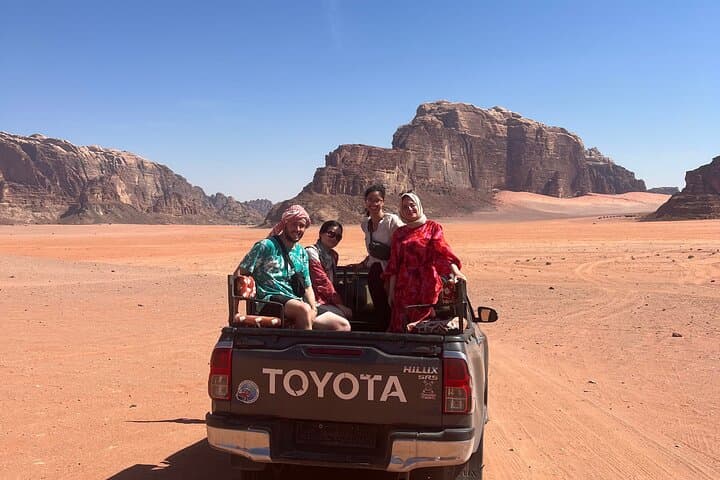
Spend a day tracing jeep tracks, petroglyph canyons and massive rock bridges with a Bedouin guide, then stay for a night under desert stars. This full-day tour pairs cultural storytelling with dramatic geology and a private tent to wake up to sunrise over sandstone towers.
Spend a day tracing jeep tracks, petroglyph canyons and massive rock bridges with a Bedouin guide, then stay for a night under desert stars. This full-day tour pairs cultural storytelling with dramatic geology and a private tent to wake up to sunrise over sandstone towers.
The morning light in Wadi Rum arrives like a slow burn—pale gold pouring across red sandstone, the long shadows of towers and arches folding into the sand. You step from a jeep onto a flat plain and the desert answers in silence, a wide, ancient room where wind has cataloged every grain. A local Bedouin guide meets you with tea, and within minutes you’re tracing tracks that caravans once used and following inscriptions carved into stone centuries ago.
Verified experiences and guided adventures in the surrounding area.
Operated by Desert Bird Camp · Wadi Rum Village, Aqaba Governorate
The morning light in Wadi Rum arrives like a slow burn—pale gold pouring across red sandstone, the long shadows of towers and arches folding into the sand. You step from a jeep onto a flat plain and the desert answers in silence, a wide, ancient room where wind has cataloged every grain. A local Bedouin guide meets you with tea, and within minutes you’re tracing tracks that caravans once used and following inscriptions carved into stone centuries ago.
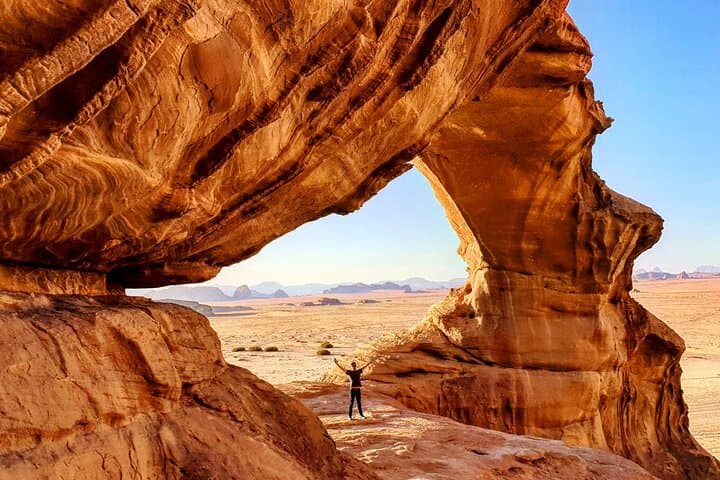
This full-day experience stitches together Wadi Rum’s geology and culture. The valley is a sculpted archive of sandstone and granite—joints, arches, and bridges formed by erosion and thermal stress. You’ll climb to Um Fruth rock bridge for a view that reads like a natural amphitheater, then walk Khazali Canyon where Nabataean and Thamudic petroglyphs crouch in narrow shade. Lawrence’s House sits on a low rise, a human punctuation in a landscape that’s staged scenes for films from Lawrence of Arabia to Dune.
Guides here are storytellers and naturalists: they’ll point out how limestone springs allow tamarisk and acacia to survive, show you fox and desert mouse sign, and explain Bedouin hospitality—the logic of canvas, the clever packing of goats’ milk and flatbreads, the ritual of strong black tea poured into tiny glasses.
After a day of jeep tracks and short hikes, the tour slows into dinner beside a low fire: roasted lamb, salads, and stories. At night the sky takes over. Away from towns, the Milky Way spills like a road map; constellations read differently when you’re in the Northern Arabian desert.
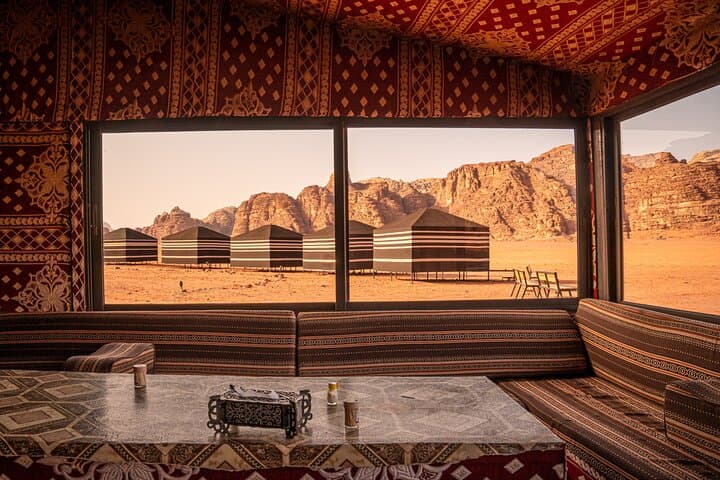
Practical note: routes cross sand flats, gravel plains and short rocky scrambles—most sections are easy on fitness but require steady footwear and sun protection. The itinerary commonly visits Lawrence Spring, Khazali Canyon, Um Fruth bridge and Anfashieh inscriptions; expect multiple 20–60 minute stops. Many operators include an overnight in a private Bedouin-style tent with a balcony to watch the sunrise. Entrance fee (small, paid locally) is standard.
Timing and packing matter: mid-morning and late afternoon deliver the best light and cooler temperatures; midday is harsh in summer. Bring at least 2 liters of water, a sun hat, layered clothing for chilly desert nights, and a camera with a wide-angle lens for vast landscapes. Respect local customs—ask before photographing people—and leave no trace: the desert’s silence and archaeological traces are fragile.
For travelers who want a compact desert immersion—big views, petroglyphs, Bedouin food and a night under stars—this full-day tour condenses Wadi Rum into an efficient, sensory-rich loop that still leaves room to wander back later with more time.
moderate.
4–16 hours.
Suitable for travelers in average fitness; expect short hikes and easy scrambles but long stretches of standing or walking on sand.
The daytime itinerary runs several hours with multiple stops; many operators offer a combined full-day jeep tour with an optional overnight in a private Bedouin tent—confirm when booking.
Entrance fees are typically paid locally; the tour notes an $8 entrance charge in addition to the booking fee—bring local currency if possible.
Yes—routes are generally gentle with short walks; inform the operator of mobility concerns as certain short scrambles may be avoided.
Most operators pick up from Wadi Rum Village; transfers from Aqaba are often available—confirm pickup details when reserving.
Expect signs and occasional sightings of desert foxes, small rodents and a variety of birds; large mammals are rare in the protected area.
Typical packages include local Bedouin meals—breakfast, lunch and dinner—and operators usually accommodate vegetarian requests if notified in advance.
Wadi Rum has served as a caravan corridor and a canvas for human expression for millennia; Nabataean and Thamudic inscriptions mark it as a crossroads of ancient travel and trade.
Wadi Rum is a protected area—stay on established tracks, avoid touching petroglyphs and follow your guide’s instructions to minimize erosion and cultural damage.
Desert Bird Camp operates guided outdoor trips and adventures with an emphasis on safety, stewardship, and memorable experiences.
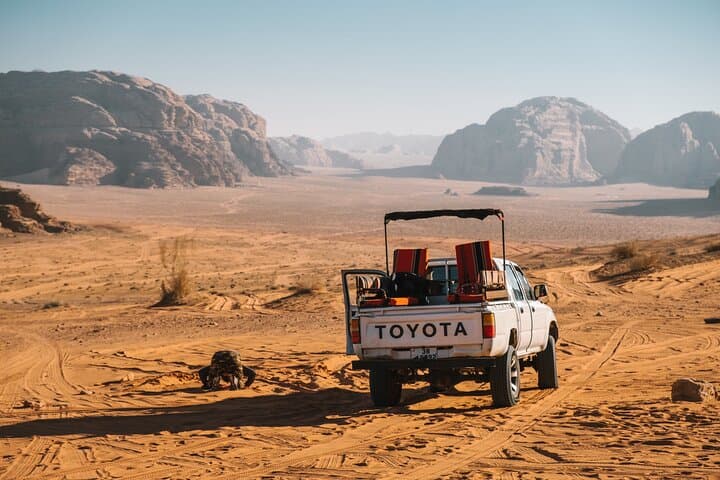
The morning light in Wadi Rum arrives like a slow burn—pale gold pouring across red sandstone, the long shadows of towers and arches folding into the sand. You step from a jeep onto a flat plain and the desert answers in silence, a wide, ancient room where wind has cataloged every grain. A local Bedouin guide meets you with tea, and within minutes you’re tracing tracks that caravans once used and following inscriptions carved into stone centuries ago.
The morning light in Wadi Rum arrives like a slow burn—pale gold pouring across red sandstone, the long shadows of towers and arches folding into the sand. You step from a jeep onto a flat plain and the desert answers in silence, a wide, ancient room where wind has cataloged every grain. A local Bedouin guide meets you with tea, and within minutes you’re tracing tracks that caravans once used and following inscriptions carved into stone centuries ago.
This full-day experience stitches together Wadi Rum’s geology and culture. The valley is a sculpted archive of sandstone and granite—joints, arches, and bridges formed by erosion and thermal stress. You’ll climb to Um Fruth rock bridge for a view that reads like a natural amphitheater, then walk Khazali Canyon where Nabataean and Thamudic petroglyphs crouch in narrow shade. Lawrence’s House sits on a low rise, a human punctuation in a landscape that’s staged scenes for films from Lawrence of Arabia to Dune.
Guides here are storytellers and naturalists: they’ll point out how limestone springs allow tamarisk and acacia to survive, show you fox and desert mouse sign, and explain Bedouin hospitality—the logic of canvas, the clever packing of goats’ milk and flatbreads, the ritual of strong black tea poured into tiny glasses.
After a day of jeep tracks and short hikes, the tour slows into dinner beside a low fire: roasted lamb, salads, and stories. At night the sky takes over. Away from towns, the Milky Way spills like a road map; constellations read differently when you’re in the Northern Arabian desert.
Practical note: routes cross sand flats, gravel plains and short rocky scrambles—most sections are easy on fitness but require steady footwear and sun protection. The itinerary commonly visits Lawrence Spring, Khazali Canyon, Um Fruth bridge and Anfashieh inscriptions; expect multiple 20–60 minute stops. Many operators include an overnight in a private Bedouin-style tent with a balcony to watch the sunrise. Entrance fee (small, paid locally) is standard.
Timing and packing matter: mid-morning and late afternoon deliver the best light and cooler temperatures; midday is harsh in summer. Bring at least 2 liters of water, a sun hat, layered clothing for chilly desert nights, and a camera with a wide-angle lens for vast landscapes. Respect local customs—ask before photographing people—and leave no trace: the desert’s silence and archaeological traces are fragile.
For travelers who want a compact desert immersion—big views, petroglyphs, Bedouin food and a night under stars—this full-day tour condenses Wadi Rum into an efficient, sensory-rich loop that still leaves room to wander back later with more time.